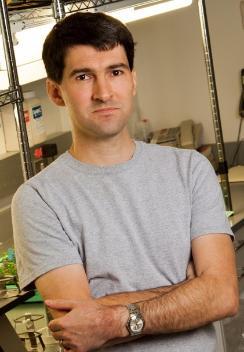
Gilles J. Basset
· Associate ProfessorUniversity of Florida · Horticultural Sciences
Active 2000–2024
About
Gilles J. Basset is an Associate Professor in the Department of Horticultural Sciences at the University of Florida, affiliated with the Institute of Food and Agricultural Sciences. His research focuses on understanding how plants synthesize redox cofactors essential for photosynthesis and respiration. His laboratory applies this knowledge to enhance the bioenergetics capabilities and nutritional value of plants through synthetic biology approaches. Basset's educational background includes a PhD from the University of Bordeaux in France, obtained in 2000, with prior degrees in structural biochemistry, molecular genetics, chemistry, and biology from the same university. He has held academic positions at the University of Nebraska-Lincoln, where he served as an Assistant and then Associate Professor at the Center for Plant Science Innovation, beginning in 2007. His work has contributed significantly to the understanding of plant biosynthesis pathways, particularly those involved in the production of vital compounds such as ubiquinone (coenzyme Q) and vitamin K1, and their roles in plant metabolism. Basset has been recognized with numerous awards, including the Innovations of the Year Award at UF in 2023 and a National Science Foundation CAREER award in 2012. His contributions extend to teaching plant cell and developmental biology, and he has served in leadership roles within graduate programs and professional societies.
Research topics
- Biochemistry
- Biology
- Chemistry
Selected publications
Current Opinion in Plant Biology · 2022 · 26 citations
Senior authorCorresponding- Biochemistry
- Biology
Journal of Biological Chemistry · 2021 · 16 citations
Senior authorCorresponding- Biochemistry
- Biology
Ubiquinone (Coenzyme Q) is a vital respiratory cofactor and liposoluble antioxidant. In plants, it is not known how the C-6 hydroxylation of demethoxyubiquinone, the penultimate step in ubiquinone biosynthesis, is catalyzed. The combination of cross-species gene network modeling along with mining of embryo-defective mutant databases of Arabidopsis thaliana identified the embryo lethal locus EMB2421 (At1g24340) as a top candidate for the missing plant demethoxyubiquinone hydroxylase. In marked contrast with prototypical eukaryotic demethoxyubiquinone hydroxylases, the catalytic mechanism of which depends on a carboxylate-bridged di-iron domain, At1g24340 is homologous to FAD-dependent oxidoreductases that instead use NAD(P)H as an electron donor. Complementation assays in Saccharomyces cerevisiae and Escherichia coli demonstrated that At1g24340 encodes a functional demethoxyubiquinone hydroxylase and that the enzyme displays strict specificity for the C-6 position of the benzoquinone ring. Laser-scanning confocal microscopy also showed that GFP-tagged At1g24340 is targeted to mitochondria. Silencing of At1g24340 resulted in 40 to 74% decrease in ubiquinone content and de novo ubiquinone biosynthesis. Consistent with the role of At1g24340 as a benzenoid ring modification enzyme, this metabolic blockage could not be bypassed by supplementation with 4-hydroxybenzoate, the immediate precursor of ubiquinone's ring. Unlike in yeast, in Arabidopsis overexpression of demethoxyubiquinone hydroxylase did not boost ubiquinone content. Phylogenetic reconstructions indicated that plant demethoxyubiquinone hydroxylase is most closely related to prokaryotic monooxygenases that act on halogenated aromatics and likely descends from an event of horizontal gene transfer between a green alga and a bacterium.
Molecules · 2020 · 14 citations
- Biochemistry
- Chemistry
- Biology
plants. Kidney cells treated with this compound incorporated the B-ring of kaempferol into newly synthesized CoQ, suggesting that the B-ring is metabolized via a mechanism described in plant cells. Kaempferol is a natural flavonoid present in fruits and vegetables and possesses antioxidant, anticancer, and anti-inflammatory therapeutic properties. A better understanding of the role of kaempferol as a CoQ ring precursor makes this bioactive compound a potential candidate for the design of interventions aiming to increase endogenous CoQ biosynthesis and may improve CoQ deficient phenotypes in aging and disease.
Recent grants
Phylloquinone Biosynthesis in Plants: Enzyme Discovery and Pathway Flux Control
NSF · $440k · 2009–2014
NSF · $650k · 2017–2023
THE EXTRAORDINARY CONNECTIONS BETWEEN FLAVONOL AND BENZOATE METABOLISM
NSF · $818k · 2022–2027
NSF · $621k · 2012–2016
NSF · $572k · 2015–2018
Frequent coauthors
- 60 shared
Stéphane Ravanel
Laboratoire Physiologie Cellulaire & Végétale
- 53 shared
Andrew D. Hanson
University of Florida
- 49 shared
Jesse F. Gregory
University of Florida
- 47 shared
Eoin P. Quinlivan
- 41 shared
Fabrice Rebeillé
Laboratoire Physiologie Cellulaire & Végétale
- 39 shared
James J. Giovannoni
Robert W. Holley Center for Agriculture & Health
- 39 shared
Brian P. Nichols
University of Illinois Chicago
- 38 shared
Motoaki Seki
Kihara Institute for Biological Research
Education
- 2009
PhD
University of Bordeaux
Awards & honors
- Innovations of the Year Award; UF Innovate-Technology Licens…
- Dedication and Loyal Service Award, Plant Molecular & Cellul…
- Graduate Coordinator, UF Plant Molecular & Cellular Biology…
- Member of the Program Committee of the American Society of P…
- NSF CAREER award (2012)
Similar researchers at University of Florida
- Resume-aware match score
- Save to shortlist
- AI-drafted outreach
See your match with Gilles J. Basset
PhdFit ranks faculty by your research interests, methods, and publications — grounded in their actual work, not templates.
- Free to start
- No credit card
- 30-second signup