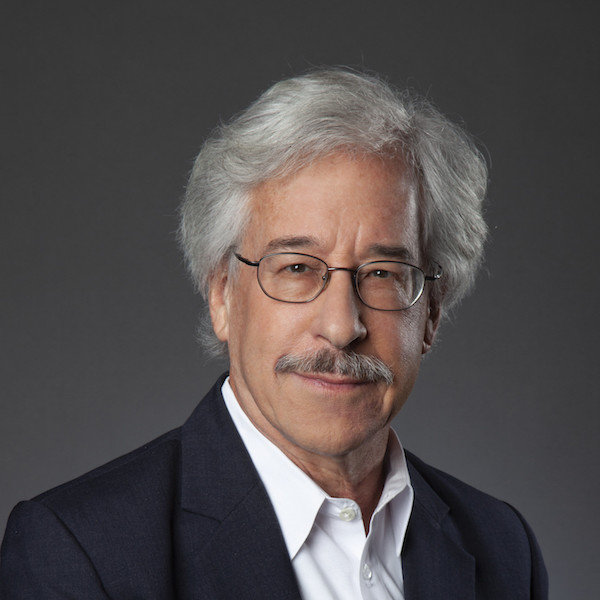
Gerald E. Loeb
· Professor of Biomedical Engineering and NeurologyVerifiedUniversity of Southern California · Alfred E. Mann Department of Biomedical Engineering
Active 1972–2026
About
Dr. Gerald E. Loeb is a Professor of Biomedical Engineering and Neurology at the University of Southern California. He holds a Doctoral Degree in Medicine from Johns Hopkins University, where he also earned his Bachelor's Degree in Human Biology. His training includes surgery at the University of Arizona. Dr. Loeb has extensive experience, having spent 15 years in the Laboratory of Neural Control at the National Institutes of Health and 12 years at Queen’s University, where he served as Professor of Physiology and Director of the Bio-Medical Engineering Unit. His research focuses on neural prosthetics, specifically interfaces between electronic devices and the nervous system to replace sensory and motor functions and address neurological dysfunctions. He was one of the developers of the cochlear implant used to restore hearing in deaf individuals and continues to work on improving this technology. His group developed BIONs—BIOnic Neurons—that can be injected into paralyzed muscles to receive power and communicate via radio links with external controllers. Additionally, he contributed to the development of the BioTac, a biomimetic tactile sensor now commercialized by SynTouch Inc. Dr. Loeb’s work also involves basic neurophysiological studies of the sensorimotor nervous system to understand biological control mechanisms, with efforts to develop models and interfaces for reanimating paralyzed limbs through functional electrical stimulation and for designing powered prosthetic limbs. He has published over 400 peer-reviewed articles, holds 70 US patents, and has received numerous awards and honors, including recognition from the American Institute for Medical and Biological Engineering, the National Academy of Sciences, and the World Economic Forum.
Research topics
- Computer Science
- Psychology
- Artificial Intelligence
- Neuroscience
- Biology
- Mathematics
- Human–computer interaction
- Cognitive psychology
Selected publications
Zenodo (CERN European Organization for Nuclear Research) · 2026-02-26
datasetOpen accessSenior authorThe dataset is associated with the materials presented in this publication and supports the results and analyses reported therein.
Zenodo (CERN European Organization for Nuclear Research) · 2026-02-26
otherOpen accessSenior authorHuman manual dexterity relies critically on touch. Robotic and prosthetic hands are much less dexterous and make little use of the many tactile sensors available. We propose a framework modeled on the hierarchical sensorimotor controllers of the nervous system to link sensing to action in human-in-the-loop, haptically enabled, artificial hands.
Zenodo (CERN European Organization for Nuclear Research) · 2026-02-26
otherOpen accessSenior authorHuman manual dexterity relies critically on touch. Robotic and prosthetic hands are much less dexterous and make little use of the many tactile sensors available. We propose a framework modeled on the hierarchical sensorimotor controllers of the nervous system to link sensing to action in human-in-the-loop, haptically enabled, artificial hands.
Open MIND · 2026-02-26
datasetSenior authorThe dataset is associated with the materials presented in this publication and supports the results and analyses reported therein.
Did Down‐Regulated Instincts Enable Human Gene‐Culture Coevolution?
Evolutionary Anthropology Issues News and Reviews · 2025-08-14 · 1 citations
articleOpen access1st authorCorrespondingThe unique intellectual and cultural attributes of Homo sapiens that arose during the Middle Stone Age are often ascribed to positive evolutionary development of novel physical or personality traits, but attempts to correlate cultural with genetic evolution have been unsuccessful. Humans are also unique, however, in their ability to ignore or override hormonal and pheromonal instincts that define the social structures and behaviors of other animals. Humans can rapidly invade new environments because they invent rather than inherit such behaviors, which cumulatively we call a culture. Downregulation of instincts makes the invention and learning of cultures necessary, which imposes both an opportunity and a burden on individuals and societies. Cultural evolution enables human societies to invent, promulgate, compete and evolve their social structures in a generation or two rather than the hundreds of generations required for significant genetic evolution. Nevertheless, residual instincts may conflict with and delimit novel cultures and their social structures.
A leadless pericardial pacemaker
Heart Rhythm · 2025-01-31
articleSenior authorSubcortical control of reaching in humans
bioRxiv (Cold Spring Harbor Laboratory) · 2025-11-26
preprintOpen accessABSTRACT Accurate visually guided reaching requires transformation of target-related photoreceptor responses into precisely coordinated activation of trunk and arm muscles. The cerebral cortex is widely believed to compute the requisite kinematic and musculoskeletal dynamics strategies in humans 1–3 , even though vertebrates lacking a cerebral cortex achieve sophisticated visuomotor control 4–6 , and brainstem circuits executing coordinated eye and head gaze shifts perform analogous sensorimotor computations in non-human primates 7 . Here we used a visuomotor reaching task that yields extremely rapid, “express”, target-directed muscle activations 8–10 to test whether a putative subcortical sensorimotor network can compute musculoskeletal dynamics to initiate reaching in humans. We found coordinated express visuomotor responses (EVRs) in task-relevant shoulder, elbow, and bi-articular muscles that reflected both starting posture and target direction in similar patterns to longer latency, presumably cortically mediated, muscle responses. When the task goal was to reach away from the stimulus (i.e. an “anti-reach”; 11 ) the EVR involved coordinated muscle activation to initiate the hand toward the stimulus location, opposite to the subsequent goal-directed response. The results suggest a unified theory of visuomotor control for reaching and gaze shifts, in which subcortical systems compute musculoskeletal dynamics based on sensory target information and cortically derived context. The results imply that the transformation from motor goals in extrapersonal space into musculoskeletal dynamics can be performed by neural circuitry in humans that does not involve the sensorimotor cortex.
Artificial intelligence algorithm for real-time diagnostic assist in orofacial pain
The Journal of the American Dental Association · 2025-06-13 · 3 citations
articleSenior authorIEEE Transactions on Haptics · 2025-01-01
editorialBuilding haptic interfaces for human-in-the-loop applications is a profound scientific and technological challenge. It requires developing methods to intuitively channel sensorimotor information between afferent and efferent neural pathways of a human user and inputs and outputs of an external system. In such applications, artificial touch may serve as a virtual extension of the human body to a remote location (e.g., teleoperation) or it can create a perception that an external system is a part of the body (e.g., prosthetics).
ARTIFICIAL INTELLIGENCE BASED DIAGNOSTIC SUPPORT SYSTEM FOR DENTAL RESIDENTS
INTED proceedings · 2024-03-01 · 1 citations
article1 Herman Ostrow School of Dentistry (UNITED STATES)2 University of Colorado Boulder (UNITED STATES)3 University of Southern California (UNITED STATES)
Recent grants
NIH · $4.6M · 2008
MRI: Development of a Tactile Sensing Hand+Arm for Robotic Haptics
NSF · $452k · 2009–2013
NIH · $467k · 1992
Frequent coauthors
- 83 shared
F.J.R. Richmond
University of Southern California
- 45 shared
C. A. Pratt
- 35 shared
Cheryl M. Chanaud
Memorial Hermann–Texas Medical Center
- 24 shared
Brian D. Corneil
Robarts Clinical Trials
- 24 shared
Jeremy A. Fishel
- 23 shared
Rahman Davoodi
- 23 shared
Nicholas Wettels
- 18 shared
W. B. Marks
Education
- 1990
Ph.D., Biomedical Engineering
University of Southern California
- 1986
M.S., Biomedical Engineering
University of Southern California
- 1984
B.S., Biomedical Engineering
University of Southern California
Awards & honors
- U. S. Public Health Service Commendation Medal
- American Institute for Medical and Biological Engineering Fe…
- National Academy of Sciences International Exchange Fellowsh…
- Queen's University Queen's National Scholar
- Seeing Eye, Inc. Fellowship
- Resume-aware match score
- Save to shortlist
- AI-drafted outreach
See your match with Gerald E. Loeb
PhdFit ranks faculty by your research interests, methods, and publications — grounded in their actual work, not templates.
- Free to start
- No credit card
- 30-second signup