
Resume-aware faculty matching

Find professors who actually fit you

Review faculty evidence in public, then use the workspace to turn your background into a shortlist, outreach, and meeting prep.
Profile-awarePaper evidenceSix agents
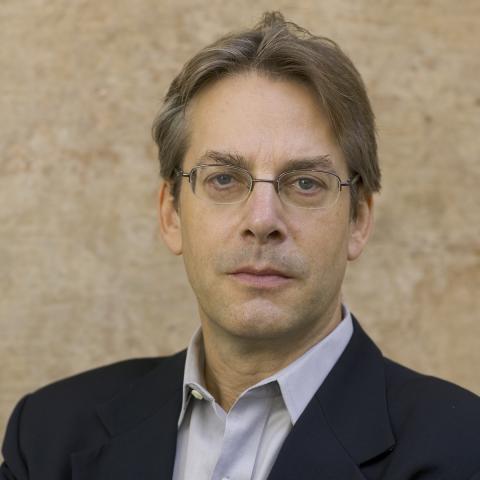
G. John Ikenberry

G. John Ikenberry

· Professor

Princeton University · Politics

Active 1932–2025

h-index123
Citations76.9k
Papers72852 last 5y
Funding

Academic metrics are sourced from OpenAlex and public funding records; values may differ from Google Scholar.

See your match with G. John Ikenberry — sign in to PhdFit.Sign in

About

G. John Ikenberry is the Albert G. Milbank Professor of Politics and International Affairs at Princeton University, serving in the Department of Politics and the Princeton School of Public and International Affairs. He is also Co-Director of Princeton’s Center for International Security Studies and a Global Eminence Scholar at Kyung Hee University in Seoul, Korea. His research focuses on international relations, American foreign policy, and the development of international order, with notable contributions including his books 'Liberal Leviathan' and 'After Victory.' Ikenberry has been recognized as a top scholar in the field, ranked among the most influential and interesting scholars in international relations over the past two decades. He has authored numerous books, articles, and essays exploring themes such as liberal international order, strategic restraint, and the evolution of global power dynamics. His work often examines the legacy of American leadership, the stability of international institutions, and the future of global order, making him a prominent figure in contemporary international relations scholarship.

Research topics

  • Computer Science
  • Political Science
  • Sociology
  • Law
  • Political economy
  • Computer Security
  • Law and economics
  • Economics
  • Development economics

Selected publications

  • Three Worlds: the West, East and South and the competition to shape global order

    International Affairs · 2024-01-08 · 109 citations

    articleOpen access1st authorCorresponding

    Abstract Among the many impacts of Russia's war on Ukraine, the most consequential may be in pushing the world in the direction of Three Worlds—the global West, the global East and the global South. One is led by the United States and Europe, the second by China and Russia, and the third by an amorphous grouping of non-western developing nations. These Three Worlds are not blocs or coherent negotiating groups, but loose, constructed and evolving global factions. This article makes four arguments…

  • A World Safe for Democracy

    Yale University Press eBooks · 2020 · 98 citations

    1st authorCorresponding
  • The Crisis of Liberal Internationalism: Japan and the World Order

    Brookings Institution Press eBooks · 2020 · 45 citations

    Senior authorCorresponding

    Japan's challenges and opportunities in a new era of uncertainty. Henry Kissinger wrote a few years ago that Japan has been for seven decades important anchor of Asian stability and global peace and prosperity. However, Japan has only played this anchoring role within an American-led liberal international order built from the ashes of World War II. Now that order itself is under siege, not just from illiberal forces such as China and Russia but from its very core, the United States under Donald…

  • Debating Worlds

    2023-03-23 · 9 citations

    book

    Abstract In the late twentieth century, the narrative of universalization of Western liberal democratic modernity dominated the international scene. A few decades later, a new plurality of narratives has emerged, reflecting both a global redistribution of geopolitical power and deep political transformation within Western liberal societies. Each of the new, or most often reinvented, narratives combines stories of the past with understandings of the present and attractive visions of the future. T…

  • Liberal statecraft and the problems of world order

    Oxford Review of Economic Policy · 2024-01-01 · 6 citations

    article1st authorCorresponding

    Abstract What is the future of the Western-led liberal international order? This paper makes four arguments. First, over the last two centuries, liberal democracies have pioneered a tradition of international order building, the essential impulse of which has been to create an environment—a sort of cooperative ecosystem—in which liberal states can manage interdependence, protect their values and interests, and aggregate capabilities to defend against threats and challenges to their global positi…

Frequent coauthors

  • Joanne Gowa

    Cornell University

    118 shared
  • Michael Mastanduno

    100 shared
  • Charles A. Kupchan

    98 shared
  • Bruce Bueno

    93 shared
  • Robert O. Keohane

    University of Oxford

    87 shared
  • Laura D’Andrea Tyson

    85 shared
  • Peter Gilpin

    Dartmouth College

    85 shared
  • Mark W. Zacher

    85 shared

Labs

Awards & honors

  • Fellow of the American Academy of Arts and Sciences

Similar researchers at Princeton University

  • Resume-aware match score
  • Save to shortlist
  • AI-drafted outreach

See your match with G. John Ikenberry

PhdFit ranks faculty by your research interests, methods, and publications — grounded in their actual work, not templates.

  • Free to start
  • No credit card
  • 30-second signup