
Resume-aware faculty matching

Find professors who actually fit you

Review faculty evidence in public, then use the workspace to turn your background into a shortlist, outreach, and meeting prep.
Profile-awarePaper evidenceSix agents
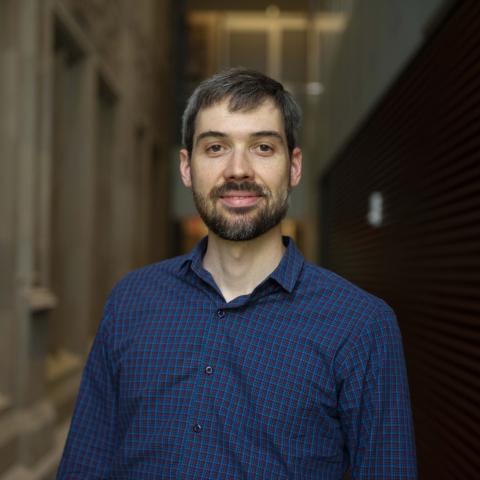
Andrew M. Guess

Andrew M. Guess

· Associate Professor

Princeton University · Politics

Active 2014–2026

h-index33
Citations7.3k
Papers7358 last 5y
Funding

Academic metrics are sourced from OpenAlex and public funding records; values may differ from Google Scholar.

See your match with Andrew M. Guess — sign in to PhdFit.Sign in

About

Andrew M. Guess is an associate professor of politics and public affairs at Princeton University. His research employs quantitative and computational methods to investigate the relationship between digital media and politics. His work addresses key questions such as the extent to which digital and social media facilitate encounters with differing political perspectives, the prevalence and effects of online misinformation, and the relationship between social media and political outcomes including polarization and trust. Additionally, he explores how social platforms can improve knowledge and promote news diet quality, as well as how researchers can use survey and digital trace data to measure concepts related to digital media and politics. He is also a founding co-editor of the Journal of Quantitative Description: Digital Media, alongside Kevin Munger and Eszter Hargittai, contributing to the development of the journal's philosophy and goals.

Research topics

  • Political Science
  • Computer Science
  • Sociology
  • Internet privacy
  • Law
  • Psychology
  • Advertising
  • Social psychology
  • Business
  • Media studies

Selected publications

  • A digital media literacy intervention increases discernment between mainstream and false news in the United States and India

    Proceedings of the National Academy of Sciences · 2020 · 715 citations

    1st authorCorresponding

    Widespread belief in misinformation circulating online is a critical challenge for modern societies. While research to date has focused on psychological and political antecedents to this phenomenon, few studies have explored the role of digital media literacy shortfalls. Using data from preregistered survey experiments conducted around recent elections in the United States and India, we assess the effectiveness of an intervention modeled closely on the world's largest media literacy campaign, wh…

  • Exposure to untrustworthy websites in the 2016 US election

    Nature Human Behaviour · 2020 · 560 citations

    1st authorCorresponding
  • Like-minded sources on Facebook are prevalent but not polarizing

    Nature · 2023 · 296 citations

    . Here we present data from 2020 for the entire population of active adult Facebook users in the USA showing that content from 'like-minded' sources constitutes the majority of what people see on the platform, although political information and news represent only a small fraction of these exposures. To evaluate a potential response to concerns about the effects of echo chambers, we conducted a multi-wave field experiment on Facebook among 23,377 users for whom we reduced exposure to content fro…

  • Asymmetric ideological segregation in exposure to political news on Facebook

    Science · 2023 · 291 citations

    Does Facebook enable ideological segregation in political news consumption? We analyzed exposure to news during the US 2020 election using aggregated data for 208 million US Facebook users. We compared the inventory of all political news that users could have seen in their feeds with the information that they saw (after algorithmic curation) and the information with which they engaged. We show that (i) ideological segregation is high and increases as we shift from potential exposure to actual ex…

  • How do social media feed algorithms affect attitudes and behavior in an election campaign?

    Science · 2023 · 286 citations

    1st authorCorresponding

    We investigated the effects of Facebook's and Instagram's feed algorithms during the 2020 US election. We assigned a sample of consenting users to reverse-chronologically-ordered feeds instead of the default algorithms. Moving users out of algorithmic feeds substantially decreased the time they spent on the platforms and their activity. The chronological feed also affected exposure to content: The amount of political and untrustworthy content they saw increased on both platforms, the amount of c…

Frequent coauthors

  • Brendan Nyhan

    136 shared
  • Jason Reifler

    University of Exeter

    75 shared
  • Benjamin Lyons

    University of Utah

    67 shared
  • Jacob Montgomery

    Washington University in St. Louis

    65 shared
  • Michael Lerner

    56 shared
  • Neelanjan Sircar

    Centre for Policy Research

    56 shared
  • Pablo Barberá

    New York University

    44 shared
  • Simon Munzert

    Hertie School

    35 shared

Education

  • Ph.D., Political Science

    Columbia University

    2015

Similar researchers at Princeton University

  • Resume-aware match score
  • Save to shortlist
  • AI-drafted outreach

See your match with Andrew M. Guess

PhdFit ranks faculty by your research interests, methods, and publications — grounded in their actual work, not templates.

  • Free to start
  • No credit card
  • 30-second signup