
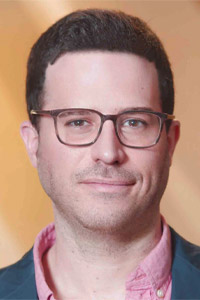
Fernando Llanos
· Assistant ProfessorUniversity of Texas at Austin · Linguistics
Active 2010–2026
Academic metrics are sourced from OpenAlex and public funding records; values may differ from Google Scholar.
About
Fernando Llanos is the lab director of the UT Austin Neuro Linguistics Lab, where he oversees research in neurolinguistics, focusing on the processing and acquisition of speech patterns across multiple languages, including indigenous languages in Latin America. His work involves conducting behavioral and neuroscientific studies, analyzing neural signals, and developing computational models related to speech and language processing. He has contributed to understanding neural responses to speech, prosodic patterns, and the neural basis of linguistic principles, with numerous publications in the field. His research aims to advance knowledge of how the brain processes language and speech, integrating neuroscientific methods with linguistic theory.
Research topics
- Artificial Intelligence
- Computer Science
- Neuroscience
- Medicine
- Psychology
- Machine Learning
- Audiology
- Speech recognition
- Linguistics
- Communication
Selected publications
The neural processing of pitch accents in continuous speech
Neuropsychologia · 2021-05-11 · 17 citations
articleOpen access1st authorPitch accents are local pitch patterns that convey differences in word prominence and modulate the information structure of the discourse. Despite the importance to discourse in languages like English, neural processing of pitch accents remains understudied. The current study investigates the neural processing of pitch accents by native and non-native English speakers while they are listening to or ignoring 45 min of continuous, natural speech. Leveraging an approach used to study phonemes in na…
Bayesian Semiparametric Longitudinal Drift-Diffusion Mixed Models for Tone Learning in Adults
Journal of the American Statistical Association · 2020 · 15 citations
Understanding how adult humans learn nonnative speech categories such as tone information has shed novel insights into the mechanisms underlying experience-dependent brain plasticity. Scientists have traditionally examined these questions using longitudinal learning experiments under a multi-category decision making paradigm. Drift-diffusion processes are popular in such contexts for their ability to mimic underlying neural mechanisms. Motivated by these problems, we develop a novel Bayesian sem…
Frontiers in Human Neuroscience · 2022-07-09 · 14 citations
articleOpen accessfor phonetic learning (6∼12 months), evidenced by improved native speech processing and declined non-native speech processing, represents an early milestone in language acquisition. We examined the extent that sensory encoding of speech is altered by experience during this period by testing two hypotheses: (1) early sensory encoding of non-native speech declines as infants gain native-language experience, and (2) music intervention reverses this decline. We longitudinally measured the frequency-…
JASA Express Letters · 2022-05-01 · 4 citations
articleOpen access1st authorThe frequency-following response (FFR) is a scalp-recorded signal that reflects phase-locked activity from neurons across the auditory system. In addition to capturing information about sounds, the FFR conveys biometric information, reflecting individual differences in auditory processing. To investigate the development of FFR biometric patterns, we trained a pattern recognition model to recognize infants (N = 16) from FFRs collected at 7 and 11 months. Model recognition scores were used to inde…
Cortical processing of discrete prosodic patterns in continuous speech
Nature Communications · 2025-03-03 · 3 citations
articleOpen accessProsody has a vital function in speech, structuring a speaker’s intended message for the listener. The superior temporal gyrus (STG) is considered a critical hub for prosody, but the role of earlier auditory regions like Heschl’s gyrus (HG), associated with pitch processing, remains unclear. Using intracerebral recordings in humans and non-human primate models, we investigated prosody processing in narrative speech, focusing on pitch accents—abstract phonological units that signal word prominenc…
Frequent coauthors
- 30 shared
Bharath Chandrasekaran
University of Pittsburgh
- 12 shared
Alexander L. Francis
Purdue University West Lafayette
- 8 shared
Olga Dmitrieva
Purdue University System
- 8 shared
T. Christina Zhao
University of Washington
- 6 shared
Abhra Sarkar
The University of Texas at Austin
- 6 shared
Amanda A. Shultz
Purdue University System
- 6 shared
G. Nike Gnanateja
University of Wisconsin–Madison
- 6 shared
Patricia K. Kuhl
University of Washington
Labs
Similar researchers at University of Texas at Austin
- Resume-aware match score
- Save to shortlist
- AI-drafted outreach
See your match with Fernando Llanos
PhdFit ranks faculty by your research interests, methods, and publications — grounded in their actual work, not templates.
- Free to start
- No credit card
- 30-second signup