
Resume-aware faculty matching

Find professors who actually fit you

Upload your resume. Four AI agents analyze your background, rank the faculty who fit, inspect their recent research, and help you draft outreach — grounded in their actual work, not templates.

Free to startNo credit cardCancel anytime
Top matches Balanced preset
Dr. Sarah Chen
Stanford · Interpretability · NLP
91
Dr. Marcus Holloway
MIT · Robotics · RL
84
Dr. Aisha Okonkwo
CMU · Fairness · HCI
82
Nova · Professor Researcher · re-ranking top 20…
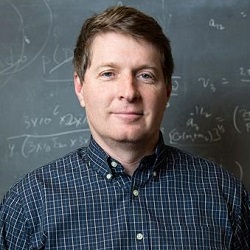
Eric Agol

Eric Agol

· Professor, AstronomyVerified

University of Washington · Earth and Space Sciences

Active 1994–2026

h-index88
Citations34.0k
Papers55387 last 5y
Funding$1.6M
See your match with Eric Agol — sign in to PhdFit.Sign in

About

Eric Agol is a professor in the Department of Astronomy with a research focus on exoplanets, including their detection, habitability, and biosignatures. He has created widely used modeling code for transits of extrasolar planets and helped originate the idea of detecting and characterizing planets through transit time variations. Agol is a former member of the Kepler team, where he led the discovery and characterization of Kepler's first potentially rocky exoplanet within the habitable zone (Kepler 62f), as well as a super-Earth and mini-Neptune (Kepler 36). He has contributed to the characterization of circumbinary planet systems, including the first two-planet system orbiting a binary star (Kepler 38 and 47), and has postulated the possibility of long-lived habitable planets around white dwarf stars. His interests extend to atmospheric modeling of hot Jupiters, coronagraphic imaging, radial velocity surveys, and mapping of extrasolar planets using their time-dependent variations. Agol has also helped characterize Earth-sized transiting exoplanets in the TRAPPIST-1 system, contributing significantly to the field of exoplanet research.

Research topics

  • Astrophysics
  • Physics
  • Astronomy
  • Astrobiology
  • Meteorology
  • Chemistry

Selected publications

  • No thick atmosphere around TRAPPIST-1 b and c from JWST thermal phase curves

    Nature Astronomy · 2026-04-03

    article
  • JWST TRAPPIST-1 e/b Program: Motivation and First Observations

    The Astronomical Journal · 2026-01-22 · 1 citations

    articleOpen access

    Abstract One of the forefront goals in the field of exoplanets is the detection of an atmosphere on a temperate terrestrial exoplanet, and among the best suited systems to do so is TRAPPIST-1. However, JWST transit observations of the TRAPPIST-1 planets show significant contamination from stellar surface features that we are unable to confidently model. Here, we present the motivation and first observations of our JWST multicycle program of TRAPPIST-1 e, which utilize close transits of the airless TRAPPIST-1 b to model-independently correct for stellar contamination, with the goal of determining whether TRAPPIST-1 e has an Earth-like mean molecular weight atmosphere containing CO 2 . We present our simulations, which show that with 15 close transit observations, we will be able to detect this atmosphere on TRAPPIST-1 e at <mml:math xmlns:mml="http://www.w3.org/1998/Math/MathML" overflow="scroll"> <mml:mi mathvariant="normal">Δ</mml:mi> <mml:mi>ln</mml:mi> <mml:mspace width="0.25em"/> <mml:mi>Z</mml:mi> <mml:mo>=</mml:mo> <mml:mn>5</mml:mn> </mml:math> or greater confidence assuming we are able to correct for stellar contamination using the close transit observations. We also show the first three observations of our program. We find that our ability to correct for stellar contamination can be inhibited when strong stellar flares are present, as flares can break the assumption that the star does not change meaningfully between planetary transits. The cleanest observation demonstrates the removal of stellar contamination contribution through an increased preference for a flat line over the original TRAPPIST-1 e spectrum, but highlights how minor data analysis assumptions can propagate significantly when searching for small atmospheric signals. This is amplified when using the signals from multiple planets, which is important to consider as we continue our atmospheric search.

  • Updated Masses for the Gas Giants in the Eight-planet Kepler-90 System Via Transit-timing Variation and Radial Velocity Observations

    The Astronomical Journal · 2025-08-05 · 1 citations

    articleOpen accessCorresponding

    Abstract The eight-planet Kepler-90 system exhibits the greatest multiplicity of planets found to date. All eight planets are transiting and were discovered in photometry from the NASA Kepler primary mission. The two outermost planets, g ( P g = 211 days) and h ( P h = 332 days), exhibit significant transit-timing variations (TTVs), but were only observed six and three times, respectively, by Kepler. These TTVs allow for the determination of planetary masses through dynamical modeling of the pair’s gravitational interactions, but the paucity of transits allows a broad range of solutions for the masses and orbital ephemerides. To determine accurate masses and orbital parameters for planets g and h, we combined 34 radial velocities (RVs) of Kepler-90, collected over a decade, with the Kepler transit data. We jointly modeled the transit times of the outer two planets and the RV time series, then used our two-planet model to predict their future times of transit. These predictions led us to recover a transit of Kepler-90 g with ground-based observatories in 2024 May. We then combined the 2024 transit and several previously unpublished transit times of planets g and h with the Kepler photometry and RV data to update the masses and linear ephemerides of the planets, finding masses for g and h of 15.0 ± 1.3 M ⊕ and 203 ± 16 M ⊕, respectively, from a Markov Chain Monte Carlo analysis. These results enable further insights into the architecturally rich Kepler-90 system and pave the way for atmospheric characterization with space-based facilities.

  • First JWST thermal phase curves of temperate terrestrial exoplanets reveal no thick atmosphere around TRAPPIST-1 b and c

    ArXiv.org · 2025-09-02

    preprintOpen access

    International audience

  • Transit Timing and Duration Variations for the Discovery and Characterization of Exoplanets in the TESS Era

    2025-01-01 · 1 citations

    book-chapter1st authorCorresponding
  • A Ground-Based Transit Observation of the Long-Period Extremely Low-Density Planet HIP 41378 f

    ArXiv.org · 2025-06-26

    preprintOpen access

    We present a ground-based transit detection of HIP 41378 f, a long-period ($P = 542$ days), extremely low-density ($0.09 \pm 0.02$ g cm$^{-3}$) giant exoplanet in a dynamically complex system. Using photometry from Tierras, TRAPPIST-North, and multiple LCOGT sites, we constrain the transit center time to $T_{C,6} = 2460438.891 \pm 0.052$ BJD TDB. This marks only the second ground-based detection of HIP 41378 f, currently the longest-period and longest-duration transiting exoplanet observed from the ground. We use this new detection, along with a recently published transit time from Rossiter-McLaughlin observations, to update the TTV solution for HIP 41378 f. We predict the next two transits will occur at $T_{C,7} = 2460980.793^{+0.098}_{-0.129}$ BJD TDB (2025 November 1) and $T_{C,8} = 2461522.653^{+0.213}_{-0.238}$ BJD TDB (2027 April 27). Incorporating new TESS Sector 88 data, we also rule out the 101-day orbital period alias for HIP 41378 d, and find that the remaining viable solutions are centered on the 278, 371, and 1113-day aliases. The latter two imply dynamical configurations that challenge the canonical view of planet e as the dominant perturber of planet f. Our results suggest that HIP 41378 d may instead play the leading role in shaping the TTV of HIP 41378 f.

  • Updated Masses for the Gas Giants in the Eight-Planet Kepler-90 System Via Transit-Timing Variation and Radial Velocity Observations

    ArXiv.org · 2025-07-18

    preprintOpen access

    The eight-planet Kepler-90 system exhibits the greatest multiplicity of planets found to date. All eight planets are transiting and were discovered in photometry from the NASA Kepler primary mission. The two outermost planets, g ($P_g$ = 211 d) and h ($P_h$ = 332 d) exhibit significant transit-timing variations (TTVs), but were only observed 6 and 3 times respectively by Kepler. These TTVs allow for the determination of planetary masses through dynamical modeling of the pair's gravitational interactions, but the paucity of transits allows a broad range of solutions for the masses and orbital ephemerides. To determine accurate masses and orbital parameters for planets g and h, we combined 34 radial velocities (RVs) of Kepler-90, collected over a decade, with the Kepler transit data. We jointly modeled the transit times of the outer two planets and the RV time series, then used our two-planet model to predict their future times of transit. These predictions led us to recover a transit of Kepler-90 g with ground-based observatories in May 2024. We then combined the 2024 transit and several previously unpublished transit times of planets g and h with the Kepler photometry and RV data to update the masses and linear ephemerides of the planets, finding masses for g and h of $15.0 \pm 1.3\, M_\oplus$, and $203 \pm 16\, M_\oplus$ respectively from a Markov Chain Monte Carlo analysis. These results enable further insights into the architecturally rich Kepler-90 system and pave the way for atmospheric characterization with space-based facilities.

  • Modeling the Solar System. I. Characterization Limits from Analytic Timing Variations

    The Planetary Science Journal · 2025-11-01

    articleOpen accessSenior author

    Abstract Planetary systems with multiple transiting planets are beneficial for understanding planet occurrence rates and system architectures. Although we have yet to find a solar system (SS) analog, future surveys may detect multiple terrestrial planets transiting a Sun-like star. In this work, we simulate transit-timing observations of our system based on the actual orbital motions of Venus and Earth + Moon (EM)—influenced by the other SS objects—and retrieve the system’s dynamical parameters for varying noise levels and observing durations. Using an approximate coplanar N -body model for transit-time variations, we consider test configurations with two, three, and four planets. For various observing baselines, we can robustly retrieve the masses and orbits of Venus and EM, detect Jupiter at high significance (for &lt;90 s timing error and baseline ≤15 yr), and detect Mars at 5 σ confidence (with &lt;20 s timing error and baseline ≥27 yr) using TTVFaster . We also find that the three-planet model is generally preferred, and we provide equations to estimate the mass precision of Venus/Earth/Jupiter analogs. The addition of Mars—which is near a 2:1 mean-motion resonance with Earth—improves our retrieval of Jupiter’s parameters, suggesting that unseen terrestrials could interfere in the characterization of multiplanetary systems. Our findings are comparable to theoretical limits based on stellar variability and may eventually be possible.

  • The Exoplanet Edge: Planets Do Not Induce Observable Transit Timing Variations with a Dominant Transit Timing Variation Period Faster than Half Their Orbital Period

    The Astrophysical Journal Letters · 2025-05-09 · 3 citations

    articleOpen access

    Abstract Transit timing variations (TTVs) are observed for exoplanets at a range of amplitudes and periods, yielding an ostensibly degenerate forest of possible explanations. We offer some clarity in this forest, showing that systems with a distant perturbing planet preferentially show TTVs with a dominant period equal to either the perturbing planet’s period or half the perturbing planet’s period. We demonstrate that planet-induced TTVs are not expected with dominant TTV periods below this exoplanet edge (lower period limit) and that systems with TTVs that fall below this limit likely contain additional mass in the system. We present an explanation for both of these periods, showing that both aliasing of the conjunction-induced synodic period and the near 1:2 resonance superperiod and tidal effects induce TTVs at periods equal to either the perturber’s orbit or half-orbit. We provide three examples of known systems for which the recovered TTV period induced by a distant perturbing planet is equal to the perturber’s orbital period or half its orbital period. We then investigate Kepler two-planet systems with TTVs and identify 13 two-planet systems with TTVs below this TTV period lower limit, thus potentially uncovering the gravitational influence of new planets and/or moons. We conclude by discussing how the exoplanet edge effects can be used to predict the presence of distant companion planets in situations where TTVs are detected and where nearby companions can be ruled out by additional observations, such as radial velocity data.

  • A differentiable N-body code for transit timing and dynamical modelling - II. Photodynamics

    Monthly Notices of the Royal Astronomical Society · 2025-05-05 · 1 citations

    articleOpen accessSenior author

    ABSTRACT Exoplanet transits contain substantial information about the architecture of a system. By fitting transit light curves we can extract dynamical parameters and place constraints on the properties of the planets and their host star. Having a well-defined probabilistic model plays a crucial role in making robust measurements of these parameters, and the ability to differentiate the model provides access to more robust inference tools. Gradient-based inference methods can allow for more rapid and accurate sampling of high-dimensional parameter spaces. We present a fully differentiable photodynamical model for multiplanet transit light curves that display transit-timing variations. We model time-integrated exposures, compute the dynamics of a system over the full length of observations, and provide analytic expressions for derivatives of the flux with respect to the dynamical and photometric model parameters. The model has been implemented in the Julia language and is available open-source on GitHub. We demonstrate with a simulated data set that Bayesian inference with the NUTS HMC algorithm, which uses the model gradient, can outperform the affine-invariant (e.g. emcee) MCMC algorithm in CPU time per effective sample, and we find that the relative sampling efficiency improves with the number of model parameters.

Recent grants

Frequent coauthors

  • Émeline Bolmont

    University of Geneva

    83 shared
  • Franck Selsis

    Centre National de la Recherche Scientifique

    82 shared
  • Drake Deming

    81 shared
  • Rodrigo Luger

    Flatiron Institute

    77 shared
  • Nicolas B. Cowan

    76 shared
  • Elsa Ducrot

    Astrophysique, Instrumentation et Modélisation

    75 shared
  • S. Hoyer

    73 shared
  • Jonathan J. Fortney

    University of California, Santa Cruz

    66 shared

Education

  • Ph.D., Astronomy

    University of California, Berkeley

    1998
  • M.S., Astronomy

    University of California, Berkeley

    1995
  • B.S., Physics

    University of California, Los Angeles

    1992
  • Resume-aware match score
  • Save to shortlist
  • AI-drafted outreach

See your match with Eric Agol

PhdFit ranks faculty by your research interests, methods, and publications — grounded in their actual work, not templates.

  • Free to start
  • No credit card
  • 30-second signup