
Resume-aware faculty matching

Find professors who actually fit you

Upload your resume. Four AI agents analyze your background, rank the faculty who fit, inspect their recent research, and help you draft outreach — grounded in their actual work, not templates.

Free to startNo credit cardCancel anytime
Top matches Balanced preset
Dr. Sarah Chen
Stanford · Interpretability · NLP
91
Dr. Marcus Holloway
MIT · Robotics · RL
84
Dr. Aisha Okonkwo
CMU · Fairness · HCI
82
Nova · Professor Researcher · re-ranking top 20…
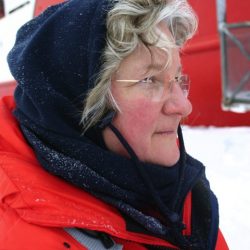
Jody Deming

Jody Deming

· Karl M. Banse Endowed Professor, Oceanography

University of Washington · Earth and Space Sciences

Active 1978–2026

h-index64
Citations13.7k
Papers17519 last 5y
Funding$2.4M
See your match with Jody Deming — sign in to PhdFit.Sign in

About

Jody W. Deming earned her Ph.D. in marine Microbiology from the University of Maryland in 1981, following a B.A. in Biological Sciences cum laude from Smith College in 1974. She developed microbial life detection assays for NASA between 1974 and 1977 and received NSF and NOAA postdoctoral fellowships for deep-sea research at the Scripps Institution of Oceanography and Johns Hopkins University from 1981 to 1983. Her research included Alvin dives at deep-sea hydrothermal vents, and she continued her work at Johns Hopkins before moving to the University of Washington in 1988, where she is a Professor in the School of Oceanography. Her research focuses on microbial life in extreme environments, including the Arctic Ocean and sea-ice cover, and she has directed various programs such as the Marine Bioremediation Program and the Center for Environmental Genomics. She helped establish the nation’s first graduate training program in Astrobiology and has directed the Future of Ice Initiative. Deming has led over 50 seagoing or ice-related expeditions, served as chair of the International Arctic Polynya Program, and participated in the US Polar Research Board during the International Polar Year. She has received numerous awards, including the US Coast Guard Arctic Service Medal, an Honorary Doctorate from Université Laval, and the Karl M. Banse Endowed Professorship. She is Editor-in-Chief of the Ocean Science domain of Elementa: Science of the Anthropocene, a member of the American Academy of Microbiology, and of the US National Academy of Sciences.

Research topics

  • Genetics
  • Oceanography
  • Geology
  • Biology
  • Evolutionary biology
  • Ecology
  • Chemistry
  • Computational biology
  • Environmental science

Selected publications

  • The Tara Polaris scientific vision: Advancing our understanding of the central Arctic Ocean to better address life in the Earth System

    2026-01-09

    preprintOpen access

    The Arctic Ocean is currently experiencing, at the forefront of global concerns, the pressures of climate change and global pollution. To boost our ability to understand the state of this ecosystem, its evolution in this context and its resilience, the Tara Ocean Foundation has built the Tara Polar Station (TPS), intended to become a permanent observatory of the central Arctic Ocean. The objective of this initiative is threefold: to deepen our knowledge of the foundations of life in an ice-covered polar ocean, to better understand the dynamics of the coupled ocean-ice-atmosphere system and the role of living organisms, and to identify long-term trends in the main characteristics of the Central Arctic Ocean ecosystem resulting from global change. In this article, we describe the vision that guided the development of the Tara Polaris scientific programme, and more specifically the first of ten transpolar drifts that will be undertaken over the next 20 years aboard the TPS (Tara Polaris I, II, III, etc.). The research activities of the Tara Polaris I expedition will be grouped under four specific but interrelated themes: biosphere-atmosphere interactions, epi- and mesopelagic life in an ice-covered ocean, life in sea ice, and pollution. In addition, a theme that cuts across all environmental compartments and disciplines, and is implemented on all Tara Polaris expeditions, is the establishment of an observatory that will monitor the main sentinels of this ecosystem. This umbrella article introduces these different themes, which are then described in more detail in four other articles in this Special Feature, in addition to an article describing the technical characteristics of the TPS.

  • Microbial life in Arctic pack ice: Prospects for the Tara Polaris expeditions

    HAL (Le Centre pour la Communication Scientifique Directe) · 2026-01-06

    article

    International audience

  • The Tara Polaris scientific vision: Advancing our understanding of the central Arctic Ocean to better address life in the Earth System

    ArXiv.org · 2026-01-09

    articleOpen access

    The Arctic Ocean is currently experiencing, at the forefront of global concerns, the pressures of climate change and global pollution. To boost our ability to understand the state of this ecosystem, its evolution in this context and its resilience, the Tara Ocean Foundation has built the Tara Polar Station (TPS), intended to become a permanent observatory of the central Arctic Ocean. The objective of this initiative is threefold: to deepen our knowledge of the foundations of life in an ice-covered polar ocean, to better understand the dynamics of the coupled ocean-ice-atmosphere system and the role of living organisms, and to identify long-term trends in the main characteristics of the Central Arctic Ocean ecosystem resulting from global change. In this article, we describe the vision that guided the development of the Tara Polaris scientific programme, and more specifically the first of ten transpolar drifts that will be undertaken over the next 20 years aboard the TPS (Tara Polaris I, II, III, etc.). The research activities of the Tara Polaris I expedition will be grouped under four specific but interrelated themes: biosphere-atmosphere interactions, epi- and mesopelagic life in an ice-covered ocean, life in sea ice, and pollution. In addition, a theme that cuts across all environmental compartments and disciplines, and is implemented on all Tara Polaris expeditions, is the establishment of an observatory that will monitor the main sentinels of this ecosystem. This umbrella article introduces these different themes, which are then described in more detail in four other articles in this Special Feature, in addition to an article describing the technical characteristics of the TPS.

  • Chemoautotrophy in subzero environments and the potential for cold-adapted Rubisco

    Applied and Environmental Microbiology · 2025-05-30 · 5 citations

    articleOpen access

    ABSTRACT The act of fixing inorganic carbon into the biosphere is largely facilitated by one enzyme, Rubisco. Beyond well-studied plants and cyanobacteria, many bacteria use Rubisco for chemolithoautotrophy in extreme environments on Earth. Here, we characterized the diversity of autotrophic pathways and chemolithoautotrophic Rubiscos from two distinct subzero, hypersaline Arctic environments: 40-kyr relic marine brines encased within permafrost (cryopeg brines) and first-year sea ice. The Calvin-Benson-Bassham (CBB) cycle was widely found in both environments, although with different predominant Rubisco forms. From cryopeg brine, reconstructions of metagenome-assembled genomes (MAGs) uncovered four MAGs with the potential for chemolithoautotrophy, of which the CBB-containing genus Thiomicrorhabdus was most abundant. A broader survey of Thiomicrorhabdus genomes from diverse environments identified a core complement of three Rubisco forms (II, IAc, IAq) with a complex pattern of gain and loss, with form II constitutively present in genomes from subzero environments. Using representative kinetic data, we modeled carboxylation rates of Rubisco forms II, IAc, and IAq across CO 2 , O 2 , and temperature conditions. We found that form II outcompetes form I at low O 2 , but cold temperatures minimize this advantage. Inspection of form II from genomes from cold environments identified signals of potential thermal adaptation due to key amino acid substitutions, which resulted in a more exposed active site. We argue that subzero form II from Thiomicrorhabdus warrants further study as it may have unique kinetics or thermal stability. This work can help address the limits of autotrophic functionality in extreme environments on Earth and other planetary bodies. IMPORTANCE Autotrophy, or the fixation of inorganic carbon to biomass, is a key factor in life’s ability to thrive on Earth. Research on autotrophy has focused on plants and algae, but many bacteria are also autotrophic and can survive and thrive under more extreme conditions. These bacteria are a window to past autotrophy on Earth, as well as potential autotrophy in extreme environments elsewhere in the universe. Our study focused on dark, cold, saline environments, which are likely to be found on Enceladus and Europa, as well as in the Martian subsurface. We found evidence for potential cold adaptation in a key autotrophic enzyme, Rubisco, which could expand the known boundaries of autotrophy in rapidly disappearing icy environments on Earth. We also present a novel model framework that can be used to probe the limits of autotrophy not only on Earth but also on key astrobiological targets like Enceladus and Europa.

  • Phyloecology of sea ice bacteria and archaea

    2025-08-06 · 1 citations

    other
  • Life in the Frozen Ocean

    Annual Review of Marine Science · 2025-07-28 · 1 citations

    reviewOpen access

    Present seasonally or year-round in polar and subpolar seas, sea ice is one of the most complex and biologically rich ecosystems on Earth. Throughout the history of our planet, sea ice has periodically covered vast proportions of the world's oceans, and it may also serve as a plausible habitat on other ocean worlds. In this review, we provide a comprehensive overview of current knowledge on sea ice as a habitat, both on Earth and in extraterrestrial environments. We focus on bacteria, microalgae, and their associated viruses, describing the key physicochemical characteristics that shape this unique ecosystem. Additionally, we explore hypotheses on how microorganisms colonize sea ice, survive by protecting themselves and altering their environment, and ultimately proliferate and evolve. Finally, we consider the potential role of the sea-ice microbiome in the evolution of life on Earth and its possible existence beyond our planet.

  • Data from: Extant life detection using label-free video microscopy in analog aquatic environments

    DRYAD · 2025-02-27

    datasetOpen access

    The ability of microbial morphology, active motion, and refractive index to serve as biosignatures was investigated by in situ video microscopy in a wide range of extreme field sites where such imaging had not previously been performed. These sites allowed for sampling seawater, sea ice brines, cryopeg brines, hypersaline pools and seeps, hyperalkaline springs, and glaciovolcanic cave ice. In all samples, except the cryopeg brine, active motion was observed without any sample treatment. Active motion was observed in the cryopeg brines when samples were subjected to temperature gradient above in situ. Levels of prokaryotic motility were, in general, low in the field samples collected at temperatures < 4ºC. Non-motile cells could be distinguished from microminerals by differences in passive motion (e.g., density measured by sinking/floating), refractive index and/or absorbance, or morphology in the case of larger eukaryotes. Dramatic increases in the fraction of motile cells were seen with simple stimuli such as warming or the addition of L-serine. Chemotaxis and thermotaxis were also observed in select samples. An open-source, autonomous software package with computational requirements that can be scaled to spaceflight computers was used to classify the data. These results demonstrate the utility of volumetric light microscopy for life detection, but also suggest the importance of developing methods to stimulate cells in situ and process data using the restrictions imposed by mission bandwidth, as well as instruments to capture cell-like objects for detailed chemical analysis.

  • Multiple roles of DNA methylation in sea-ice bacterial communities and associated viruses

    The ISME Journal · 2025-01-01 · 2 citations

    articleOpen accessSenior author

    Despite growing evidence for the role of DNA methylation in bacterial acclimation to environmental stress, this epigenetic mechanism remains unexplored in sea-ice microbial communities known to tolerate multiple stressors. This study presents a first analysis of DNA methylation patterns in bacterial communities and associated viruses across the vertical thickness of sea-ice. Using a novel stepped-sackhole method, we collected sea-ice brines from distinct horizons of an Arctic ice floe, capturing microbial communities that had been exposed to different environmental conditions. Through Oxford Nanopore sequencing, we characterized methylation patterns in bacterial and associated viral DNA, analysing for methylation motifs and differences between ice horizons. We identified 22 unique bacterial methylation motifs and 27 viral motifs across three nucleotide methylation types (5mC, 6 mA, and 4mC), with evidence of differential methylation between upper and lower ice. Analysis of metagenome-assembled genomes revealed the regulatory potential of methylation in both ice-adapted (Psychromonas and Polaribacter) and nonadapted bacteria (Pelagibacter); e.g. in Pelagibacter, differential methylation of the GANTC motif between upper and lower ice affected genes involved in core cellular processes. Viral methylation patterns showed evidence of recent infection. We also identified orphan methyltransferases in sea-ice phages, suggesting a mechanism for bypassing host restriction-modification systems and regulating host genes. Our findings reveal that DNA methylation serves functions in sea-ice beyond traditional restriction-modification systems that protect against foreign DNA, opening new avenues for research on the role of epigenetic mechanisms not only in acclimation to the cryosphere but also more generally in microbial ecology and evolution.

  • Extant life detection using label-free video microscopy in analog aquatic environments

    PLoS ONE · 2025-03-12 · 2 citations

    articleOpen accessCorresponding

    The ability of microbial active motion, morphology, and optical properties to serve as biosignatures was investigated by in situ video microscopy in a wide range of extreme field sites where such imaging had not been performed previously. These sites allowed for sampling seawater, sea ice brines, cryopeg brines, hypersaline pools and seeps, hyperalkaline springs, and glaciovolcanic cave ice. In all samples except the cryopeg brine, active motion was observed without any sample treatment. Active motion was observed in the cryopeg brines when samples were subjected to a temperature gradient above in situ. In general, levels of motility were low in the field samples collected at temperatures < 4ºC. Non-motile cells could be distinguished from microminerals by differences in passive motion (e.g., density measured by sinking/floating), refractive index and/or absorbance, or morphology in the case of larger eukaryotes. Dramatic increases in the fraction of motile cells were seen with simple stimuli such as warming or the addition of L-serine. Chemotaxis and thermotaxis were also observed in select samples. An open-source, autonomous software package with computational requirements that can be scaled to spaceflight computers was used to classify the data. These results demonstrate the utility of volumetric light microscopy for life detection, but also suggest the importance of developing methods to stimulate cells in situ and process data using the restrictions imposed by mission bandwidth, as well as instruments to capture cell-like objects for detailed chemical analysis.

  • Exceeding expectations out in the cold with Colwellia

    Nature Microbiology · 2024-04-26 · 2 citations

    article1st authorCorresponding

Recent grants

Frequent coauthors

Labs

Education

  • Ph.D., Astrophysics

    University of Washington

    1995
  • M.S., Astronomy

    University of Washington

    1991
  • B.S., Physics

    University of California, San Diego

    1987

Awards & honors

  • US Coast Guard Arctic Service Medal (1993)
  • Honorary Doctorate in Science and Engineering, Université La…
  • Walters Endowed Professorship (2009–2016)
  • Hasselblad Guest Professor, University of Göteburg, Sweden (…
  • Karl M. Banse Endowed Professorship (2016– present)
  • Resume-aware match score
  • Save to shortlist
  • AI-drafted outreach

See your match with Jody Deming

PhdFit ranks faculty by your research interests, methods, and publications — grounded in their actual work, not templates.

  • Free to start
  • No credit card
  • 30-second signup