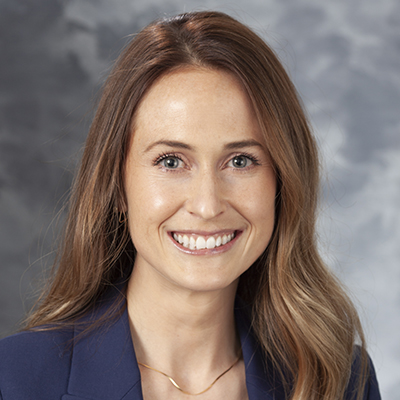
Jacqueline Israel
· Assistant ProfessorUniversity of Wisconsin-Madison · Plastic Surgery
Active 1887–2026
About
Dr. Jacqueline Israel is an Assistant Professor in the Division of Plastic Surgery at the University of Wisconsin School of Medicine and Public Health. She is a board-certified, fellowship-trained reconstructive plastic surgeon specializing in a wide range of procedures including hand and microvascular surgery, peripheral nerve surgery, and microsurgical breast reconstruction. She holds subspecialty certification in hand surgery and provides services such as Pediatric Hand Surgery, Abdominal Wall Reconstruction, Arthritic Reconstructions, Breast Reconstruction, Carpal Tunnel Release, Digital Replantation, Hand Arthroplasty, Limb Salvage, Lower Extremity Reconstruction, Microvascular Reconstruction, Nerve Repair, Pediatric Plastic Surgery, Tendon Repairs, Wrist Reconstruction, and Nerve Decompression, among others. Dr. Israel's research interests include developing and studying strategies for optimizing surgical education, patient-reported outcomes after reconstructive surgery, and nerve pain syndromes and their effect on quality of life.
Research topics
- Medicine
- Surgery
- Computer Science
- Materials science
- Biomedical engineering
- Anatomy
- Chemistry
- Pathology
- Internal medicine
- Neuroscience
- Mathematics
- Biology
- Computer hardware
Selected publications
Etiologies of Wrist Arthritis in the Young Patient
Hand Clinics · 2026-02-16
articleSenior authorCorrespondingJournal of Plastic Reconstructive & Aesthetic Surgery · 2025-06-25
letterSenior authorAnnals of Plastic Surgery · 2025-09-01
articleSenior authorPURPOSE: Membership in professional societies offers valuable opportunities for personal and professional growth. For aspiring plastic surgeons (including students, residents, and fellows), these societies can support career development by aiding in residency application preparation, subspecialty exploration, research portfolio building, and the development of leadership and advocacy skills. This article highlights the opportunities available for trainees to engage with and advance in professional societies related to plastic surgery. DESIGN: We conducted web-based searches and consulted with plastic surgeons across various subspecialties to compile a list of relevant professional organizations. For each organization, we reviewed their websites and created tables categorizing programs related to leadership development, mentorship, research, and financial awards. RESULTS: We identified 20 professional societies offering opportunities for prospective plastic surgeons. The findings include 78 programs for trainees, ranging from leadership roles and advocacy groups to research funding, organized by category. These organizations provide significant resources that support the success of medical students and residents as they prepare for the next stage of their careers. CONCLUSIONS: Engagement in professional societies helps plastic surgery residents and interested medical students build meaningful relationships, gain exposure to the field, and access resources that support research, innovation, and career development. These opportunities may be particularly beneficial for medical students without home plastic surgery programs, as they offer experiences that may otherwise be unavailable. For residents, society involvement fosters mentorship and sponsorship, enhancing fellowship and job applications and facilitating the transition into early career practice.
Journal of Plastic Reconstructive & Aesthetic Surgery · 2025-06-04
letterPlastic & Reconstructive Surgery Global Open · 2025-02-01
articleOpen accessSenior authorCorrespondingBackground: Migraines are common and are associated with significant morbidity to patients and cost to the healthcare system. Headache surgery (HS) has emerged as a treatment option for patients with symptoms refractory to medical management, but its impact on patients' quality of life is incompletely understood. This study analyzed, via in-depth prospective patient interviews, patient perceptions of and experience with HS. Methods: Patients with history of migraines who were scheduled for HS were invited to participate in this study. Semistructured interviews were conducted by trained qualitative interviewers in the pre/postoperative periods. Interviews were transcribed verbatim, coded utilizing NVivo 12 Software, and queried to assess the impact of surgery on domains such as work, relationships, headache severity, and medication use. Predominant themes were identified and compared among subjects in the preoperative/postoperative periods. Subjects were recruited until thematic saturation was achieved. Results: Eleven patients were enrolled in this study. Nine patients completed preoperative/postoperative interviews an average of 1 month before and 33 months following surgery. Compared with the preoperative interview, postoperative transcript analysis revealed reduced migraine severity, greater ability to participate in work and personal relationships, improved medication efficacy, and better ability to control headaches. These shifting domains facilitated a transition in patient cognitive allocation with reduced migraine predominance in the postoperative setting. Conclusions: This novel study assessed the impact of HS on the quality of life in a prospective, qualitative manner. Our results suggest that HS may reduce migraine severity, improve patients' ability to work and engage in relationships, and improve patients' mental health overall.
19. Coaching for Success: Enhancing Medical Student Involvement in Plastic Surgery Research
Plastic & Reconstructive Surgery Global Open · 2025-06-01
articleOpen accessBACKGROUND: The increasingly competitive nature of the plastic surgery residency match process has raised the bar for research productivity among medical students. As a result, many aspiring plastic surgeons choose to take one or more research years to bolster their application, lengthening their medical education and incurring additional expenses in the process. For many, the high barrier of entry into plastic surgery research–owing to the specialized nature of the field and limited research opportunities–makes it difficult for them to gain experience earlier on in medical school. To address these challenges, we developed a structured research curriculum that can be implemented by plastic surgery research fellows, residents, and faculty to lower this barrier by progressively involving junior medical students in research projects and cultivating their skills. METHODS: The curriculum serves as a blueprint for research fellows, residents, and faculty to engage medical students in ways that maximize their contributions, prevent delays in research progress, and promote successful collaborative partnerships [Fig. 1]. The curriculum is organized into several key steps and built around a graduated model. First, an intake assessment allows students to provide information on their previous research experience and skills, specific interests in plastic surgery, and available time commitment. Next, students progress through a series of workshops and project-based learning experiences. Following these workshops, students engage in essential research activities such as data collection, data analysis, and manuscript revision. In the later stages, students undertake independent projects, applying the skills they have acquired throughout the curriculum. Each phase builds on the previous one, emphasizing increasing responsibilities and a strong focus on coaching and mentorship. RESULTS: Since its implementation, 12 first- and second-year medical students are participating in the program. Of the 16 trainees who completed the curriculum, 2 (12.5%) are early-career faculty, 10 (62.5%) are residents/fellows, and 4 (25%) are fourth-year medical students. The average number of publications is 40 for faculty, 17 for residents/fellows, and 8 for medical students. Key insights from initial implementation of the curriculum include the importance of clear communication, effective task management, assessing time commitments, providing necessary resources and training, setting achievable goals and deadlines, and cultivating resilience. CONCLUSION: Our initiative aims to establish a standardized curriculum that provides a scaffolded approach to research participation. By cultivating a supportive and structured research environment, we can better prepare the next generation of plastic surgeons to contribute meaningfully to the field.
Professional Development for Early-Career Plastic Surgeons
Annals of Plastic Surgery · 2025-05-20
articleSenior authorBACKGROUND: Professional development is relevant to physicians at all stages of one's career, including early in practice. Specialty society membership offers opportunities for personal and professional growth and collaboration in many realms, including clinical practice, education, research and leadership. For early-career plastic surgeons, engagement in professional societies can facilitate career development as young surgeons navigate decision making and challenges at the start of their practices. The purpose of this article is to provide information regarding opportunities for early-career involvement and growth in professional societies related to plastic surgery. METHODS: We sought to collate a single resource for early-career plastic surgeons as they hone their "brand" and seek additional engagement with their field. After web-based searches and seeking expert opinion from a variety of plastic surgeons, we generated a list of professional organizations and relevant opportunities. RESULTS: For each professional organization, we created tables with programs and corresponding descriptions in the categories of leadership development, mentorship, research, and financial awards and scholarships. We identified dozens of opportunities for early-career plastic surgeons, from leadership committees to advocacy groups to grant funding. CONCLUSIONS: Regardless of practice type, given the many advantages of pursuing opportunities within and supported by professional societies, we advocate for engagement of early-career plastic surgeons in these organizations.
Journal of Plastic Reconstructive & Aesthetic Surgery · 2025-07-08 · 1 citations
articleArchives of cardiovascular diseases · 2025-01-01
articleAbdominal Cutaneous Nerve Entrapment Syndrome (ACNES)
2025-01-01
book-chapterSenior author
Frequent coauthors
- 44 shared
Samuel O. Poore
University of Wisconsin–Madison
- 29 shared
Ahmed M. Afifi
University of Wisconsin–Madison
- 28 shared
John W. Siebert
- 19 shared
Aaron M. Dingle
University of Wisconsin–Madison
- 19 shared
Venkat K. Rao
Energy Center of Wisconsin
- 16 shared
John E. Hall
- 16 shared
Ashish Y. Mahajan
- 16 shared
John P. Kostuik
Phoenix (United States)
Education
M.D.
University of Wisconsin School of Medicine and Public Health
B.S.
University of Wisconsin-Madison
- Resume-aware match score
- Save to shortlist
- AI-drafted outreach
See your match with Jacqueline Israel
PhdFit ranks faculty by your research interests, methods, and publications — grounded in their actual work, not templates.
- Free to start
- No credit card
- 30-second signup