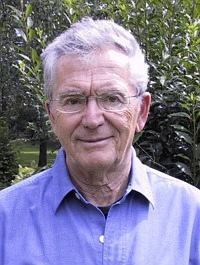
Horia Metiu
VerifiedUniversity of California, Santa Barbara · Chemistry and Biochemistry
Active 1970–2024
Research topics
- Materials science
- Organic chemistry
- Chemistry
- Inorganic chemistry
- Chemical engineering
- Thermodynamics
- Physical chemistry
- Computational chemistry
Selected publications
Dry reforming of methane catalysed by molten metal alloys
Nature Catalysis · 2020 · 305 citations
- Chemical engineering
- Chemistry
- Inorganic chemistry
Catalytic Methane Pyrolysis in Molten Alkali Chloride Salts Containing Iron
ACS Catalysis · 2020 · 110 citations
- Chemistry
- Inorganic chemistry
- Organic chemistry
Mixtures of molten iron–sodium-potassium chloride salts are found to be catalytic for methane pyrolysis. In a differential bubble column reactor, the apparent activation energy of the molten salt decreases from 301 kJ/mol for the eutectic NaCl-KCl to 171 kJ/mol for 3 wt % of iron-added as FeCl3. The solid carbon produced in the iron-containing salt mixture has a graphitic structure which is distinct from the more disordered carbon produced in the iron-free eutectic, suggesting a different solid carbon formation pathway. Results from H–D exchange investigations are consistent with a different reaction pathway for methane pyrolysis in the iron-containing NaCl-KCl melt than in the melt without Fe. The activity of the salt mixture was stable for over 50 h, producing molecular hydrogen and separable solid carbon. It is likely that the activity is due to the presence of Fe in molecular ions stabilized in the NaCl-KCl melt that facilitate the C–H bond activation in methane.
Catalytic Methane Pyrolysis with Liquid and Vapor Phase Tellurium
ACS Catalysis · 2020 · 91 citations
- Chemistry
- Physical chemistry
- Inorganic chemistry
Methane pyrolysis transforms CH4 into hydrogen and solid carbon without a CO2 byproduct. Using a high-temperature liquid catalyst in a bubble column reactor, deactivation from coking is avoided and the solid carbon removed. As an element with high electron affinity, liquid tellurium is an active methane pyrolysis catalyst with an apparent activation energy of 166 kJ/mol. At the reaction temperature of approximately 1000 °C, Te has a high vapor pressure and the vapor is also found to be a catalyst with an apparent activation energy of 178 kJ/mol. Contrary to results obtained for other molten alloy catalysts, dissolving Ni in molten tellurium lowers the pyrolysis activity. Quantum mechanical calculations were performed with accurate methods for the gas-phase reaction, and with ab initio, constant-temperature, molecular dynamics (MD) simulations with energies computed using density functional theory for the liquid phase.
Recent grants
Theoretical and Experimental Study of Spinodal Decomposition
NSF · $73k · 1979–1981
Theoretical Study of the Spectroscopy of Molecules Located Near Metallic Surfaces
NSF · $138k · 1980–1983
Frequent coauthors
- 82 shared
Eric W. McFarland
- 44 shared
Steeve Chrétien
University of California, Santa Barbara
- 36 shared
Steven K. Buratto
University of California, Santa Barbara
- 27 shared
Michael J. Gordon
University of California, Santa Barbara
- 25 shared
Mark S. Gordon
Iowa State University
- 22 shared
Richard M. Martin
- 21 shared
Nick P. Blake
University of California, Santa Barbara
- 21 shared
D. Chester Upham
University of British Columbia
- Resume-aware match score
- Save to shortlist
- AI-drafted outreach
See your match with Horia Metiu
PhdFit ranks faculty by your research interests, methods, and publications — grounded in their actual work, not templates.
- Free to start
- No credit card
- 30-second signup