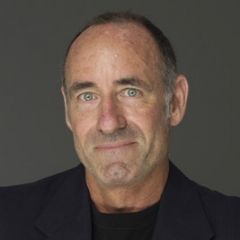
Eric McFarland
· ProfessorVerifiedUniversity of California, Santa Barbara · Chemical Engineering
Active 1985–2025
About
Eric McFarland is a Professor of Chemical Engineering at the University of California, Santa Barbara, with a research focus on coupling fundamental processes at surfaces with novel material systems for the cost-effective production and use of energy and energy-related chemicals. His investigations include fundamental catalytic and molecular reaction phenomena on complex surfaces, utilizing new experimental systems to study chemical transformations on surfaces of molten metals and strong electrolytes at high temperatures. His work aims to improve understanding of heterogeneous catalysts at high temperature on liquid surfaces, particularly in reactions involving natural gas in molten metals and salts to produce hydrogen and solid carbon for zero CO2 fuel production. Professor McFarland's educational background includes a B.S. and M.S. in Nuclear Engineering from UC Berkeley, a Ph.D. from MIT, and an M.D. from Harvard Medical School. His career began at MIT, where he worked on nuclear reaction fundamentals and non-destructive materials and chemical analysis using nuclear phenomena. Since joining UC Santa Barbara in 1991, he has made significant contributions to the understanding of surface-mediated chemical reactions, demonstrating that they are mediated by non-adiabatic electronic excitations beyond the conventional Born-Oppenheimer approximation. He has published over 200 scientific papers and holds more than 30 patents. McFarland has worked closely with industry, serving as a board member and advisor for several technology companies, and was a founding director of Symyx Technologies, a successful chemical technology startup. He has also served as CEO and President of Gas Reaction Technologies Inc., a university startup focused on R&D with oil and gas companies. His leadership roles include being awarded the Dow Chemical Chair of Chemical Engineering at the University of Queensland, Australia, where he was the founding Director of the Dow Centre for Sustainable Engineering Innovation. He is a founder and CTO of CZero Inc., a company developing natural gas-based hydrogen production technology without CO2 emissions. Currently, he holds senior technical leadership roles in NewHydrogen and First American Nuclear Co (FANCO). In addition to his engineering expertise, McFarland studied medicine, earning an M.D. and completing postgraduate training in general surgery, practicing part-time in Emergency Medicine and volunteering as a physician for relief agencies.
Research topics
- Inorganic chemistry
- Chemistry
- Organic chemistry
- Materials science
- Chemical engineering
- Computational chemistry
- Physical chemistry
- Thermodynamics
Selected publications
Co-production as an Economically Feasible Pathway to Economy-Wide Electrification
Research Square · 2025-10-03
preprintOpen accessIron Catalyzed Methane Pyrolysis in a Stratified Fluidized Bed Reactor
Energy & Fuels · 2024-07-09 · 26 citations
articleOpen accessSenior authorCorrespondingMethane pyrolysis at 950 °C and 1 atm was investigated on iron containing catalysts derived from a magnetite (Fe3O4) ore in a semibatch fluidized bed reactor. The magnetite particulates (∼10–50 μm) were observed to undergo reduction and fragmentation to approximately 100 nm iron–iron carbide catalysts in 100% methane as the fluidized bed reactor was heated to 950 °C at high gas flow rates. After prereduction, the flow rate was decreased to a weight hourly space velocity (WHSV) of 3.5 h–1, and the activity was observed to increase at 950 °C to a maximum methane conversion of approximately 90% (turnover frequency ∼ 0.3 s–1). At maximum activity, the C/Fe ratio was approximately 2. With increasing time on stream, the catalyst activity and particle density decreased. As solid carbon was deposited on the iron containing catalyst, the semibatch fluidized bed volume, C/Fe, and void fraction increased at a constant WHSV. The graphitic carbon product accumulated in and around the catalyst particles with increasing time, consistent with the observed decrease in activity as access of methane to the catalyst surface was limited by diffusion through an increasingly impermeable graphite barrier. The C/Fe mass ratio of the deactivated catalyst particles was observed to be approximately 5.
Journal of the American Chemical Society · 2024-12-20 · 6 citations
articleOpen accessAC plasmas directly excited within liquid hydrocarbons were investigated for the production of hydrogen and unsaturated C2 hydrocarbon in a recirculating liquid “jet” flow configuration. Arc discharges were excited at two different frequencies (60 Hz and 17.3 kHz) in C6–C8 hydrocarbons (hexane, cyclohexane, benzene, toluene, and xylene) to produce H2, C2H4, C2H2, and CH4, along with liquid and solid carbon byproducts. AC frequency was seen to modify the plasma properties and gas bubble formation dynamics, significantly influencing the efficiency and reaction pathway. Higher discharge frequency increased energy efficiency more than 2-fold by minimizing thermal losses and favored the production of hydrogenated compounds due to shorter reactant–plasma contact times. Further optimization of hexane conversion was achieved by introducing fluid flow around the plasma electrodes, which led to competitively low specific energy requirements (SERs) of 3.2 kWh/kg C2H4, 4.9 kWh/kg C2H2, and 24.3 kWh/kg H2. The effect of hydrocarbon feed chemistry was analyzed, showing that hexane and cyclohexane are preferable for C2 hydrocarbon syntheses, whereas aromatic hydrocarbons produce more H2. Gas bubble dynamics and liquid/solid products were analyzed using high-speed imaging, optical emission spectroscopy (OES), gas chromatography–mass spectrometry (GC-MS), scanning electron microscopy/transmission electron microscopy (SEM/TEM), and Raman spectroscopy. This work contributes to the understanding of plasma conversion mechanisms within liquids and demonstrates the potential for the energy-efficient transformation of hydrocarbons with plasma in unique reaction environments.
Simultaneous reaction and separation of chemicals
OSTI OAI (U.S. Department of Energy Office of Scientific and Technical Information) · 2024-03-18
articleOpen access1st authorCorrespondingThe reaction rate of hydrocarbon pyrolysis can be increased to produce solid carbon and hydrogen by the use of molten materials which have catalytic functionality to increase the rate of reaction and physical properties that facilitate the formation and contamination-free separation of the solid carbon. Processes, materials, reactor configurations, and conditions are disclosed whereby methane and other hydrocarbons can be decomposed at high reaction rates into hydrogen gas and carbon products without any carbon oxides in a single reaction step. The process also makes use of specific properties of selected materials with unique solubilities and/or wettability of products into (and/or by) the molten phase to facilitate generation of purified products and increased conversion in more general reactions.
Halogen-Mediated Methane Pyrolysis for CO<sub>2</sub>-Free Hydrogen Production
Energy & Fuels · 2024-03-06 · 3 citations
articleSenior authorCorrespondingWhile low-cost natural gas resources remain abundant, a cost-effective option for the production of hydrogen without direct carbon dioxide emissions is pyrolysis, whereby a hydrocarbon is thermochemically decomposed into hydrogen and solid carbon. A major engineering challenge is providing the large quantities of heat required for the endothermic reaction. We report results for a pyrolysis process in which methane is reacted with sufficient chlorine or bromine such that the partial oxidation reaction to form solid carbon is autothermal, with higher reaction rates and higher equilibrium conversion than with methane alone. The autothermal reaction of 1:1 CH4/Br2 has an equilibrium methane conversion of over 95%, and the results demonstrate over 80% methane conversion in equimolar chlorine or bromine at 950 °C. No catalyst is required; however, in the process, hydrogen and hydrogen halides produced must be separated and the halogen must be regenerated by electrolysis or chemical oxidation. The CO2-free hydrogen cost of production for the halogen-mediated methane pyrolysis process is estimated to be $2.2–$2.4/kg H2, which is lower than that for water electrolysis ($3.5/kg H2) and comparable to conventional methane reforming combined with carbon capture and sequestration ($2.4/kg H2).
Being Intentional with Diversity, Equity, Inclusion, and Environmental Justice
Proceedings of the Water Environment Federation · 2024-02-15
articleSenior authorBeing Intentional with Diversity, Equity, Inclusion, and Environmental JusticeAbstractWSSC Water was established in 1918 to improve the polluted waterways in suburban Maryland. Our continued commitment to providing for our communities is marked by our record of zero drinking water quality violations in our 105 years of service. WSSC Water provides water and wastewater treatment to approximately 1.9 million residents in Montgomery and Prince George's counties in Maryland. While we have wholesale customers, we predominantly serve residential, commercial, and government customers. Intentionality is key in addressing equity and environmental justice issues within WSSC Water's jurisdiction. This presentation with go through how we strive to serve these disadvantaged communities and ensure equity and environmental justice for all. Diversity, equity, inclusion, and environmental justice are the foundation of what WSSC Water does for our internal and external customers and stakeholders. This involves building a strong, diverse, and inclusive workforce; continuing our 105-year track record of supplying safe, clean drinking water for customers focusing on financial stewardship to minimize cost and additional financial burden on those with affordability concerns; implementing capital improvement projects based on public health, equity, and environmental justice criteria; increasing efforts to access funding to assist disadvantaged customers; and strengthening supplier diversity efforts, all while maintaining operational reliability and resilience. Access to safe drinking water is a fundamental right for every customer but is particularly critical for disadvantaged communities. Because they often do not have access to alternative drinking water sources and adequate healthcare support, these communities depend on the reliability and safety of their tap water. Our outstanding track record assures our customers that safe drinking water is always available, establishing the foundation for these communities to prosper. The way WSSC Water has integrated equity and environmental justice considerations into prioritization of its Capital Improvements Program (CIP) is, in part, a response to initiatives that have been taken by the two counties that we serve. Montgomery County has designated 56 census tracts as Equity Focus Areas (EFAs), which are intended to encourage investment in areas characterized by concentrations of minority populations, low-income households, or people with limited English proficiency. Prince George's County has designated 120 census tracts as Revitalization Tax Credit Districts (RTCs) that are intended to attract investment into areas that are disadvantaged based on consideration of factors like household income, residential density, land use, economic factors, and unemployment rates but consideration is not limited to these factors. Environmental justice and equity goals were enhanced when WSSC Water made them the foundation for the capital project prioritization in fiscal year 2023 by identifying and providing prioritization points to equity focus areas. The future direction of capital project prioritization is to include environmental justice as a separate scoring category to increase the visibility of this critical initiative. The scoring categories also will be consolidated and simplified. The existing six scoring categories will be merged into four, plus an environmental justice category. The tangible positive impact on environmental justice areas requires going beyond prioritizing capital projects. It requires two decisive efforts. The first effort is to expand the use of WSSC Water's performance measures within census tract boundaries so WSSC Water's level of service can be measured and compared to our goals. If a specific census tract area does not meet WSSC Water's level of service goals, that area can become a primary focus for the second effort. Projects can be prioritized to address the assets that impact that area. Individual project identification and selection will occur at the outset of WSSC Water's project packaging phases. Individual projects will be packaged by identifying water and sewer assets in poorer conditions located on or positively impacting an environmental justice area. This data will be collected and evaluated using GIS maps, census tracts, environmental justice screening tools, conditional assessment data and optimization software. To help keep rates low, we aggressively seek external financing. During FY 2022, WSSC Water applied for $632.4 million in external financing, was awarded $110.3 million, and received $8.3 million in grants and $53.2 million in low-interest loans. The interest rate on these loans is one-half of the rate for an index of highly-rated municipal bonds or one-quarter of the index rate for loans that finance construction projects benefiting disadvantaged communities. In addition to the highly subsidized interest rate, loans that benefit disadvantaged communities include up to 25 percent of the loan amount as principal forgiveness, with a maximum of $3 million per fiscal year per borrower, the same as a grant. By obtaining tens of millions of dollars of grants and low-interest loans each year, WSSC Water significantly reduces its rate revenue requirements and makes its services more affordable to customers. WSSC Water works each day to increase awareness and find new ways to promote and connect our customers to financial assistance programs, including the following: Customer Assistance Program, Water Fund, Bill Adjustments, Forgiveness of Past-Due Charges, and a Water Service Line Emergency Replacement Plan. In June 2023, WSSC Water launched a 'Get Current' water bill amnesty program to assist customers with delinquent water/sewer bills. This temporary program ran during June, providing bill credits for 100 percent of late payment charges and turn-on fees for qualified customers. During June, WSSC Water suspended residential water service turnoffs to encourage program participation. WSSC Water is committed to building a strong, diverse, and inclusive workforce; delivering safe, reliable water; continuing exceptional customer service; implementing capital improvement projects based on public health, equity, and environmental justice criteria; increasing efforts to access funding for programs to assist disadvantaged customers; and strengthening supplier diversity efforts; all while maintaining operational reliability and resilience. This presentation will go through some of the ways WSSC Water approached diversity, equity, inclusion and environmental justice through the programs listed above and other initiatives.This paper was presented at the WEF/AWWA Utility Management Conference, February 13-16, 2024.SpeakerLa Plante, RosannaPresentation time15:30:0016:00:00Session time15:30:0017:00:00SessionDiversity, Equity, and Inclusion from a Water Utility's PerspectiveSession number25Session locationOregon Convention Center, Portland, OregonTopicDiversity, Equity, and InclusionTopicDiversity, Equity, and InclusionAuthor(s)La Plante, RosannaAuthor(s)R. La Plante1, E. Mcfarland1Author affiliation(s)Washington Suburban Sanitation Commission 1;SourceProceedings of the Water Environment FederationDocument typeConference PaperPublisherWater Environment FederationPrint publication date Feb 2024DOI10.2175/193864718825159265Volume / Issue Content sourceUtility Management ConferenceWord count10
Methane Pyrolysis for CO2-free Hydrogen Production
2023-09-29 · 2 citations
book-chapter1st authorCorrespondingThe pyrolysis of methane and other hydrocarbons produces solid carbon and hydrogen, which can be used as a CO2-free fuel allowing more sustainable use of our fossil resources while long-term energy solutions are developed. The fundamental chemistry has long been studied and the process requirements for pyrolysis well understood. Very high reactor temperatures, efficient energy addition, and management of the solid carbon product pose engineering challenges. For the production of a valuable solid carbon product, methane pyrolysis is practiced commercially; however, the high-value carbon market is limited in size. For pyrolysis to compete economically with existing commercial methane reforming processes for hydrogen production, a sustained and significant negative cost must be assigned to the CO2 generated by reforming and an efficient, low-cost, scalable pyrolysis process demonstrated.
Techno-economic analysis of bromine mediated propane oxidative dehydrogenation to produce propylene
Chemical Engineering Journal · 2023-08-29 · 10 citations
articleOpen accessSenior authorCorrespondingThe production of propylene from propane is becoming increasingly important. Catalytic propane dehydrogenation (PDH) is the major on-purpose propylene production process today. The conventional PDH process has a relatively high energy consumption (6.1–9.4 kWh/kg C3H6) which results in high direct CO2 emissions and modest propylene yield (0.8–0.9 kg C3H6/kg C3H8). A bromine-mediated propane oxidative dehydrogenation process (Br-ODH) is evaluated in this techno-economic study which can potentially improve both the process energy efficiency and product yield. To investigate the Br-ODH process feasibility, a heat integrated process model was designed using Aspen Plus® V12 for a 450 kta propylene facility using reaction data from the literature. The partial oxidation of propane under bromine limited conditions selectively produces a propylbromide intermediate which can be readily separated from propane. Propylbromide undergoes dehydrobromination under relatively mild conditions to produce the propylene product in a second step. Bromine is regenerated by conversion of the hydrogen bromide byproduct either thermochemically or electrochemically. Due to the current interest in use of renewable electricity in chemical processes, the electrochemical regeneration process was evaluated in this study. Based on the model, the Br-ODH process can achieve approximately 10% higher propylene yield with 37% lower utilities than conventional PDH. However, the use of high-cost electrolyzers resulted in the capital investment increasing by approximately 11%. Capital cost was also increased due to the requirements of high alloy materials of construction for the potentially corrosive halogen containing equipment. The sensitivity analysis showed that the production cost was most sensitive to the propane price. For the electrolyzer-based regeneration process the capital cost was found to be key parameter that might limit competition with conventional PDH; however, the development of a commercial thermochemical HBr oxidation process analogous to the Deacon process for chlorine would likely bring significant cost savings.
Valorizing the carbon byproduct of methane pyrolysis in batteries
Carbon · 2022-12-14 · 37 citations
articleOpen accessWhile low-cost natural gas remains abundant, the energy content of this fuel can be utilized without greenhouse gas emissions through the production of molecular hydrogen and solid carbon via methane pyrolysis. In the absence of a carbon tax, methane pyrolysis is not economically competitive with current hydrogen production methods unless the carbon byproducts can be valorized. In this work, we assess the viability of the carbon byproduct produced from methane pyrolysis in molten salts as high-value-added anode or conductive additive for secondary Li-ion and Na-ion batteries. Raman characterization and electrochemical differential capacity analysis demonstrate that the use of molten salt mixtures with catalytically-active FeCl3-or MnCl2 result in more graphitic carbon co-products. These graphitic carbons exhibit the best electrochemical performance (up to 272 mAh/g of reversible capacity) when used as Li-ion anodes. For all carbon samples studied here, disordered carbon domains and retained salt species trapped and/or intercalated into the carbon structure were identified by X-ray photoelectron and multinuclear solid-state nuclear magnetic resonance spectroscopy. The latter lead to reduced electrochemical activity and reversibility, and poorer rate performance compared to commercial carbon anodes. The electronic conductivity of the pyrolyzed carbons is found to be highly dependent on their purity, with the purest carbon exhibiting an electronic conductivity nearly on par with that of commercial carbon additives. These findings suggest that more effective removal of the salt catalyst could enable applications of these carbons in secondary batteries, providing a financial incentive for the large-scale implementation of methane pyrolysis for “low-carbon” hydrogen production.
Reaction Chemistry & Engineering · 2022-01-01 · 10 citations
articleSenior authorCorrespondingThe rate of methane pyrolysis in molten salt environments is increased with hydrocarbon feed additives which provide a low-cost means of improving the process which could allow for CO 2 -free hydrogen production at industrial scales.
Recent grants
Frequent coauthors
- 82 shared
Horia Metiu
University of California, Santa Barbara
- 38 shared
Galen D. Stucky
University of California, Santa Barbara
- 35 shared
Christian Schwarzbauer
- 35 shared
Tom Ogino
Helsinki University Hospital
- 34 shared
Nirala Singh
University of Michigan–Ann Arbor
- 32 shared
Thomas F. Jaramillo
- 32 shared
Kimberlee Potter
Armed Forces Institute of Pathology
- 30 shared
Michael J. Gordon
University of California, Santa Barbara
Awards & honors
- 2013-2015 Dow Chemical Professor of Chemical Engineering, Un…
- 1990-1995 NSF Presidential Young Investigator
- 1992 Am. Nuc. Soc. Special Award for Outstanding Advances in…
- 1989-91 Edgerton Assistant Professorship
- 1981-82 NIH Grad. Fellowship
- Resume-aware match score
- Save to shortlist
- AI-drafted outreach
See your match with Eric McFarland
PhdFit ranks faculty by your research interests, methods, and publications — grounded in their actual work, not templates.
- Free to start
- No credit card
- 30-second signup