
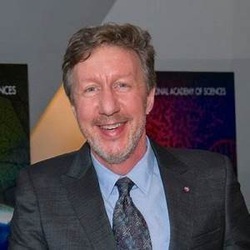
David Heeger
· Silver Professor of Neural ScienceNew York University · Chemistry
Active 1966–2026
Academic metrics are sourced from OpenAlex and public funding records; values may differ from Google Scholar.
About
David Heeger is the Silver Professor of Psychology and Neural Science at New York University, where he is also a faculty member at the Center for Neural Science. He holds a B.A. in Mathematics and a Ph.D. in Computer Science from the University of Pennsylvania, completed in 1983 and 1987 respectively. His postdoctoral work was conducted at the MIT Media Lab from 1987 to 1990, followed by a research scientist position at NASA Ames Research Center. Heeger has held academic positions at Stanford University, serving as an Assistant Professor from 1991 to 1998 and an Associate Professor from 1998 to 2002. His research focuses on computational neuroimaging and perception, with over 130 journal papers and six US patents to his name. He has received numerous awards, including the David Marr Prize in computer vision, the Alfred P. Sloan Research Fellowship, the Troland Award in psychology from the National Academy of Sciences, and the Margaret and Herman Sokol Faculty Award in the Sciences at NYU. In 2013, he was elected a member of the National Academy of Sciences. His work encompasses a broad range of topics in perception and neural systems, and he is actively involved in teaching undergraduate and graduate courses in perception, computational neuroscience, and neural imaging.
Research topics
- Artificial Intelligence
- Computer Science
- Neuroscience
- Cognitive psychology
- Biology
- Psychology
- Mathematics
- Endocrinology
Selected publications
Differential impact of endogenous and exogenous attention on activity in human visual cortex
Scientific Reports · 2020 · 102 citations
How do endogenous (voluntary) and exogenous (involuntary) attention modulate activity in visual cortex? Using ROI-based fMRI analysis, we measured fMRI activity for valid and invalid trials (target at cued/un-cued location, respectively), pre- or post-cueing endogenous or exogenous attention, while participants performed the same orientation discrimination task. We found stronger modulation in contralateral than ipsilateral visual regions, and higher activity in valid- than invalid-trials. For e…
A dynamic normalization model of temporal attention
Nature Human Behaviour · 2021 · 78 citations
Senior authorCorrespondingA recurrent circuit implements normalization, simulating the dynamics of V1 activity
Proceedings of the National Academy of Sciences · 2020 · 73 citations
1st authorCorrespondingThe normalization model has been applied to explain neural activity in diverse neural systems including primary visual cortex (V1). The model's defining characteristic is that the response of each neuron is divided by a factor that includes a weighted sum of activity of a pool of neurons. Despite the success of the normalization model, there are three unresolved issues. 1) Experimental evidence supports the hypothesis that normalization in V1 operates via recurrent amplification, i.e., amplifyin…
Traveling waves in the human visual cortex: An MEG-EEG model-based approach
PLoS Computational Biology · 2025-04-17 · 13 citations
articleOpen accessBrain oscillations might be traveling waves propagating in cortex. Studying their propagation within single cortical areas has mostly been restricted to invasive measurements. Their investigation in healthy humans, however, requires non-invasive recordings, such as MEG or EEG. Identifying traveling waves with these techniques is challenging because source summation, volume conduction, and low signal-to-noise ratios make it difficult to localize cortical activity from sensor responses. The diffic…
Anticipatory and evoked visual cortical dynamics of voluntary temporal attention
Nature Communications · 2024-10-21 · 12 citations
articleOpen accessWe can often anticipate the precise moment when a stimulus will be relevant for our behavioral goals. Voluntary temporal attention, the prioritization of sensory information at task-relevant time points, enhances visual perception. However, the neural mechanisms of voluntary temporal attention have not been isolated from those of temporal expectation, which reflects timing predictability rather than relevance. Here we use time-resolved steady-state visual evoked responses (SSVER) to investigate…
Recent grants
NIH · $1.4M · 2011
The neural representation and transformation of color in human visual cortex
NIH · $1.1M · 2012–2016
NIH · $1.1M · 2013
Frequent coauthors
- 35 shared
Elisha P. Merriam
- 34 shared
Marisa Carrasco
New York University
- 23 shared
Marlene Behrmann
Carnegie Mellon University
- 22 shared
Laura Dugué
Centre de recherche cerveau et cognition
- 21 shared
Michael S. Landy
New York University
- 20 shared
Geoffrey M. Boynton
University of Washington
- 16 shared
Ilan Dinstein
Center for Autism and Related Disorders
- 16 shared
Tobias H. Donner
University Medical Center Hamburg-Eppendorf
Labs
Education
- 1983
B.A., Mathematics
University of Pennsylvania
- 1987
Ph.D., Computer Science
University of Pennsylvania
Awards & honors
- David Marr Prize in computer vision (1987)
- Alfred P. Sloan Research Fellowship (1994)
- Troland Award in psychology from the National Academy of Sci…
- Margaret and Herman Sokol Faculty Award in the Sciences, New…
- Elected member of the National Academy of Sciences (2013)
Similar researchers at New York University
- Resume-aware match score
- Save to shortlist
- AI-drafted outreach
See your match with David Heeger
PhdFit ranks faculty by your research interests, methods, and publications — grounded in their actual work, not templates.
- Free to start
- No credit card
- 30-second signup