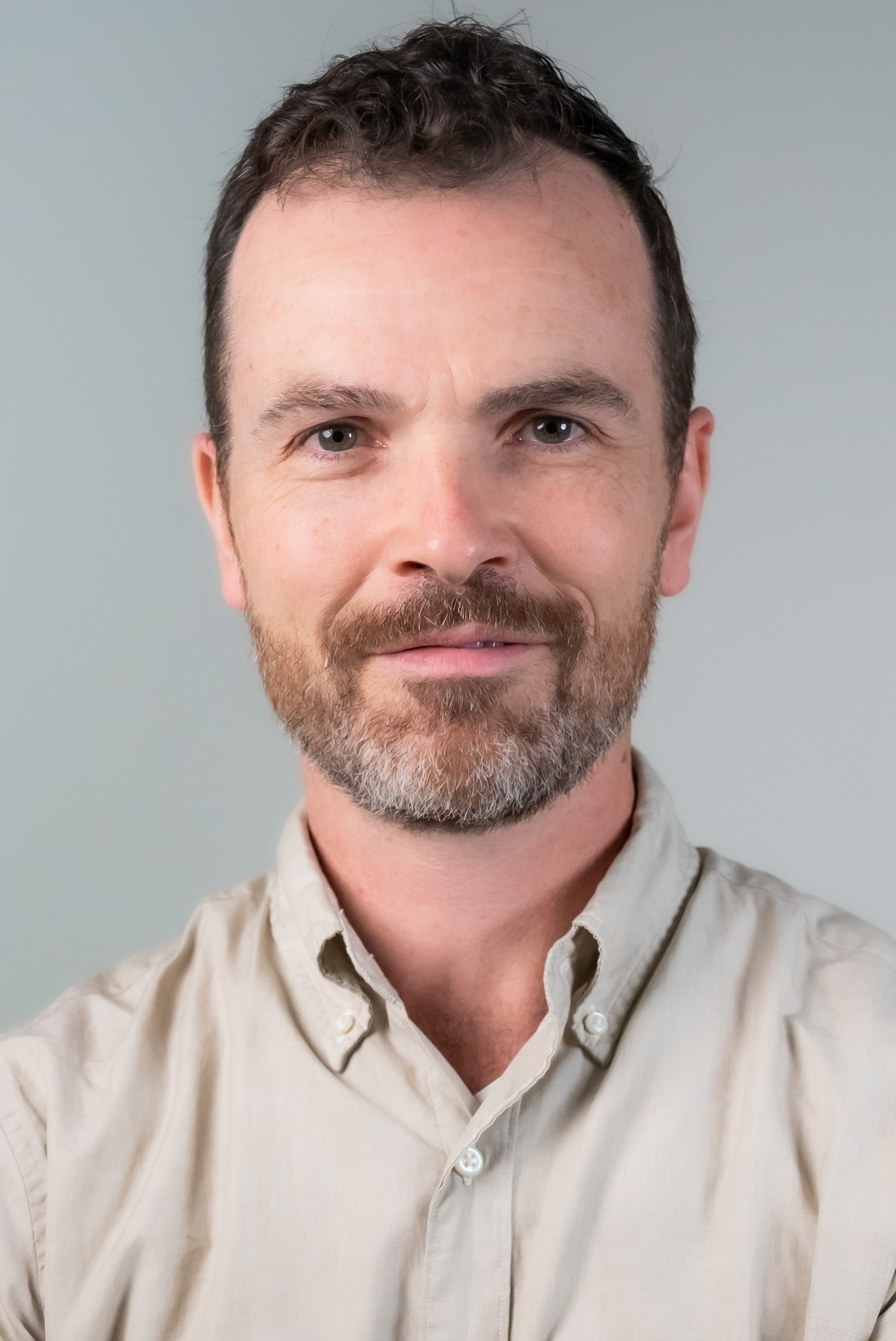
David Barner
· ProfessorUniversity of California, San Diego · Psychology
Active 1997–2026
Academic metrics are sourced from OpenAlex and public funding records; values may differ from Google Scholar.
About
David Barner is a professor in the Department of Psychology at UC San Diego. His research interests focus on language, thought, and conceptual development, with particular attention to case studies involving number, time, space, and logical reasoning. He employs a cross-cultural approach in his studies, conducting research in diverse regions including India, Japan, Latin America, China, and Eastern Europe. His work aims to understand how these fundamental cognitive domains develop and vary across different cultural contexts, contributing to the broader understanding of human cognition and language development.
Research topics
- Computer Science
- Psychology
- Political Science
- Natural Language Processing
- Artificial Intelligence
- Mathematics
- Social psychology
- Cognitive psychology
- Linguistics
- Statistics
Selected publications
Do children use language structure to discover the recursive rules of counting?
Cognitive Psychology · 2020 · 45 citations
Senior authorCorrespondingCounting and the ontogenetic origins of exact equality
Cognition · 2021 · 28 citations
Senior authorCorrespondingChildren are sensitive to reputation when giving to both ingroup and outgroup members
Journal of Experimental Child Psychology · 2020 · 28 citations
Senior authorCorrespondingCan preschoolers learn the syntax of number? Using rules to combine familiar and novel number words
Philosophical Transactions of the Royal Society B Biological Sciences · 2025-10-20 · 4 citations
articleSenior authorAlthough children can combine words to express meanings like 'red house' or 'two cats', they do not represent number words compositionally (e.g. 'twenty-six' as 6+20) until late in development. One reason for this might be that smaller number words in most languages are not composed via rules, limiting children's exposure to the syntactic structure underlying larger number words. However, historically, many languages have featured number systems with smaller bases or anchors, thus relying more o…
Two-Year-Olds Reason About Multiple Mutually Exclusive Possibilities
2026-05-23
articleOpen accessSenior authorA prominent hypothesis in the literature on logical reasoning suggests that, unlike human adults and older children, 3-year-olds deploy “minimal representation of possibility” when reasoning about the existence of a reward in one of two possible locations. On this view, children are unable to represent two mutually exclusive possibilities simultaneously, and instead commit to one location for the reward in a pair of possible locations, only considering the second location once they have evidence…
Recent grants
Collaborative Research: Language structure and number word learning
NSF · $773k · 2014–2018
Collaborative Research: Development of symbolic and non-symbolic representations of exact equality
NSF · $712k · 2020–2025
How do children construct linguistic color categories?
NSF · $400k · 2015–2019
Frequent coauthors
- 46 shared
Mahesh Srinivasan
University of California, Berkeley
- 35 shared
Rose M. Schneider
University of California, San Diego
- 32 shared
Neon Brooks
Kaiser Permanente Center for Health Research
- 29 shared
Alan Bale
- 28 shared
Roman Feiman
Hologic (Germany)
- 27 shared
Jessica Sullivan
University of New Mexico
- 24 shared
Peggy Li
Lawrence Livermore National Laboratory
- 22 shared
Ruthe Foushee
Similar researchers at University of California, San Diego
- Resume-aware match score
- Save to shortlist
- AI-drafted outreach
See your match with David Barner
PhdFit ranks faculty by your research interests, methods, and publications — grounded in their actual work, not templates.
- Free to start
- No credit card
- 30-second signup