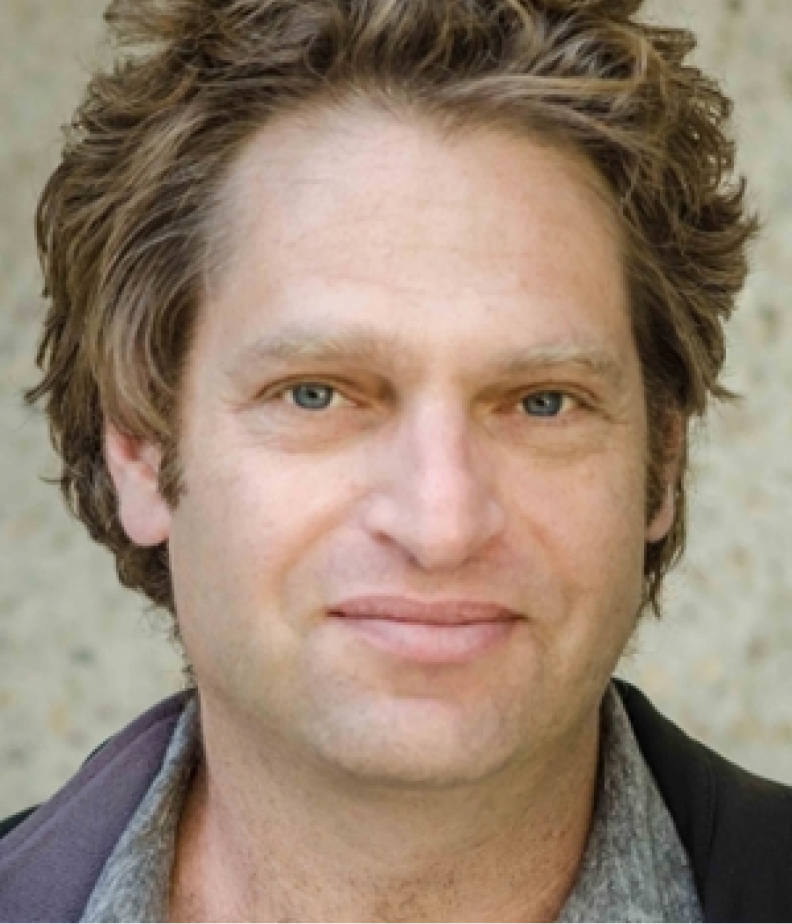
Adam Aron
· ProfessorUniversity of California, San Diego · Psychology
Active 1958–2026
About
Adam Aron is a professor in the Department of Psychology at UC San Diego. He was a cognitive neuroscientist for 20 years before shifting his research focus to social mobilization efforts aimed at ending fossil fuel use and preparing for climate, ecological, and social stresses. His work emphasizes understanding how to mobilize people into social movements to support policies that address the climate crisis, as well as exploring human emotions such as fear, denial, and disavowal that hinder action. Aron is concerned with the accelerating pace of global heating, the surpassing of planetary boundaries, and the broader polycrisis involving economic inequality, technological shifts, and democratic deficits. His research also investigates how to shift beliefs away from neoliberal values towards collective futures of flourishing. Aron has authored several publications on climate action and social psychology, and he emphasizes the importance of psychological insights in addressing urgent environmental and societal challenges.
Research signals
Five dimensions sourced from public faculty / publication signals. Sign in to compare against your own profile and see your match score.
Research topics
- Computer Science
- Psychology
- Neuroscience
- Artificial Intelligence
- Cognitive science
- Developmental psychology
- Cognitive psychology
- Chemistry
Selected publications
The psychology of real-world collective climate action: A mixed-methods approach
Journal of Environmental Psychology · 2026-05-12
articleOpen accessSenior authorCorrespondingThis study aimed to understand why people join small-team action on the climate crisis and what makes them effective. Over 7 weeks, college students (Study 1: N = 34, Study 2: N = 45) received training, acted in small teams, and responded to open-ended questions about their plans, actions and reasoning alongside survey-based self-reported beliefs. At 6 months, follow-up interviews were conducted. From a rich set of results there were two main take-aways. First, to understand the psychology of collective action, it is critical to measure real-world action in addition to intentions and beliefs. Here we found that even these highly motivated participants only translated 54% of their intentions to verified action in Study 1 and 66% in Study 2; therefore, merely measuring intentions would provide an incomplete picture. And whereas self- and collective efficacy survey scales showed significant increases, these changes did not relate to verified action. Second, in the context of a real-world collective action study, this study shows that it is possible to derive psychological variables bottom-up, from the data, rather than only relying on psychological variables that are derived top-down from theories in the literature. Across both studies, a psychological construct which we term “social obligation” was significantly related to action. This construct, which also connotes commitment to one’s group or the norms by which one’s group works, is not readily featured in existing collective action research. These results may be useful for social movement organizers, and for advancing psychological theories of real-world collective action. • participants learned the skills of planning and performing collective climate action through a seven-week intervention • a new method was developed to assess verified collective climate action • self- and collective efficacy increased but did not relate to verified collective action • the psychological variable of social obligation related to verified collective action in both studies
Energy Research & Social Science · 2026-05-20
articleOpen accessSenior authorGlobal heating is accelerating, but climate mobilization remains too limited to stop climate breakdown and protect people from its impacts. We draw on the history of social movements, the social science of collective action, and our experience in the climate movement to make concrete suggestions for increasing climate mobilization. While moral motivations are important for some participants, they have proven inadequate; here we urge a focus on people's immediate material interests, building upon recent proposals to center “transformative adaptation”. Unlike shallower forms of climate adaptation, transformative adaptation involves major changes to social and economic relations. We argue that strong campaigns for transformative adaptation could grow climate mobilization because they can accomplish five goals at once: deliver direct material benefits, appeal to a politically diverse public, foster democratic and equitable institutions, increase climate resilience, and reduce greenhouse gas emissions. In so doing, transformative adaptation could also make pro-climate policies and institutions more durable by creating constituencies that will defend them. We suggest how researchers and organizers can build on our proposal.
The wins of the grassroots climate movement in the University of California
Frontiers in Education · 2025-03-10 · 5 citations
articleOpen accessSenior authorCorrespondingAs the climate and ecological predicament worsens, too many people seem to be waiting for policy to be implemented from “on high.” Yet the history of many social struggles shows us that achieving policy wins requires a strong push from below. Here we recount how members of the climate justice organization The UC San Diego Green New Deal were critical to reorienting the climate policy of a very large institution, the 10 campus University of California, as well as winning important climate actions at UC San Diego itself. We discuss three campaigns: Decarbonization and Electrification, Cutting Ties with Fossil Finance, and Climate Education for All. From shifting the focus to emission reductions rather than carbon offsets, to pushing Chase Bank out of the campus student center, to providing new undergraduate curricula, these wins are now reverberating throughout higher education in the United States and beyond. This movement has also provided an important pedagogical role by teaching organizing and activist skills to undergraduates so they can go forth and fight for their futures.
2025-02-21
peer-reviewSenior authorOut of the labs and into the streets: Effects of climate protests by environmental scientists
Royal Society Open Science · 2025-04-01 · 5 citations
articleOpen accessSenior authorThere have been increasing calls for scientists to ‘get out of the labs and into the streets’ and become more involved in climate change advocacy and protest, including civil disobedience. A growing number of scientists are heeding these calls, but the potential impact of such engagement on the public and the credibility of science remains critically understudied. In this registered report, we used a vignette approach to examine the potential effects of scientists’ engagement in two types of protest in a large representative sample (in terms of age and gender; n = 2856) of people in the United States, taking into account political affiliation. Contrary to our predictions, we found that an environmental scientist’s endorsement of or involvement in a protest did not reduce public support for oil and gas drilling, increase support for activists or alter perceptions of protest radicalness. As predicted, we found that scientists’ participation in protests did not reduce the public’s reported level of credibility of the participating scientists or of environmental scientists more broadly. These findings suggest that scientists can engage in public protest without compromising their credibility, but that such actions alone may have less impact than one would like to believe.
The Impact of a Climate Crisis Class on Collective Action Participation
Environmental Psychology Open · 2025-10-30 · 1 citations
articleOpen accessSenior authorWe tested whether the acquisition of knowledge and beliefs in a climate crisis class related to verified collective action. We studied undergraduate participants (N = 132) in the class (intervention condition) and participants not enrolled in the class (control condition). All participants answered questions about their knowledge and beliefs about the climate crisis, as well as their biospheric values, beliefs about efficacy, and climate anxiety, at two time points separated by nine weeks. We measured collective action in the intervention condition. First, we found that a few measures of knowledge and belief as well as biospheric values and belief in collective efficacy increased significantly in the intervention group relative to the control group. Second, within the intervention group, there were no significant relationships between the changes in several types of knowledge and beliefs and verified collective action. The only significant correlate was biospheric values measured prior to intervention exposure. These results point to the need for research to explore how variables other than knowledge and beliefs, such as group dynamics, relate to collective action. Finally, the study develops new methods for measuring people’s engagement in collective action in a class setting that goes beyond typical studies of intentions to act.
Expressing intentions is not climate action
Proceedings of the National Academy of Sciences · 2025-07-03 · 13 citations
letterOpen accessSenior authorstatus: Published
2024-09-16
peer-reviewSenior author2024-12-18
peer-reviewSenior author2024-10-15
peer-reviewSenior author
Recent grants
How inhibitory control prevents thought intrusions and sensory and motor provocations
NIH · $4.0M · 2009–2024
How stopping movement affects working memory
NIH · $351k · 2013–2016
Evaluating a Fronto-Basal-Ganglia White-Matter Network for Behavioral Stopping in Lesion Patients
NSF · $377k · 2009–2012
Stopping behavior and interrupting cognition via subthalamic nucleus
NIH · $2.4M · 2018–2024
Frequent coauthors
- 28 shared
Russell A. Poldrack
Stanford University
- 19 shared
Trevor W. Robbins
- 18 shared
Jan R. Wessel
University of Iowa
- 17 shared
Ayda Ghahremani
Krembil Research Institute
- 14 shared
Robert Chen
IFC Research (United Kingdom)
- 14 shared
Barbara J. Sahakian
- 13 shared
Vignesh Muralidharan
- 12 shared
Nitin Tandon
Neurological Surgery
- Resume-aware match score
- Save to shortlist
- AI-drafted outreach
See your match with Adam Aron
PhdFit ranks faculty by your research interests, methods, and publications — grounded in their actual work, not templates.
- Free to start
- No credit card
- 30-second signup