
Resume-aware faculty matching

Find professors who actually fit you

Upload your resume. Four AI agents analyze your background, rank the faculty who fit, inspect their recent research, and help you draft outreach — grounded in their actual work, not templates.

Free to startNo credit cardCancel anytime
Top matches Balanced preset
Dr. Sarah Chen
Stanford · Interpretability · NLP
91
Dr. Marcus Holloway
MIT · Robotics · RL
84
Dr. Aisha Okonkwo
CMU · Fairness · HCI
82
Nova · Professor Researcher · re-ranking top 20…
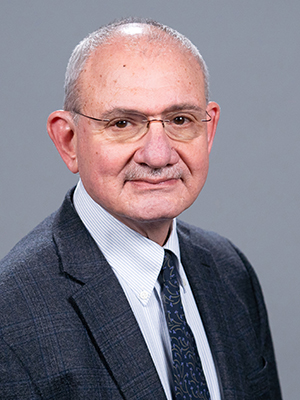
Costas Grigoropoulos

Costas Grigoropoulos

· ProfessorVerified

University of California, Berkeley · Mechanical Engineering

Active 1986–2026

h-index80
Citations27.0k
Papers644111 last 5y
Funding$6.3M
See your match with Costas Grigoropoulos — sign in to PhdFit.Sign in

About

Professor Costas Grigoropoulos is the advisor of the Laser Thermal Lab at UC Berkeley. The lab has supported the research of 38 doctoral and 5 MSc students, and has advised 27 post-doctoral researchers and 31 visiting scholars under his guidance. He is involved in mentoring and supporting open research positions for undergraduate and prospective graduate students, indicating his active role in fostering academic growth and research development within the lab.

Research topics

  • Optoelectronics
  • Materials science
  • Computer Science
  • Physics
  • Nanotechnology
  • Artificial Intelligence
  • Composite material
  • Optics
  • Electrical engineering
  • Environmental science
  • Structural engineering
  • Meteorology
  • Thermodynamics
  • Nuclear engineering
  • Atmospheric sciences
  • Condensed matter physics
  • Chemistry
  • Engineering

Selected publications

  • Optimized mechano-fluidic metamaterials inspired by deep-sea sponges

    Nature Communications · 2026-05-05

    articleOpen accessSenior author

    Multifunctional materials that balance mechanical resilience and fluid dynamic efficiency are critical in engineering applications, yet their synergistic optimization remains challenging due to inherent trade-offs, computational expense, and high-dimensional design spaces. Inspired by the skeleton of the deep-sea sponge Euplectella aspergillum, this work presents an automated framework integrating Finite Element Analysis for mechanics, Computational Fluid Dynamics for flow behavior, and multi-objective Bayesian optimization. Leveraging high-performance computing, the framework efficiently explores complex design spaces to identify Pareto-optimal solutions. Optimized lattices achieve an average 140% increase in critical buckling load across a range of volume fractions relative to baseline designs, while simultaneously reducing drag, lift, and vortex shedding at porosities as low as 5%. We fabricate selected designs via stereolithography and validate them through compression experiments and particle image velocimetry, showing agreement with simulations. By jointly optimizing mechanics and fluidics, this work establishes a scalable methodology for designing lightweight, high-performance architected materials.

  • Laser processing and tip-based probing of nanomaterials

    2025-03-19

    articleSenior author
  • Optically Detected Magnetic Resonance Imaging and Sensing Within Functionalized Additively Manufactured Microporous Structures

    ArXiv.org · 2025-02-23

    preprintOpen accessSenior author

    Quantum sensing with nitrogen-vacancy centers in diamond has emerged as a powerful tool for measuring diverse physical parameters, yet the versatility of these measurement approaches is often limited by the achievable layout and dimensionality of bulk-crystal platforms. Here, we demonstrate a versatile approach to creating designer quantum sensors by surface-functionalizing multiphoton lithography microstructures with NV-containing nanodiamonds. We showcase this capability by fabricating a 150 $μ$m x 150 $μ$m x 150 $μ$m triply periodic minimal surface gyroid structure with millions of attached nanodiamonds. We demonstrate a means to volumetrically image these structures using a refractive index matching confocal imaging technique, and extract ODMR spectra from 1.86 $μ$m x 1.86 $μ$m areas of highly concentrated nanodiamonds across a cross section of the gyroid. Furthermore, the high density of sensing elements enables ensemble temperature measurements with sensitivity of 0.548 °K/$\sqrt{Hz}$ at 5 mW excitation power. This approach to creating quantum-enabled microarchitectures opens new possibilities for multimodal sensing in complex three-dimensional environments.

  • Exciton Dynamics in 2D Transition Metal Dichalcogenides

    Advanced Optical Materials · 2025-02-20 · 21 citations

    articleOpen accessSenior authorCorresponding

    Abstract 2D transition metal dichalcogenides (TMDCs) have emerged as a promising class of materials for broad applications. The physical properties of TMDCs are dominated by strong excitonic effects, which critically determine the performance of photonic and optoelectronic devices. In this Review, the current state of research on exciton dynamics in TMDCs is summarized, discussed common optical characterization techniques, and analyzed factors that influence exciton behaviors, such as thickness, dielectric environment, strain, and heterostructure configuration. Throughout this work, the challenges and opportunities for future research in this rapidly evolving field are also highlighted.

  • Scalable phononic metamaterials: Tunable bandgap design and multi-scale experimental validation

    Materials & Design · 2025-03-02 · 13 citations

    articleOpen accessSenior author

    Phononic metamaterials offer unprecedented control over wave propagation, making them essential for applications such as vibration isolation, waveguiding, and acoustic filtering. However, achieving scalable and precisely tunable bandgap properties across different length scales remains challenging. This study presents a user-friendly design framework for phononic metamaterials, enabling ultra-wide bandgap tunability (B/ω<sub>c</sub> ratios up to 172 %) across multiple frequency ranges and scales. Using finite element simulations of a Yablonovite-inspired unit cell, we establish a comprehensive parametric design space that illustrates how geometric parameters, such as sphere size and beam diameter, controls bandgap width and frequency. The scalability and robustness of the framework are validated through experimental testing on additively manufactured structures at both macro (10 mm) and micro (80 µm) scales, fabricated using Stereolithography and Two-Photon Polymerization. Transmission loss measurements, conducted with piezoelectric transducers and laser vibrometry, closely match simulations in the kHz and MHz frequency ranges, confirming the reliability and consistency of the bandgap behavior across scales. This work bridges theory and experiments at multiple scales, offering a practical methodology for the rapid design of phononic metamaterials and expanding their potential for diverse applications across a broad range of frequencies.

  • Scalable Phononic Metamaterials: Tunable Bandgap Design and Multi-Scale Experimental Validation

    SSRN Electronic Journal · 2025-01-01

    preprintOpen accessSenior author
  • Inverse design of photonic surfaces via multi fidelity ensemble framework and femtosecond laser processing

    npj Computational Materials · 2025-02-15 · 8 citations

    articleOpen access

    We demonstrate a multi-fidelity (MF) machine learning ensemble framework for the inverse design of photonic surfaces, trained on a dataset of 11,759 samples that we fabricate using high throughput femtosecond laser processing. The MF ensemble combines an initial low fidelity model for generating design solutions, with a high fidelity model that refines these solutions through local optimization. The combined MF ensemble can generate multiple disparate sets of laser-processing parameters that can each produce the same target input spectral emissivity with high accuracy (root mean squared errors < 2%). SHapley Additive exPlanations analysis shows transparent model interpretability of the complex relationship between laser parameters and spectral emissivity. Finally, the MF ensemble is experimentally validated by fabricating and evaluating photonic surface designs that it generates for improved efficiency energy harvesting devices. Our approach provides a powerful tool for advancing the inverse design of photonic surfaces in energy harvesting applications.

  • Multiphoton and Harmonic Imaging of Microarchitected Materials

    ACS Applied Materials & Interfaces · 2025-01-03 · 3 citations

    articleOpen accessSenior authorCorresponding

    Microadditive manufacturing has revolutionized the production of complex, nano- to microscale components across various fields. This work investigates two-photon (2P) and three-photon (3P) fluorescence imaging, as well as third-harmonic generation (THG) microscopy, to examine periodic microarchitected lattice structures fabricated using multiphoton lithography (MPL). By immersing the structures in refractive index matching fluids, we demonstrate high-fidelity 3D reconstructions of both fluorescent structures using 2P and 3P microscopy as well as low-fluorescence structures using THG microscopy. These results show that multiphoton fluorescence (MPF) imaging offers reduced signal decay with respect to depth compared to single-photon techniques in the examined structures. We further demonstrate the ability to nondestructively identify intentional internal modifications of the structure that are not immediately visible with scanning electron microscope (SEM) images and compression-induced fractures, highlighting the potential of these techniques for quality control and defect detection in microadditively manufactured components.

  • Optical Emission Spectroscopy and Gas Kinetics of Picosecond Laser-Induced Chlorine Dissociation for Atomic Layer Etching of Silicon

    The Journal of Physical Chemistry C · 2025-01-22 · 2 citations

    articleOpen accessSenior authorCorresponding

    The continuing developments in semiconductor device technologies have prompted the need for advanced nanoscale processing techniques. Laser chemical processing offers significant advantages, including spatial selectivity, high localization, minimal material damage, and fast operation. Pulsed laser-induced dissociation of gas species serves as an essential process step, contributing to doping, etching, and other chemical modifications of semiconductor materials. However, the mechanisms behind the laser–gas interactions and subsequent surface modifications remain elusive. Here, we demonstrate ultraviolet picosecond laser-induced atomic layer etching of silicon in a gaseous chlorine environment, achieving self-limited etching with a precision of 0.93 nm/cycle. Through in situ optical emission spectroscopy, we elucidate the transition energy states of laser-excited products during chlorination. Complementing our experimental findings, we perform numerical modeling that reveals the complex spatiotemporal dynamics of chlorine species, encompassing their generation, recombination, diffusion, and transient surface reaction with the silicon substrate. Our study demonstrates optical diagnostics of laser-induced chlorination in atomic layer etching, which can provide valuable insights into ultrafine chemical nanostructuring of semiconductor materials.

  • Quantum Sensing in Micro-Architected Scaffolds

    ACS Applied Materials & Interfaces · 2025-12-09

    articleSenior authorCorresponding

    Quantum sensing with nitrogen-vacancy centers in diamond has emerged as a powerful tool for measuring diverse physical parameters, yet the versatility of these measurement approaches is often limited by the achievable layout and dimensionality of bulk-crystal platforms. Here, we demonstrate a versatile approach to creating designer quantum sensors by surface-functionalizing multiphoton lithography microstructures with NV-containing nanodiamonds. We showcase this capability by fabricating a 150 μm × 150 μm × 150 μm triply periodic minimal surface gyroid structure with millions of attached nanodiamonds. We demonstrate a means to volumetrically image these structures using a refractive index matching confocal imaging technique and extract ODMR spectra from 1.86 μm × 1.86 μm areas of highly concentrated nanodiamonds across a cross-section of the gyroid. Furthermore, the high density of sensing elements enables ensemble temperature measurements with a sensitivity of 0.548 ± 0.084 K/√Hz at 5 mW excitation power. This approach to creating quantum-enabled microarchitectures opens new possibilities for multimodal sensing in complex three-dimensional environments.

Recent grants

Frequent coauthors

  • Seung Hwan Ko

    Seoul National University

    120 shared
  • David J. Hwang

    State University of New York

    83 shared
  • Aleksandr Noy

    83 shared
  • Nipun Misra

    74 shared
  • Heng Pan

    65 shared
  • Yoonsoo Rho

    Ulsan National Institute of Science and Technology

    58 shared
  • Junqiao Wu

    Lawrence Berkeley National Laboratory

    57 shared
  • Andrew M. Minor

    University of California, Berkeley

    49 shared

Labs

Education

  • Ph.D., Mechanical Engineering

    University of California, Berkeley

    2000
  • M.S., Mechanical Engineering

    University of California, Berkeley

    1996
  • B.S., Mechanical Engineering

    National Technical University of Athens

    1994

Awards & honors

  • A. Martin Berlin Chair in Mechanical Engineering
  • Distinguished Professor of Mechanical Engineering
  • Resume-aware match score
  • Save to shortlist
  • AI-drafted outreach

See your match with Costas Grigoropoulos

PhdFit ranks faculty by your research interests, methods, and publications — grounded in their actual work, not templates.

  • Free to start
  • No credit card
  • 30-second signup