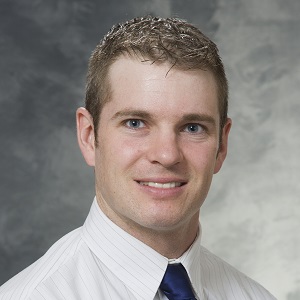
Christopher Darling
· Associate Professor (CHS)University of Wisconsin-Madison · Rehabilitation Medicine
Active 2001–2022
About
Christopher Darling is associated with the Department of Anesthesiology at the University of Wisconsin School of Medicine and Public Health. The provided page does not include specific details about his research focus, background, or key contributions. Therefore, a detailed biography cannot be generated from the available information.
Research topics
- Genetics
- Biology
- Zoology
- Law
- Evolutionary biology
- Ecology
Selected publications
Systematic Entomology · 2022 · 23 citations
- Biology
- Zoology
- Evolutionary biology
Abstract Planidia are free‐living, mobile first‐instar larvae that are notable in their ability to transition across different larval stages of their host, and for completing their development on the host prepupa as ectoparasitoids, effectively acting as larval‐pupal external koinobionts. Chalcidoid taxa with a planidium form a monophyletic group, the planidial larva clade (PLC). We conducted a phylogenomic study of the PLC using anchored hybrid enrichment data. Phylogenetic analyses support the backbone relationship of PLC as: (Eutrichosomatinae, ((Philomidinae, Chrysolampinae), (Perilampinae, Eucharitidae))). Although excluded from the main analyses, the genus Jambiya , based on only 11 loci recovered, was placed as the sister of Chrysolampinae + Philomidinae or Perilampinae + Eucharitidae. Our results demonstrate that Perilampidae (Philomidinae, Chrysolampinae and Perilampinae) are paraphyletic. Divergence dating based on four node calibrations based on fossils suggests that the PLC arose approximately 111 Ma and the evolution of ant parasitism at least 64 Ma. Host associations, direct versus indirect hyperparasitism, ability to attack a host within a cocoon, soft versus hard planidial forms and mobility of the planidium were explored using a likelihood‐based ancestral state reconstruction method. A revised higher‐level classification of the PLC is proposed, with Eutrichosomatinae elevated to Eutrichosomatidae ( stat. rev. ), Chrysolampinae and Philomidinae placed in Chrysolampidae ( stat. rev. ), Perilampidae ( stat. rev. ) restricted to what was referred to as Perilampinae, and Eucharitidae maintained with four subfamilies, with Akapalinae (unknown biology) as sister group to the core Eucharitidae, all of which are ant parasitoids. Jambiya is treated as an incertae sedis taxon within the planidial clade.
Journal of Hymenoptera Research · 2022 · 112 citations
- Biology
- Zoology
- Genetics
The family Pteromalidae (Hymenoptera: Chalcidoidea) is reviewed with the goal of providing nomenclatural changes and morphological diagnoses in preparation for a new molecular phylogeny and a book on world fauna that will contain keys to identification. Most subfamilies and some tribes of Pteromalidae are elevated to family level or transferred elsewhere in the superfamily. The resulting classification is a compromise, with the aim of preserving the validity and diagnosability of other, well-established families of Chalcidoidea. The following former subfamilies and tribes of Pteromalidae are elevated to family rank: Boucekiidae, Ceidae, Cerocephalidae, Chalcedectidae, Cleonymidae, Coelocybidae, Diparidae, Epichrysomallidae, Eunotidae, Herbertiidae, Hetreulophidae, Heydeniidae, Idioporidae, Lyciscidae, Macromesidae, Melanosomellidae, Moranilidae, Neodiparidae, Ooderidae, Pelecinellidae (senior synonym of Leptofoeninae), Pirenidae, Spalangiidae, and Systasidae. The following subfamilies are transferred from Pteromalidae: Chromeurytominae and Keiraninae to Megastigmidae, Elatoidinae to Neodiparidae, Nefoeninae to Pelecinellidae, and Erotolepsiinae to Spalangiidae. The subfamily Sycophaginae is transferred to Pteromalidae. The formerly incertae sedis tribe Lieparini is abolished and its single genus Liepara is transferred to Coelocybidae. The former tribe Tomocerodini is transferred to Moranilidae and elevated to subfamily status. The former synonym Tridyminae (Pirenidae) is treated as valid. The following former Pteromalidae are removed from the family and, due to phylogenetic uncertainty, placed as incertae sedis subfamilies or genera within Chalcidoidea: Austrosystasinae, Ditropinotellinae, Keryinae, Louriciinae, Micradelinae, Parasaphodinae, Rivasia , and Storeyinae. Within the remaining Pteromalidae, Miscogastrinae and Ormocerinae are confirmed as separate from Pteromalinae, the former tribe Trigonoderini is elevated to subfamily status, the former synonym Pachyneurinae is recognized as a distinct subfamily, and as the senior synonym of Austroterobiinae. The tribe Termolampini is synonymized under Pteromalini, and the tribe Uzkini is synonymized under Colotrechnini. Most former Otitesellinae, Sycoecinae, and Sycoryctinae are retained in the tribe Otitesellini, which is transferred to Pteromalinae, and all other genera of Pteromalinae are treated as Pteromalini. Eriaporidae is synonymized with Pirenidae, with Eriaporinae and Euryischiinae retained as subfamilies. Other nomenclatural acts performed here outside of Pteromalidae are as follows: Calesidae: elevation to family rank. Eulophidae: transfer of Boucekelimini and Platytetracampini to Opheliminae, and abolishment of the tribes Elasmini and Gyrolasomyiini. Baeomorphidae is recognized as the senior synonym of Rotoitidae. Khutelchalcididae is formally excluded from Chalcidoidea and placed as incertae sedis within Apocrita. Metapelmatidae and Neanastatidae are removed from Eupelmidae and treated as distinct families. Eopelma is removed from Eupelmidae and treated as an incertae sedis genus in Chalcidoidea. The following subfamilies and tribes are described as new: Cecidellinae (in Pirenidae), Enoggerinae ( incertae sedis in Chalcidoidea), Erixestinae (in Pteromalidae), Eusandalinae (in Eupelmidae), Neapterolelapinae ( incertae sedis in Chalcidoidea), Solenurinae (in Lyciscidae), Trisecodinae (in Systasidae), Diconocarini (in Pteromalidae: Miscogastrinae), and Trigonoderopsini (in Pteromalidae: Colotrechninae). A complete generic classification for discussed taxa is provided.
Frequent coauthors
- 6 shared
Lars Krogmann
Staatliches Museum für Naturkunde Stuttgart
- 6 shared
Jean‐Yves Rasplus
Centre de Coopération Internationale en Recherche Agronomique pour le Développement
- 5 shared
John M. Heraty
- 4 shared
Hannes Baur
Advanced Neural Dynamics (United States)
- 4 shared
Michael Haas
Staatliches Museum für Naturkunde Stuttgart
- 3 shared
Simon van Noort
University of Cape Town
- 2 shared
Robert L. Kresslein
- 2 shared
Alan R. Lemmon
Florida State University
Labs
Similar researchers at University of Wisconsin-Madison
- Resume-aware match score
- Save to shortlist
- AI-drafted outreach
See your match with Christopher Darling
PhdFit ranks faculty by your research interests, methods, and publications — grounded in their actual work, not templates.
- Free to start
- No credit card
- 30-second signup