
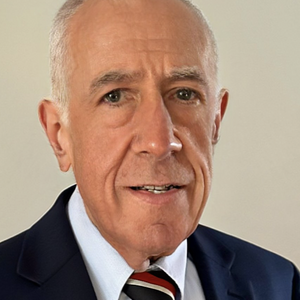
Charles DeLisi
· Distinguished Visiting Professor in Computing & Data SciencesBoston University · Computing & Data Sciences
Active 1969–2024
Academic metrics are sourced from OpenAlex and public funding records; values may differ from Google Scholar.
About
Charles DeLisi is an American Biomedical scientist who has made mathematical, computational, and experimental contributions to various areas of cell and systems biology including protein and DNA structure and function, gene regulation, cancer genetics, and immunology. His most recent publications have focused on climate change. He received a BA in History from the City College of New York and a PhD in Physics from NYU, followed by post-doctoral research in biophysical chemistry at Yale. DeLisi has held numerous prominent positions, including staff scientist at Los Alamos National Laboratory, senior investigator at NIH, and Founding Head of the Section on Theoretical Immunology at NCI, NIH. He was also the Director of the Department of Energy's Health and Environmental Research Programs and contributed to the development of one of the earliest databases of nucleic acid and protein sequences and structures. In 1986, he and colleagues proposed the concept of a reference human genome, which he successfully translated into policy. DeLisi served as Professor and Chair of the Department of Biomathematical Science at Mount Sinai School of Medicine, and as Dean of Boston University’s College of Engineering. He proposed and obtained funding for the nation's first graduate program in Bioinformatics and Systems Biology, which he chaired for over a decade. He was appointed the first Arthur Metcalf Professor of Science and Engineering at Boston University until his retirement in 2024. His…
Research topics
- Biology
- Mathematics
- Geography
- Medicine
- Virology
- Philosophy
- Art history
- Demography
- Internal medicine
- Statistics
Selected publications
The Role of Synthetic Biology in Atmospheric Greenhouse Gas Reduction: Prospects and Challenges
BioDesign Research · 2020 · 49 citations
1st authorCorrespondingproduced by respiration into a stable carbonate, designing plants with an increased root-to-shoot ratio, and creating plants with the ability to self-fertilize. A number of serious ecological and societal challenges must, however, be confronted and resolved before any such application can be fully assessed, realized, and deployed.
Inferring microbial co-occurrence networks from amplicon data: a systematic evaluation
mSystems · 2023-06-20 · 21 citations
articleOpen accessMicrobes commonly organize into communities consisting of hundreds of species involved in complex interactions with each other. 16S ribosomal RNA (16S rRNA) amplicon profiling provides snapshots that reveal the phylogenies and abundance profiles of these microbial communities. These snapshots, when collected from multiple samples, can reveal the co-occurrence of microbes, providing a glimpse into the network of associations in these communities. However, the inference of networks from 16S data i…
Predictions for Europe for the Covid-19 pandemic from a SIR model
medRxiv (Cold Spring Harbor Laboratory) · 2020 · 11 citations
Senior authorCorrespondingof infection per contact, with higher temperatures associated with lower infectivity. Policy implications of our findings are also briefly discussed.
Research Square (Research Square) · 2020 · 9 citations
Senior authorCorrespondingBackground: As the SARS-Cov-2/Covid-19 pandemic continues to ravage the world, it is important to understanding the characteristics of its spread and possible correlates for control to develop strategies of response. Methods: Here we show how a simple Susceptible-Infective-Recovered (SIR) model applied to data for eight European countries and the United Kingdom (UK) can be used to forecast the descending limb (post-peak) of confirmed cases and deaths as a function of time, and predict the durati…
The Amphipathic Helix as a Structural Feature Involved in T-Cell Recognition
2024-12-04 · 2 citations
book-chapterThe mammalian immune response to an invasion by a virus, bacteria, protozoa, or other foreign agent involves two distinct, but interdependent mechanisms referred to as humoral response and cellular response. In the humoral response, B cells release antibodies that attach to distinct binding sites on the proteins of the foreign agent, thus enabling phagocytic cells or complement to attach to and eliminate the foreign agent. A central character of antibody binding is that antibodies bind to foreig…
Recent grants
NIH · $1.2M · 2011
NIH · $447k · 2011
Visant-Predictome: A System for Integration, Mining, Visualization and Analysis
NIH · $3.0M · 2007–2017
Frequent coauthors
- 79 shared
Gyan Bhanot
Rutgers, The State University of New Jersey
- 47 shared
Gabriela Alexe
Dana-Farber Cancer Institute
- 40 shared
Zhenjun Hu
- 37 shared
James Cornette
Iowa State University
- 27 shared
Gul S. Dalgin
- 27 shared
Shridar Ganesan
Rutgers Cancer Institute of New Jersey
- 26 shared
Jay A. Berzofsky
National Institutes of Health
- 26 shared
Pablo Tamayo
Awards & honors
- Presidential Citizens Medal (President Clinton)
- Informa Clinical and Research Excellence Lifetime Achievemen…
Similar researchers at Boston University
- Resume-aware match score
- Save to shortlist
- AI-drafted outreach
See your match with Charles DeLisi
PhdFit ranks faculty by your research interests, methods, and publications — grounded in their actual work, not templates.
- Free to start
- No credit card
- 30-second signup