
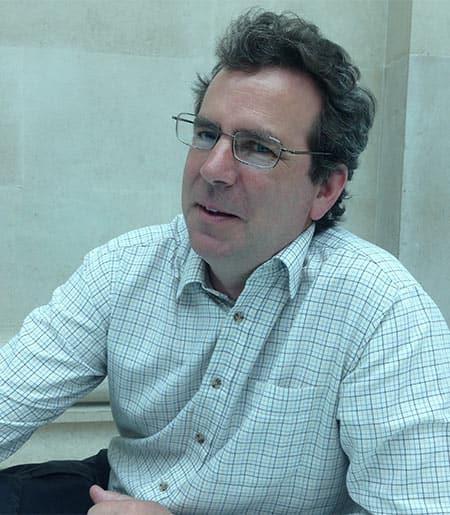
Charles Brittain
· Susan Linn Sage Professor of Philosophy and Humane LettersCornell University · Classics
Active 1962–2021
Academic metrics are sourced from OpenAlex and public funding records; values may differ from Google Scholar.
About
Charles Brittain is a Professor of Classics and of Philosophy at Cornell University, specializing in ancient philosophy. His research primarily focuses on Hellenistic philosophy, with particular interest in epistemology and ethics, as well as the works of Cicero, Augustine, and the Platonic tradition from Plato to Simplicius. Brittain has contributed to the understanding of ancient philosophical thought through his publications, including books on Philo of Larissa, Cicero, and translations of works by Simplicius. His scholarly work explores themes such as academic skepticism, ancient perceptions of divination, and the influence of Platonism in late antiquity. Brittain's expertise extends to analyzing the philosophical dialogues and concepts of self-knowledge, divine intervention, and the development of philosophical ideas from classical Greece through late antiquity.
Research topics
- Philosophy
- Epistemology
- Artificial Intelligence
- Computer Science
- History
- Social psychology
- Art
- Classics
- Literature
- Psychology
Selected publications
Cambridge University Press eBooks · 2012-02-02 · 228 citations
bookAntiochus of Ascalon was one of the seminal philosophers of the first century BC, an era of radical philosophical change. Some called him a virtual Stoic, but in reality his programme was an updated revival of the philosophy of the 'ancients', meaning above all Plato and Aristotle. His significance lies partly in his enormous influence on Roman intellectuals of the age, including Cicero, Brutus and Varro, partly in his role as the harbinger of a new style of philosophy, which thereafter remained…
Cambridge University Press eBooks · 2015-12-09 · 104 citations
book-chapter1st authorCorrespondingA summary is not available for this content so a preview has been provided. Please use the Get access link above for information on how to access this content.
Common sense: concepts, definition and meaning in and out of the Stoa
Cambridge University Press eBooks · 2005-06-23 · 101 citations
book-chapter1st authorCorrespondingThe prevalence of philosophical appeals to universal agreement in ancient thought indicates that a limited notion of 'common sense' was around, at least implicitly, from the fourth century bc. But, despite the partial justification Aristotle gave for such appeals, a developed theory of common sense was not possible until the Socratic insight that rationality is in some sense constitutive of all adult human beings was adapted and elaborated by the Stoics. In this paper, I argue that the earliest…
Cambridge University Press eBooks · 2012-02-16 · 82 citations
bookSenior authorPlato's account of the tripartite soul is a memorable feature of dialogues like the Republic, Phaedrus and Timaeus: it is one of his most famous and influential yet least understood theories. It presents human nature as both essentially multiple and diverse - and yet somehow also one - divided into a fully human 'rational' part, a lion-like 'spirited part' and an 'appetitive' part likened to a many-headed beast. How these parts interact, how exactly each shapes our agency and how they are affect…
Cambridge University Press eBooks · 2005-06-23 · 73 citations
bookThe philosophers and scholars of the Hellenistic world laid the foundations upon which the Western tradition based analytical grammar, linguistics, philosophy of language, and other disciplines probing the nature and origin of human communication. Building on the pioneering work of Plato and Aristotle, these thinkers developed a wide range of theories about the nature and origin of language which reflected broader philosophical commitments. In this collection of nine essays, a team of distinguis…
Frequent coauthors
- 8 shared
Tad Brennan
Cornell University
- 6 shared
Dorothea Frede
Universität Hamburg
- 6 shared
David Sedley
- 3 shared
Malcolm Schofield
- 3 shared
Troels Engberg‐Pedersen
University of Copenhagen
- 3 shared
Rachel Barney
University of Toronto
- 3 shared
David Blank
- 2 shared
Myrto Hatzimichali
Similar researchers at Cornell University
- Resume-aware match score
- Save to shortlist
- AI-drafted outreach
See your match with Charles Brittain
PhdFit ranks faculty by your research interests, methods, and publications — grounded in their actual work, not templates.
- Free to start
- No credit card
- 30-second signup