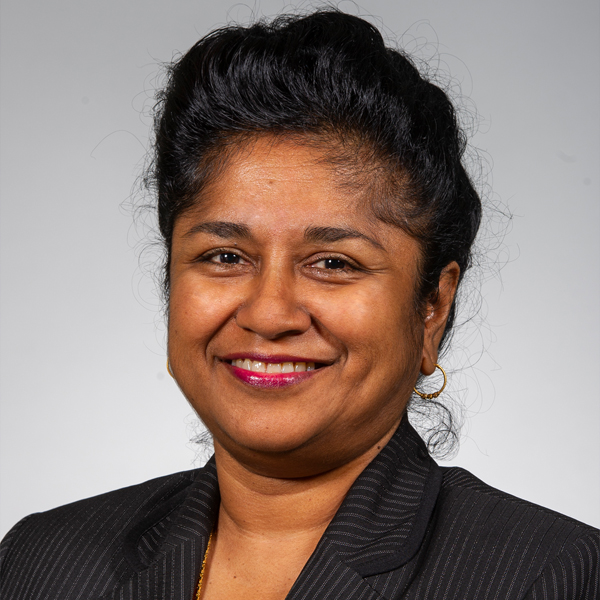
Celeste Abraham
· Clinical Associate ProfessorTexas A&M University · Ophthalmology
Active 1998–2025
Research topics
- Medicine
- Dentistry
- Surgery
- Internal medicine
- Immunology
Selected publications
Oral Surgery Oral Medicine Oral Pathology and Oral Radiology · 2025-09-18 · 1 citations
articleHAIRY LEUKOPLAKIA IN A PATIENT UNDERGOING ANTI-RETROVIRAL THERAPY
Oral Surgery Oral Medicine Oral Pathology and Oral Radiology · 2019-06-12
articleVideoscope Assisted Minimally Invasive Surgery (VMIS): 36‐Month Results
Journal of Periodontology · 2017-02-10 · 24 citations
articleBACKGROUND: Clinical outcomes from videoscope assisted minimally invasive surgery (VMIS) at 36 to 58 months are reported. METHODS: Fourteen patients having sites with residual probing depth (PD) of at least 5 mm and 2 mm loss of clinical attachment level (CAL) after initial non-surgical therapy were treated with VMIS. RESULTS: At 36 months or greater post-surgery there was a statistically significant improvement (P <0.001) in mean PD and CAL (PD: 3.80 ± 1.18 mm, CAL: 4.16 ± 1.18 mm) in all surgical sites compared with baseline. There was a mean improvement in soft tissue height (0.36 ± 0.64 mm, P = 0.03). In most cases, patients reported no postoperative discomfort. CONCLUSIONS: Improvements from VMIS appear to be favorable when compared with previously reported results of periodontal regenerative surgery. All improvements were stable over time. The lack of post-surgical recession after VMIS has not been reported with traditional regenerative surgery.
Videoscope Assisted Minimally Invasive Periodontal Surgery (VMIS): Long Term Outcomes.
Journal of Periodontology · 2017-02-09 · 1 citations
articleTHE INTERNATIONAL JOURNAL OF PERIODONTICS AND RESTORATIVE DENTISTRY · 2017-10-17
articleVideoscope-Assisted Minimally Invasive Periodontal Surgery: One-Year Outcome and Patient Morbidity
The International Journal of Periodontics & Restorative Dentistry · 2016-05-01 · 15 citations
articleThe aim of this study was to report the 1-year clinical outcomes from videoscope-assisted minimally invasive surgery (V-MIS). A sample of 18 patients having sites with residual pocket probing depth (PPD) of at least 5 mm and 2 mm loss in clinical attachment level (CAL) following initial nonsurgical therapy were treated with V-MIS. At 12 months postsurgery, there was a statistically significant improvement (P < .001) in mean PPD (4.11 ± 0.98 mm) and CAL (4.58 ± 1.19 mm) in all surgical sites. A mean improvement in soft tissue height (0.48 ± 0.65 mm, P = .006) was also observed. In most cases, patients reported no postoperative discomfort. The improvements associated with V-MIS appear to be favorable when compared with previously reported results of periodontal regenerative surgery. The lack of postsurgical recession following V-MIS has not been reported with traditional regenerative surgery.
The Role of Occlusion in the Dental Implant and Peri-implant Condition: A Review
The Open Dentistry Journal · 2016-11-16 · 49 citations
reviewOpen accessSenior authorDental implants have become a widely used dental treatment approach. It is important to identify factors that can be detrimental to dental implants and the peri-implant complex. There is controversy regarding whether occlusion plays a role in the implant and peri-implant condition. The present study aims to review the scientific literature regarding this topic. Animal and human studies, and previous reviews on the topic are included and presented. There is a wide heterogeneity among study designs. Several articles demonstrated that occlusion and occlusion overload could detrimentally affect the peri-implant condition, while other articles did not support these results. More studies are needed to help understand the mechanisms by which occlusion might play a role in the peri-implant condition.
Videoscope‐assisted minimally invasive periodontal surgery (V‐MIS)
Journal Of Clinical Periodontology · 2014-07-16 · 27 citations
articleAIM: Small incision surgery has become routine in many areas of medicine but has not been widely accepted in periodontal therapy. A videoscope to assist minimally invasive surgery (MIS) has been developed. The clinical outcomes from MIS performed using this videoscope (V-MIS) are reported. MATERIALS AND METHODS: Patients were evaluated for residual defects following non-surgical therapy consisting of root planing with local anaesthetic. Thirty patients having 110 sites with residual pocket probing depth (PPD) of at least 5 mm, 2 mm loss of clinical attachment level (CAL), and radiographic evidence of bone loss were surgically treated. V-MIS was performed utilizing the videoscope for surgical visualization. RESULTS: At re-evaluation 6 months post surgery, there was a statistically significant improvement (p < .001) in mean PPD and CAL (PPD 3.88 ± 1.02 mm, CAL 4.04 ± 1.38 mm) in 1, 2, and 3 wall defects. All PPD at re-evaluation were 3 mm or less. There was a mean post-surgical increase in soft tissue height (0.13 ± 0.61 mm, p = 0.168) with a decrease in recession. CONCLUSIONS: The improvement in PPD and CAL from V-MIS, in the authors' opinion, appears to be favourable when compared to previously reported results of periodontal regenerative surgery. The lack of post-surgical recession following V-MIS has not been reported with traditional regenerative surgery.
A Brief Historical Perspective on Dental Implants, Their Surface Coatings and Treatments
The Open Dentistry Journal · 2014-05-16 · 290 citations
articleOpen access1st authorCorrespondingThis review highlights a brief, chronological sequence of the history of dental implants. This historical perspective begins with ancient civilizations and spotlights predominant dentists and their contributions to implant development through time. The physical, chemical and biologic properties of various dental implant surfaces and coatings are discussed, and specific surface treatments include an overview of machined implants, etched implants, and sand-blasted implants. Dental implant coatings such as hydroxyapatite, fluoride, and statin usage are further reviewed.
Ridge Preservation using Dermis Allograft Tissue Matrix Membrane vs Connective Tissue Graft
Journal of Contemporary Dentistry · 2014-01-01
articleOpen access1st authorABSTRACT Purpose The purpose of this study was to compare extraction socket healing and alveolar ridge preservation using autogenous bone covered with connective tissue graft (CT) or acellular dermal matrix (ADM). Materials and Methods Sixteen nonsmoking, healthy patients with 18 nonmolar teeth requiring extraction participated in the study. Following extraction, the sockets were debrided, measured, and grafted with autogenous bone, then covered with either CT or ADM. Measurements of alveolar ridge width and height were made at baseline and after 16 to 20 weeks post extraction. Soft and hard tissue biopsies of the extraction sites were evaluated histomorphometrically. Results The mean buccolingual ridge width loss was 0.19 mm for both CT and ADM groups. The mean vertical bone gain was 1.08 mm bone for the CT group and 0.82 mm for the ADM group. Histologic evaluation revealed a mean bone fill of 40.67 and 50.76% for CT and ADM group respectively. Student t-tests did not reveal significant difference between the two groups. Conclusion The overall results of the study suggest that the use of bone graft covered with either CT or ADM is useful for ridge preservation. How to cite this article Tomlin EM, Kerns DG, Rossmann JA, Beach MM, Al-Hashimi I, Abraham CM, Solomon ES, Kessler HP. Ridge Preservation using Dermis Allograft Tissue Matrix Membrane vs Connective Tissue Graft. J Contemp Dent 2014;4(1):10-16.
Frequent coauthors
- 23 shared
Stephen K. Harrel
- 22 shared
Francisco Rivera‐Hidalgo
Texas A&M University
- 16 shared
Ibtisam Al‐Hashimi
Southwestern Medical Center
- 12 shared
David G. Kerns
Texas A&M University
- 11 shared
Jeffrey A. Rossmann
- 11 shared
Jay D. Shulman
- 10 shared
Eric Solomon
Johns Hopkins University
- 9 shared
Daisha J. Cipher
Education
Ph.D., OCBS
Texas A&M University - Dallas/Fort Worth
M.S., OBIO
Texas A&M University - Dallas/Fort Worth
- Resume-aware match score
- Save to shortlist
- AI-drafted outreach
See your match with Celeste Abraham
PhdFit ranks faculty by your research interests, methods, and publications — grounded in their actual work, not templates.
- Free to start
- No credit card
- 30-second signup