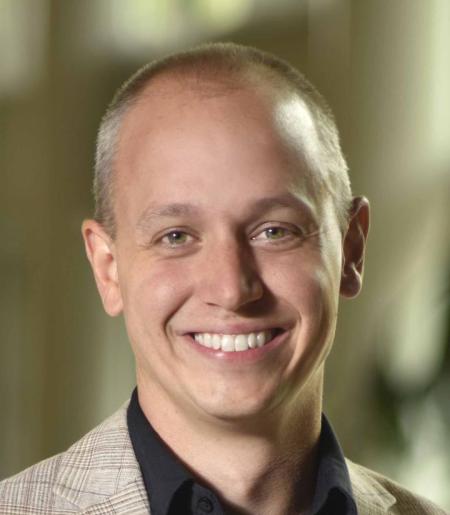
Gordon Pennycook
· Associate Professor, Dorothy and Ariz Mehta Faculty Leadership FellowCornell University · Psychology
Active 2009–2024
About
Gordon Pennycook is an Associate Professor in the Department of Psychology at Cornell University and holds the Dorothy and Ariz Mehta Faculty Leadership Fellowship. His research broadly focuses on reasoning and decision-making, specifically investigating the distinction between intuitive processes, such as gut feelings, and more deliberative, analytic reasoning processes. He is principally interested in understanding the causes of analytic thinking and its consequences, aiming to uncover what motivates us to think and why thinking is important. His work emphasizes the importance of understanding errors made during reasoning and decision-making, which have significant implications for global issues such as climate change, health crises, political polarization, and misinformation. Pennycook's research aims to identify why people make these errors and how better decision-making can be promoted. His contributions include theoretical perspectives and empirical studies on reasoning, misinformation, conspiracy beliefs, and the influence of AI and social media on public opinion. His research has been recognized in the media and through awards, highlighting his impact on understanding social and cognitive processes related to misinformation and decision-making.
Research topics
- Political Science
- Sociology
- Computer Science
- Psychology
- Social psychology
- Social Science
- Computer Security
- Medicine
- Public relations
- Advertising
- Internet privacy
- Psychiatry
- World Wide Web
- Cognitive psychology
- Epistemology
- Engineering
- Law
- Artificial Intelligence
- Clinical psychology
- Business
- Virology
- Art history
- Art
Selected publications
A synthesis of evidence for policy from behavioural science during COVID-19
Nature · 2023 · 107 citations
- Political Science
- Psychology
- Public relations
proposed 19 policy recommendations ('claims') detailing how evidence from behavioural science could contribute to efforts to reduce impacts and end the COVID-19 pandemic. Here we assess 747 pandemic-related research articles that empirically investigated those claims. We report the scale of evidence and whether evidence supports them to indicate applicability for policymaking. Two independent teams, involving 72 reviewers, found evidence for 18 of 19 claims, with both teams finding evidence supporting 16 (89%) of those 18 claims. The strongest evidence supported claims that anticipated culture, polarization and misinformation would be associated with policy effectiveness. Claims suggesting trusted leaders and positive social norms increased adherence to behavioural interventions also had strong empirical support, as did appealing to social consensus or bipartisan agreement. Targeted language in messaging yielded mixed effects and there were no effects for highlighting individual benefits or protecting others. No available evidence existed to assess any distinct differences in effects between using the terms 'physical distancing' and 'social distancing'. Analysis of 463 papers containing data showed generally large samples; 418 involved human participants with a mean of 16,848 (median of 1,699). That statistical power underscored improved suitability of behavioural science research for informing policy decisions. Furthermore, by implementing a standardized approach to evidence selection and synthesis, we amplify broader implications for advancing scientific evidence in policy formulation and prioritization.
Using Social and Behavioural Science to Support COVID-19 Pandemic Response
SSRN Electronic Journal · 2022 · 85 citations
- Political Science
- Sociology
- Social Science
Timing matters when correcting fake news
Proceedings of the National Academy of Sciences · 2021 · 205 citations
- Computer Science
- Computer Security
- Psychology
) exposure. This finding informs the cognitive science of belief revision and has practical implications for social media platform designers.
Shifting attention to accuracy can reduce misinformation online
Nature · 2021 · 1064 citations
1st authorCorresponding- Computer Science
- Political Science
- Internet privacy
Tackling misinformation: What researchers could do with social media data
2020 · 87 citations
- Sociology
- Art history
- Art
Written by Michelle A. Amazeen, Fabrício Benevenuto, Nadia M. Brashier, Robert M. Bond, Lia C. Bozarth, Ceren Budak, Ullrich K. H. Ecker, Lisa K. Fazio, Emilio Ferrara, Andrew J. Flanagin, Ales-sandro Flammini, Deen Freelon, Nir Grinberg, Ralph Hertwig, Kathleen Hall Jamieson, Kenneth Jo-seph, Jason J. Jones, R. Kelly Garrett, Daniel Kreiss, Shannon McGregor, Jasmine McNealy, Drew Margolin, Alice Marwick, FiIippo Menczer, Miriam J. Metzger, Seungahn Nah, Stephan Lewan-dowsky, Philipp Lorenz-Spreen, Pablo Ortellado, Irene Pasquetto, Gordon Pennycook, Ethan Porter, David G. Rand, Ronald Robertson, Briony Swire-Thompson, Francesca Tripodi, Soroush Vosoughi, Chris Vargo, Onur Varol, Brian E. Weeks, John Wihbey, Thomas J. Wood, & Kai-Cheng Yang
Using social and behavioural science to support COVID-19 pandemic response
Nature Human Behaviour · 2020 · 5046 citations
- Sociology
- Political Science
- Social Science
Psychological Science · 2020 · 1728 citations
1st authorCorresponding- Computer Science
- Psychology
- Social psychology
Across two studies with more than 1,700 U.S. adults recruited online, we present evidence that people share false claims about COVID-19 partly because they simply fail to think sufficiently about whether or not the content is accurate when deciding what to share. In Study 1, participants were far worse at discerning between true and false content when deciding what they would share on social media relative to when they were asked directly about accuracy. Furthermore, greater cognitive reflection and science knowledge were associated with stronger discernment. In Study 2, we found that a simple accuracy reminder at the beginning of the study (i.e., judging the accuracy of a non-COVID-19-related headline) nearly tripled the level of truth discernment in participants' subsequent sharing intentions. Our results, which mirror those found previously for political fake news, suggest that nudging people to think about accuracy is a simple way to improve choices about what to share on social media.
Using social and behavioural science to support COVID-19 pandemic response
2020 · 661 citations
- Political Science
- Sociology
- Social Science
The COVID-19 pandemic represents a massive global health crisis. Because the crisis requires large-scale behaviour change and places significant psychological burdens on individuals, insights from the social and behavioural sciences can be used to help align human behavior with the recommendations of epidemiologists and public health experts. Here we discuss evidence from a selection of research topics relevant to pandemics, including work on navigating threats, social and cultural influences on behaviour, science communication, moral decision-making, leadership, and stress and coping. In each section, we note the nature and quality of prior research, including uncertainty and unsettled issues. We identify several insights for effective response to the COVID-19 pandemic, and also highlight important gaps researchers should move quickly to fill in the coming weeks and months.
2020 · 402 citations
1st authorCorresponding- Computer Science
- Computer Security
- Psychology
Across two studies with over 1,600 U.S. adults recruited online, we present evidence that people share false claims about COVID-19 partly because they simply fail to think sufficiently about whether or not content is accurate when deciding what to share. In Study 1, participants were far worse at discerning between true and false content when deciding what they would share on social media relative to when they are asked directly about accuracy. Furthermore, cognitive reflection and science knowledge were associated with stronger discernment. In Study 2, we found that a simple accuracy reminder at the beginning of the study – i.e., judging the accuracy of a non-COVID-19-related headline – more than doubled the level of truth discernment in participants’ sharing intentions. Our results, which mirror those found previously for political fake news, suggest that nudging people to think about accuracy is a simple way to improve choices about what to share on social media.
Frequent coauthors
- 252 shared
David G. Rand
Massachusetts Institute of Technology
- 60 shared
Jonathan A. Fugelsang
University of Waterloo
- 58 shared
Derek J. Koehler
University of Waterloo
- 48 shared
Hause Lin
Massachusetts Institute of Technology
- 43 shared
Dries Trippas
Macquarie University
- 37 shared
Chad Dubé
University of South Florida
- 37 shared
David Kellen
Syracuse University
- 37 shared
Henrik Singmann
University College London
Similar researchers at Cornell University
- Resume-aware match score
- Save to shortlist
- AI-drafted outreach
See your match with Gordon Pennycook
PhdFit ranks faculty by your research interests, methods, and publications — grounded in their actual work, not templates.
- Free to start
- No credit card
- 30-second signup