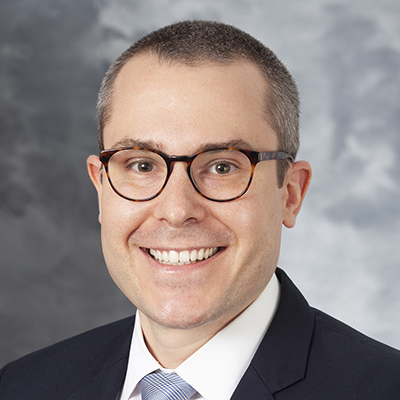
Andreas de Biasi
· Assistant ProfessorUniversity of Wisconsin-Madison · Surgery
Active 2011–2022
About
Andreas de Biasi, MD, is an Assistant Professor in the Division of Cardiothoracic Surgery at the University of Wisconsin School of Medicine and Public Health. His education includes an MD from the University of Maryland School of Medicine, postdoctoral research at Memorial Sloan Kettering Cancer Center, and additional postdoctoral research at Weill Cornell Medical College/New York-Presbyterian Hospital. He completed his General Surgery Residency at Weill Cornell Medical College/New York-Presbyterian Hospital and a Cardiothoracic Surgery Fellowship at Stanford University. Dr. de Biasi specializes in complex aortic surgery, including procedures such as David valve-sparing aortic root replacement, treatment of acute type A aortic dissection, thoracic aortic aneurysm repair, re-do aortic surgery, total arch replacement, frozen elephant trunk techniques, thoracic endovascular aortic repair (TEVAR), thoracoabdominal aortic replacement, and surgeries for connective tissue disorders like Marfan and Loeys-Dietz syndromes. He also has considerable experience in minimally invasive heart valve surgery, including mini-sternotomy aortic valve replacement, transcatheter aortic valve replacement (TAVR), and mini-thoracotomy mitral valve repair. Additionally, Dr. de Biasi is trained in advanced surgical techniques for coronary artery disease, such as coronary artery bypass grafting (CABG) using multiple arterial conduits, off-pump and beating-heart CABG, and minimally invasive myocardial bridge unroofing. His research focuses on the identification of risk factors for aortic dissection and aneurysm propagation using multidisciplinary analytics, including artificial intelligence technologies. He is also interested in the application of endovascular devices in aortic arch surgery.
Research topics
- Medicine
- Internal medicine
- Cardiology
- Radiology
- Structural engineering
- Philosophy
- Anatomy
- Engineering
- Surgery
Selected publications
JACC Case Reports · 2021 · 5 citations
- Medicine
- Cardiology
- Internal medicine
).
JTCVS Techniques · 2020 · 9 citations
- Medicine
- Surgery
- Radiology
Central MessageCatheter-ablation procedures for atrial fibrillation are increasing. Life-threatening complications, such as fistula development, require early recognition, diagnosis, and surgical intervention.See Commentaries on pages 173, 175, and 176. Catheter-ablation procedures for atrial fibrillation are increasing. Life-threatening complications, such as fistula development, require early recognition, diagnosis, and surgical intervention. See Commentaries on pages 173, 175, and 176. Atrial-esophageal fistula (AEF) is a rare but devastating complication after catheter ablation for atrial fibrillation (AF), with mortality up to 80%.1Gray W.H. Fleischman F. Cunningham M.J. Kim A.W. Baker C.J. Starnes V.A. et al.Optimal approach for repair of left atrial-esophageal fistula complicating radiofrequency ablation.Ann Thorac Surg. 2018; 105: e229-e231Abstract Full Text Full Text PDF PubMed Scopus (2) Google Scholar Prompt diagnosis and surgical intervention are essential. Herein, we describe a 2-stage approach focused on minimizing risk of air embolus and stroke, starting with intracardiac repair on cardiopulmonary bypass (CPB) followed by fistula takedown and esophageal repair via right thoracotomy. Additional novel aspects of our technique include the use of prone imaging following oral contrast administration to aid in diagnosis and the use of a stapling device during fistula takedown. The authors obtained signed informed consent from the patient to publish this manuscript. A 35-year-old man who underwent pulmonary vein isolation and catheter ablation for AF presented 3 weeks following the procedure with pleuritic chest pain, shortness of breath, and blurry vision. Computed tomography scan revealed oral contrast extravasation from the esophagus to the left atrium (LA) (Figure 1, A and B). He was transferred emergently to our institution for immediate repair (Video 1).Figure 1Diagnosis and initial control of atrial-esophageal fistula via median sternotomy (stage 1): A 35-year-old man underwent pulmonary vein isolation and catheter ablation for AF. Three weeks following the procedure, he presented with chest pain and blurry vision. A, Diagnostic imaging including: (i) Computed tomography with intravenous contrast (yellow line represents distance from esophagus to the ostia of the pulmonary veins) and (ii) oral contrast given and images obtained with patient lying prone demonstrating contrast extravasation and air within the atrium (white arrow). B, Three-dimensional reconstruction of the left atrium (dotted white line) demonstrating air behind the atrium (black arrowhead) and atrial defect (highlighted in red). C, Initial stage of surgical repair was performed via median sternotomy and aortic/bicaval cannulation for cardiopulmonary bypass. Intraoperative gross photography highlighting the defect located in the posterior left atrial wall with surrounding inflammation (white arrowhead). Intracardiac repair was performed using a bovine pericardium patch, and the patient was separated from bypass. RIPV, Right inferior pulmonary vein; E, esophagus; LA, left atrium; DA, descending aorta; LIPV, left inferior pulmonary vein; RSPV, right superior pulmonary vein; LSPV, left superior pulmonary vein.View Large Image Figure ViewerDownload (PPT) The first stage of the procedure started with median sternotomy and aortic/bicaval cannulation for CPB. Endoscopy was not done initially out of concern for causing air embolism. After we arrested the heart, a left atriotomy was performed in Sondergaard's groove. The posterior wall was found to be thickened, inflamed, and densely adherent to the pericardium. Two defects in the myocardium were identified (Figure 1, C). Intracardiac repair was performed using a bovine pericardium patch to cover and exclude the defects. The patient was then separated from bypass, the sternotomy incision closed, and he was repositioned for right thoracotomy to perform stage 2. The fistula was isolated (Figure 2, A) and taken down with a 30-mm TA stapler green cartridge (Figure 2, B). The esophageal defect was repaired in layers (Figure 2, C) and buttressed with an intercostal muscle flap (Figure 2, D). Endoscopic leak test confirmed an intact repair; however, a contained leak was seen on esophagram the following week. An esophageal stent and jejunostomy tube were placed, and the patient was discharged home on postoperative day 14. In addition, blood cultures drawn on admission grew Lactobacillus, necessitating a prolonged course of antibiotics. On postoperative day 40, the stent was removed and his esophagram was normal. He resumed a regular diet with no sequelae related to his swallowing. The LA is often enlarged and thinned in AF, making the adjacent esophagus prone to thermal injury during ablation procedures. Recognition of esophageal injury (erythema, ulceration, perforation) following ablative therapies is increasing, leading many to advocate for increased use of postprocedural endoscopy or endoscopic ultrasonography.2Zhang P. Zhang Y.-Y. Ye Q. Jiang R.H. Liu Q. Ye Y. et al.Characteristics of atrial fibrillation patients suffering esophageal injury caused by ablation for atrial fibrillation.Sci Rep. 2020; 10: 1-9PubMed Google Scholar AEFs carry a high rate of mortality and are likely underreported due to a multitude of factors, including death outside the hospital, delay in diagnosis, and misdiagnosis. As symptoms can be vague and time to development of AEF is broad (days to months), clinicians must be cognizant of all possible complications following ablative therapy and have a low threshold for investigation. The most common imaging modality to diagnose AEFs is computed tomography with oral and/or intravenous contrast.3Ha F.J. Han H.C. Sanders P. Teh A.W. O'Donnell D. Farouque O. et al.Challenges and limitations in the diagnosis of atrioesophageal fistula.J Cardiovasc Electrophysiol. 2018; 29: 861-871Crossref PubMed Scopus (8) Google Scholar We recommend administering oral contrast immediately before image capture and with the patient in prone position, as was done in this case. Once diagnosed, treatment includes broad-spectrum antibiotics and immediate surgical intervention. Nonoperative management and endoscopic therapies alone are inferior and associated with unacceptably high mortality. Cerebral air embolism often results in devastating neurologic sequelae. Air can enter the systemic circulation from the esophagus during either endoscopy or CPB until the fistula has been taken down. Several strategies were used in this case to minimize the risk of this dreaded complication. The patient was maintained in slight Trendelenburg, expeditiously placed on CPB with early crossclamp application, and upper endoscopy was completely avoided until the fistula was divided, as there are reports of deteriorating neurologic status and death following insufflation from endoscopy.4French K. Garcia C. Wold J. Hoesch R. Ledyard H. Cerebral air emboli with atrial-esophageal fistula following atrial fibrillation ablation: a case report and review.Neurohospitalist. 2011; 1: 128-132Crossref PubMed Scopus (11) Google Scholar Although various surgical approaches have been described, we advocate a staged 2-field technique (median sternotomy and right thoracotomy) using CPB. In doing so, the LA is decompressed and intracardiac repair is completed before esophageal repair to prevent embolic neurologic injury. This approach (intracardiac repair first with CPB) also protects against massive hemorrhage with fistula manipulation. Following takedown of the AEF and esophageal repair in layers, the esophagus should be buttressed with muscle (intercostal, latissimus, pectoralis) and/or fat (pericardial, omental flap). This reinforces the repair while also providing added physical separation between the inflamed esophagus and heart. Diversion with cervical esophagostomy should be performed in the setting of hemodynamic instability or friable esophageal tissue not suitable for repair. Feeding access can be considered at the time of the index procedure or placed in a delayed fashion if needed. In the setting of uncontrolled leak or a large defect, return to the operating room for esophageal diversion is likely necessary. As the incidence of catheter ablation procedures for AF is increasing worldwide,5Han H.-C. Ha F.J. Sanders P. Spencer R. Teh A.W. O'Donnell D. et al.Atrioesophageal fistula: clinical presentation, procedural characteristics, diagnostic investigations, and treatment outcomes.Circ Arrhythm Electrophysiol. 2017; 10: e005579Crossref PubMed Scopus (47) Google Scholar complications associated with the procedure are becoming more relevant. In the case of life-threating AEFs, early recognition, diagnosis, and surgical intervention is imperative and associated with improved survival. eyJraWQiOiI4ZjUxYWNhY2IzYjhiNjNlNzFlYmIzYWFmYTU5NmZmYyIsImFsZyI6IlJTMjU2In0.eyJzdWIiOiI4MWFlOTUzYjFmMWQ4YmYxOTRhZjc4YmEzNDRiY2Y0ZCIsImtpZCI6IjhmNTFhY2FjYjNiOGI2M2U3MWViYjNhYWZhNTk2ZmZjIiwiZXhwIjoxNjMzMjU3NjQyfQ.nmDsT0GwPJnjRb06zhjoLNtct0H14Q1qszzFG9p328VrB7xoIYMkdT90aRL3uSH4J4PI4u9jbKm3P5WwfjesFcZaaY939f49y9CaSyS6MLehZ0IrPryuFE0DbhvldDm2S2lqMQyPreua4YXSGOaWhDTMKbxQkpVcwNtL7a2N47fsK34306zrAqoTonvK-VSSFVLRFHh1FyVoEB8ytKESDqd5mn0atsDVxYcrY6RUV-hoRf86yA0DIysatMXPDG7LMSX8DdVY1P9NBsnHc9m1a9ytJHC2qrxUORn4cNhiMgxDGmBCLrgg0_i3EUqpLlmcvKS9tjAtx4xNrTWTyxtlsQ Download .mp4 (7.49 MB) Help with .mp4 files Video 1Case details including workup, surgical approach, and techniques presented in a male with an atrial-esophageal fistula following catheter ablation. Video available at: https://www.jtcvs.org/article/S2666-2507(20)30360-6/fulltext.
JTCVS Techniques · 2020 · 8 citations
- Anatomy
- Internal medicine
- Cardiology
Central MessageHere, we report a novel technique for replacement of the mitral and aortic valves via an aortotomy in a patient with recent Stanford type A aortic dissection and multivalve infective endocarditis.See Commentaries on pages 103 and 104. Here, we report a novel technique for replacement of the mitral and aortic valves via an aortotomy in a patient with recent Stanford type A aortic dissection and multivalve infective endocarditis. See Commentaries on pages 103 and 104. The first aortic and mitral valve replacement via an aortotomy was reported by Carmichael and colleagues1Carmichael M.J. Cooley D.A. Favor A.S. Aortic and mitral valve replacement through a single transverse aortotomy: a useful approach in difficult mitral valve exposure.Tex Heart Inst J. 1983; 10: 415-419PubMed Google Scholar in 1983. David and colleagues used the same exposure in 19972David T.E. Kuo J. Armstrong S. Aortic and mitral valve replacement with reconstruction of the intervalvular fibrous body.J Thorac Cardiovasc Surg. 1997; 114: 766-772Abstract Full Text Full Text PDF PubMed Scopus (126) Google Scholar to pioneer what came to be named the Commando procedure, which is to reconstruct the aortomitral curtain to allow double-valve replacement in cases of infective endocarditis. Here, we present a novel iteration of this procedure using the mitral sewing ring as an anchor for the neo-aortic root. A 58-year-old male patient underwent aortic valve replacement and ascending-hemiarch replacement for concurrent endocarditis and Stanford type A aortic dissection. Four months later, he was readmitted with pleuritic chest pain. Computed tomography angiography of the chest showed contrast extravasation into a perigraft fluid collection surrounding the root and ascending graft. Transthoracic echocardiography showed severe aortic regurgitation and moderate mitral regurgitation suggestive of bioprosthetic endocarditis. He remained afebrile, hemodynamically stable, and his white blood cell count was normal. He was started on intravenous antibiotics and scheduled for urgent surgery 3 days later. Before the chest was opened, the left axillary artery was dissected and an 8-mm Dacron graft anastomosed for the arterial cardiopulmonary bypass line. Once the chest was entered, cardiopulmonary bypass was initiated in the standard fashion. Upon entering the pseudoaneurysm, we found purulent material that encompassed the root and graft. The root was dehisced beneath the right coronary button and the noncoronary cusp with associated disintegration of the aortomitral curtain and dehiscence of the anterior mitral leaflet (Figure 1). The tissue of the dome of the left atrium was intact. The native aortic root, previous bioprosthetic aortic valve, and remnant of the anterior mitral leaflet were removed and pledgeted sutures were placed around the mitral annulus. A supra-annular #33 St Jude Epic biologic mitral valve (St Paul, Minn) was implanted in reverse orientation as previously described, obviating the need to enter the left atrium (Figure 2).3Frederick J.R. Woo Y.J. Transaortic mitral valve replacement.Ann Thorac Surg. 2012; 94: 302-304Abstract Full Text Full Text PDF PubMed Scopus (5) Google Scholar Pledgeted neo-aortic root sutures were placed across the regions of the right and left fibrous trigones just inferior to the territory of the noncoronary cusp and anchored to the segment of the mitral sewing ring that corresponded to the native anterior mitral leaflet. A #27 Edwards Magna biologic aortic valve (Irvine, Calif) was sewn to a 30-mm HEMASHIELD straight graft (Gothenburg, Sweden) and then into the left ventricular outflow tract (LVOT) and mitral valve sewing ring. The coronary buttons were reimplanted on the straight graft, which was subsequently anastomosed to the remaining distal hemiarch graft from the index operation. Postcardiopulmonary bypass transesophageal echocardiography showed no aortic or mitral regurgitation.Figure 2Intraoperative view from the patient's right looking down the aortotomy. Two of the struts of the replaced mitral valve can be seen pointing toward 1 and 3 o'clock (arrows), respectively. In this photograph, pledgets are being secured to the mitral annulus, corresponding with the location of the resected native anterior mitral leaflet, which will be used to anchor the neo-aortic root once the tension on the mitral valve is relaxed. The future location of the aortic valve is indicated by the dashed black ellipse.View Large Image Figure ViewerDownload (PPT) The patient was discharged to rehabilitation on postoperative day 16 in stable condition with a permanent pacemaker and lifelong antibiotics. Follow-up transthoracic echocardiography at 5 months showed aortic and mitral valve gradients of 7 mm Hg and 6.5 mm Hg, respectively. At this visit, he described continued improvement in his strength and energy levels despite his outpatient physical therapy being interrupted by the coronavirus disease 2019 pandemic. Consent for this case report was provided by the patient as part of our institution's consent for surgery. Infective endocarditis involving both the aortic and mitral valves is particularly well suited for a transaortic exposure, as opposed to the more traditional left atrial or transseptal approach for mitral procedures.3Frederick J.R. Woo Y.J. Transaortic mitral valve replacement.Ann Thorac Surg. 2012; 94: 302-304Abstract Full Text Full Text PDF PubMed Scopus (5) Google Scholar In contrast to David and colleagues' reconstruction of the intervalvular fibrous body with bovine pericardium or Dacron2David T.E. Kuo J. Armstrong S. Aortic and mitral valve replacement with reconstruction of the intervalvular fibrous body.J Thorac Cardiovasc Surg. 1997; 114: 766-772Abstract Full Text Full Text PDF PubMed Scopus (126) Google Scholar or the hemi-Commando developed by the Cleveland Clinic group,4Navia J.L. Al-Ruzzeh S. Gordon S. Fraser T. Agüero O. Rodríguez L. The incorporated aortomitral homograft: a new surgical option for double valve endocarditis.J Thorac Cardiovasc Surg. 2010; 139: 1077-1081Abstract Full Text Full Text PDF PubMed Scopus (16) Google Scholar in this report we describe a novel technique for the replacement of the aortic and mitral valves affected by infective endocarditis. Rather than the complex reconstruction of the aortomitral curtain and aortic root, in this case we used part of the sewing ring of the replaced mitral valve in addition to healthy LVOT tissue as an anchor for which the new aortic valve is secured. In this case, the 2 annuli were “hinged” together at the contact point between the sewing ring segment around the bioprosthetic anterior mitral leaflet and the bioprosthetic noncoronary cusp of the aortic valve. Provided that the surgeon is confident that the intertrigonal tissue and mitral annulus is free of inflammatory damage and retains enough structural integrity to support these anchoring sutures, this technique results in a durable repair without LVOT obstruction. Considering the recent data on graft selection in endocarditis cases have shown similar outcomes between bioprosthetic valves and homografts,5Jassar A.S. Bavaria J.E. Szeto W.Y. Moeller P.J. Maniaci J. Milewski R.K. et al.Graft selection for aortic root replacement in complex active endocarditis: does it matter?.Ann Thorac Surg. 2012; 93: 480-487Abstract Full Text Full Text PDF PubMed Scopus (83) Google Scholar, 6Avierinos J.-F. Thuny F. Chalvignac V. Giorgi R. Tafanelli L. Casalta J.P. et al.Surgical treatment of active aortic endocarditis: homografts are not the cornerstone of outcome.Ann Thorac Surg. 2007; 84: 1935-1942Abstract Full Text Full Text PDF PubMed Scopus (70) Google Scholar, 7Kim J.B. Ejiofor J.I. Yammine M. Camuso J.M. Walsh C.W. Ando M. et al.Are homografts superior to conventional prosthetic valves in the setting of infective endocarditis involving the aortic valve?.J Thorac Cardiovasc Surg. 2016; 151: 1239-1248.e2Abstract Full Text Full Text PDF PubMed Scopus (72) Google Scholar due to the urgent setting of this procedure and the mitral valve requiring replacement, we elected a bioprosthetic aortic valve instead of an aortic homograft. The advantage of this technique is that it simplified the approach to the common problem of multivalvular infective endocarditis and may spare critically ill patients the morbidities and mortality risk associated with a prolonged cardiopulmonary bypass run. Commentary: Keeping it simple to avoid going commandoJTCVS TechniquesVol. 4PreviewBurton and colleagues1 present an interesting solution to a challenging problem. At the onset, facing a patient whose prior aortic valve prosthesis and ascending graft have become grossly infected represents tremendous risk. Although encountered infrequently, the complexity of this problem warrants thoughtful reflection. The authors describe a patient whose infection has compromised both the aortic root and the mitral valve just 4 months after his index operation. Fortunately, the patient was hemodynamically stable and without overt signs of infection allowing for several days of optimization and planning before urgent intervention. Full-Text PDF Open AccessCommentary: Even simplified, it is still a commando operationJTCVS TechniquesVol. 4PreviewThe inner scaffolding of the heart, known as the fibrous skeleton, is the structure that surgeons rely on to provide good anchoring when performing surgery on valves. The intervalvular fibrosa (IVF) is the fibrous structure between the lateral and medial fibrous trigones that connects the base of the anterior mitral leaflet to the aortic annulus and aortic valve. Toward the aorta, the IVF connects to the noncoronary cusp on the right and to the left coronary cusp on the left, with the left coronary–noncoronary commissure in the middle, and posteriorly, the dome of the left atrium is attached to the IVF. Full-Text PDF Open Access
Frequent coauthors
- 20 shared
Berhane Worku
NewYork–Presbyterian Brooklyn Methodist Hospital
- 16 shared
James M. Horowitz
NYU Langone Health
- 16 shared
Polydoros N. Kampaktsis
Columbia University
- 16 shared
Robert M. Minutello
New York Hospital Queens
- 16 shared
Arash Salemi
Rutgers New Jersey Medical School
- 16 shared
Adham Elmously
New York Hospital Queens
- 16 shared
S. Chiu Wong
- 3 shared
Johannes Bonatti
University of Pittsburgh Medical Center
Similar researchers at University of Wisconsin-Madison
- Resume-aware match score
- Save to shortlist
- AI-drafted outreach
See your match with Andreas de Biasi
PhdFit ranks faculty by your research interests, methods, and publications — grounded in their actual work, not templates.
- Free to start
- No credit card
- 30-second signup