
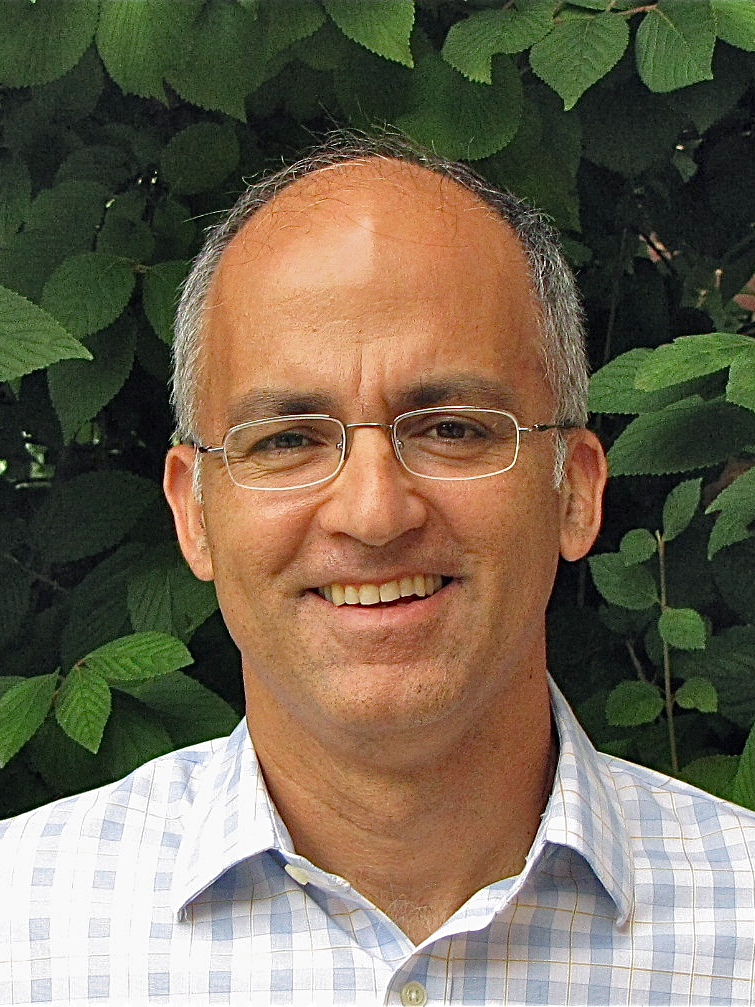
Alfredo Garcia
· Professor, Industrial & Systems Engineering, Holder of the Mike and Sugar Barnes Professorship III, Industrial & Systems EngineeringTexas A&M University · Industrial & Systems Engineering
Active 1976–2025
Academic metrics are sourced from OpenAlex and public funding records; values may differ from Google Scholar.
About
Professor Alfredo Garcia is a faculty member in the Department of Industrial & Systems Engineering at Texas A&M University. He holds the Mike and Sugar Barnes Professorship III in Industrial & Systems Engineering. His research interests include game theory and dynamic optimization, with applications in electricity and communication networks. Dr. Garcia has contributed to the understanding of driver responses to automation failures, distributed networked learning with correlated data, incentive mechanisms for electricity markets, and distributed non-convex optimization, among other topics. His work focuses on developing advanced mathematical and computational methods to address complex problems in engineering systems and networks.
Research topics
- Computer Science
- Artificial Intelligence
- Reliability engineering
- Pure mathematics
- Geometry
- Mathematical analysis
- Medicine
- Combinatorics
- Biology
- Physics
Selected publications
Disease spread coupled with evolutionary social distancing dynamics can lead to growing oscillations
2021 60th IEEE Conference on Decision and Control (CDC) · 2021 · 22 citations
If the public’s adherence to social distance measures remained steady during an outbreak, the number of cases would have a single peak followed by a sharp decline according to standard epidemiological models. Nonetheless, during COVID-19 the initial rise and fall in the number of cases followed new waves of cases in many localities. In this paper, we explore a standard susceptible-exposed-infected-recovered (SEIR) epidemiological model coupled with an individual be-havior response model that mod…
Resolving uncertainty on the fly: modeling adaptive driving behavior as active inference
Frontiers in Neurorobotics · 2024-03-21 · 18 citations
articleOpen accessUnderstanding adaptive human driving behavior, in particular how drivers manage uncertainty, is of key importance for developing simulated human driver models that can be used in the evaluation and development of autonomous vehicles. However, existing traffic psychology models of adaptive driving behavior either lack computational rigor or only address specific scenarios and/or behavioral phenomena. While models developed in the fields of machine learning and robotics can effectively learn adapt…
Modeling Driver Responses to Automation Failures With Active Inference
IEEE Transactions on Intelligent Transportation Systems · 2022 · 15 citations
Automated vehicle (AV) technologies promise to improve traffic safety and reduce driver workload in the near future. However, most current implementations have limited capabilities and require transition of control between the vehicle and the human driver during automation failures. For this reason, models of driver behavior have been widely studied to assist the design and development of AV technologies. Recent works have shown that driver behavior models grounded in human cognitive information…
Decentralized Riemannian Gradient Descent on the Stiefel Manifold
International Conference on Machine Learning · 2024 · 9 citations
We consider a distributed non-convex optimization where a network of agents aims at minimizing a global function over the Stiefel manifold. The global function is represented as a finite sum of smooth local functions, where each local function is associated with one agent and agents communicate with each other over an undirected connected graph. The problem is non-convex as local functions are possibly non-convex (but smooth) and the Steifel manifold is a non-convex set. We present a decentraliz…
Human Factors The Journal of the Human Factors and Ergonomics Society · 2024-11-01 · 5 citations
articleSenior authorObjectiveOur objectives were to assess the efficacy of active inference models for capturing driver takeovers from automated vehicles and to evaluate the links between model parameters and self-reported cognitive fatigue, trust, and situation awareness.BackgroundControl transitions between human drivers and automation pose a substantial safety and performance risk. Models of driver behavior that predict these transitions from data are a critical tool for designing safer, human-centered, systems…
Recent grants
NSF · $40k · 2010–2012
Smart Markets for Black-box Capacity Allocation
NSF · $218k · 2018–2020
CIF: Small: Dynamic Pricing of Interference in Cognitive Radio Networks
NSF · $436k · 2010–2014
Frequent coauthors
- 28 shared
Mingyi Hong
- 9 shared
Natalia Fabra
- 9 shared
Jorge Barrera
University of Virginia
- 8 shared
Shi Pu
- 8 shared
Ceyhun Eksin
- 7 shared
Anthony D. McDonald
University of Wisconsin–Madison
- 7 shared
Robert L. Smith
University of Michigan–Ann Arbor
- 7 shared
Lingzhou Hong
Labs
Education
- 1992
D.E.A Automatique et Informatique Industrielle, Laboratoire d'analyse et d'architecture des systèmes
Université Paul Sabatier
- 1990
Ingeniero Eléctrico, Ingenieria Electrica
Universidad de los Andes
Similar researchers at Texas A&M University
- Resume-aware match score
- Save to shortlist
- AI-drafted outreach
See your match with Alfredo Garcia
PhdFit ranks faculty by your research interests, methods, and publications — grounded in their actual work, not templates.
- Free to start
- No credit card
- 30-second signup