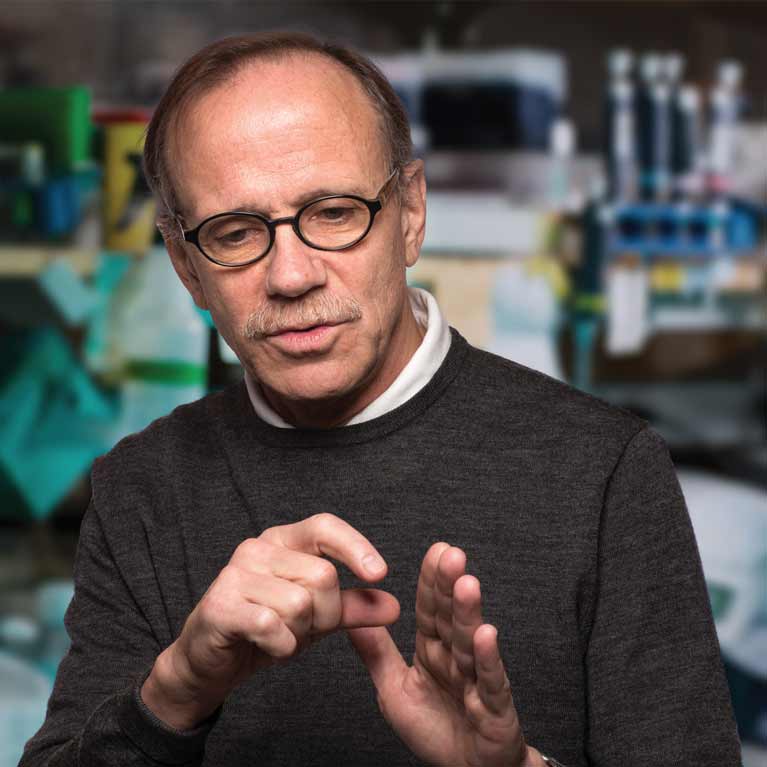
Fred H. Gage
· Ph.D.University of California, San Diego · Medical Genetics
Active 1930–2024
About
Fred H. Gage is a professor at the Salk Institute for Biological Studies, where he holds the Vi and John Adler Chair for Research on Age-Related Neurodegenerative Disease. His research concentrates on the plasticity, adaptability, and diversity of the brain, with a focus on understanding how genes and environment influence brain function and disease. Gage demonstrated that neurogenesis occurs in the adult human brain and that environmental enrichment and physical exercise can enhance this process. His lab has shown that neural stem cells exist in the adult hippocampus and can give rise to physiologically active neurons, and that mobile DNA elements are active during neurogenesis, contributing to genomic mosaicism in the brain. Recently, he led a team at the Salk Institute that received significant funding to analyze the interactions between proteins, genes, epigenetics, inflammation, and metabolism in the aging brain, aiming to uncover mechanisms of cognitive decline and develop new therapies for diseases such as Alzheimer’s. Gage’s work also involves modeling neurological and psychiatric diseases using human stem cells, reprogramming patient cells into induced pluripotent stem cells and neurons to study disease progression and mechanisms, including depression and autism. His discoveries include the lifelong capacity of the human brain to generate new neurons, the enhancement of neurogenesis through exercise and cognitive enrichment, and the use of stem cell technologies to identify early dysfunctions in neurons derived from individuals with schizophrenia. Gage has received numerous awards and honors for his contributions to neuroscience and stem cell research.
Research topics
- Biology
- Genetics
- Neuroscience
- Cell biology
- Medicine
- Computer Science
- Immunology
- Computational biology
- Internal medicine
- Biochemistry
- Cancer research
- Evolutionary biology
- Psychology
- Virology
- Zoology
- Ophthalmology
Selected publications
npj Parkinson s Disease · 2022 · 61 citations
Senior authorCorresponding- Neuroscience
- Medicine
- Psychology
Several mutations that cause Parkinson's disease (PD) have been identified over the past decade. These account for 15-25% of PD cases; the rest of the cases are considered sporadic. Currently, it is accepted that PD is not a single monolithic disease but rather a constellation of diseases with some common phenotypes. While rodent models exist for some of the PD-causing mutations, research on the sporadic forms of PD is lagging due to a lack of cellular models. In our study, we differentiated PD patient-derived dopaminergic (DA) neurons from the induced pluripotent stem cells (iPSCs) of several PD-causing mutations as well as from sporadic PD patients. Strikingly, we observed a common neurophysiological phenotype: neurons derived from PD patients had a severe reduction in the rate of synaptic currents compared to those derived from healthy controls. While the relationship between mutations in genes such as the SNCA and LRRK2 and a reduction in synaptic transmission has been investigated before, here we show evidence that the pathogenesis of the synapses in neurons is a general phenotype in PD. Analysis of RNA sequencing results displayed changes in gene expression in different synaptic mechanisms as well as other affected pathways such as extracellular matrix-related pathways. Some of these dysregulated pathways are common to all PD patients (monogenic or idiopathic). Our data, therefore, show changes that are central and convergent to PD and suggest a strong involvement of the tetra-partite synapse in PD pathophysiology.
A nomenclature consensus for nervous system organoids and assembloids
Nature · 2022 · 283 citations
- Computer Science
- Computational biology
- Biology
Altered Neuronal Support and Inflammatory Response in Bipolar Disorder Patient-Derived Astrocytes
Stem Cell Reports · 2021 · 45 citations
Senior authorCorresponding- Biology
- Neuroscience
- Immunology
Bipolar disorder (BD) is characterized by cyclical mood shifts. Studies indicate that BD patients have a peripheral pro-inflammatory state and alterations in glial populations in the brain. We utilized an in vitro model to study inflammation-related phenotypes of astrocytes derived from induced pluripotent stem cells (iPSCs) generated from BD patients and healthy controls. BD astrocytes showed changes in transcriptome and induced a reduction in neuronal activity when co-cultured with neurons. IL-1β-stimulated BD astrocytes displayed a unique inflammatory gene expression signature and increased secretion of IL-6. Conditioned medium from stimulated BD astrocytes reduced neuronal activity, and this effect was partially blocked by IL-6 inactivating antibody. Our results suggest that BD astrocytes are functionally less supportive of neuronal excitability and this effect is partially mediated by IL-6. We confirmed higher IL-6 in blood in a distinct cohort of BD patients, highlighting the potential role of astrocyte-mediated inflammatory signaling in BD neuropathology.
Age-dependent instability of mature neuronal fate in induced neurons from Alzheimer’s patients
Cell stem cell · 2021 · 244 citations
Senior authorCorresponding- Biology
- Neuroscience
- Cell biology
The role of retrotransposable elements in ageing and age-associated diseases
Nature · 2021 · 427 citations
- Biology
- Evolutionary biology
- Genetics
Proceedings of the National Academy of Sciences · 2021 · 63 citations
- Biology
- Genetics
- Cell biology
replication cycle shunt as potential therapies for a major cause of blindness.
Proceedings of the National Academy of Sciences · 2020 · 67 citations
- Biology
- Genetics
- Neuroscience
loss is thus an important cause of recessive ASD, with impaired neuron-specific chromatin repression indicated as a potential mechanism.
Zika Virus Targets Glioblastoma Stem Cells through a SOX2-Integrin αvβ5 Axis
Cell stem cell · 2020 · 183 citations
- Biology
- Cancer research
- Virology
Recent grants
NIH · $8.4M · 2017
NIH · $25.0M · 2006
NIH · $1.5M · 2013
NIH · $163k · 2005
Dynamics of activity-induced transcription in single dentate granule cells
NIH · $3.8M · 2017–2028
Frequent coauthors
- 138 shared
Kristen Brennand
- 125 shared
John R. Kelsoe
University of California, San Diego
- 122 shared
Mark A. Frye
- 121 shared
Caroline M. Nievergelt
University of California, San Diego
- 121 shared
Martin Alda
Dalhousie University
- 116 shared
Ketil J. Øedegaard
Novartis (Norway)
- 116 shared
Joseph R. Calabrese
University School
- 116 shared
Michael J. McCarthy
Loyola University Chicago
Awards & honors
- Ogawa-Yamanaka Stem Cell Prize, 2024
- Taylor International Prize in Medicine, 2024
- W.M. Keck Foundation Award, 2024
- The International Society for Stem Cell Research Achievement…
- ARCS Foundation Scientist of the Year, 2018
Similar researchers at University of California, San Diego
- Resume-aware match score
- Save to shortlist
- AI-drafted outreach
See your match with Fred H. Gage
PhdFit ranks faculty by your research interests, methods, and publications — grounded in their actual work, not templates.
- Free to start
- No credit card
- 30-second signup