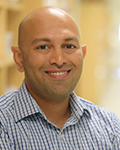
Karthik Anantharaman
· Associate Professor of BacteriologyUniversity of Wisconsin-Madison · Bacteriology
Active 1979–2024
About
Karthik Anantharaman is a professor at the University of Wisconsin–Madison, leading the Anantharaman Microbiome Laboratory. His research focuses on computational biology, microbial and viral ecology, and the study of human and environmental microbiomes. His work involves using bioinformatics and omics methods, primarily metagenomics, to understand microbial diversity and the ecological roles of microbes and viruses in various ecosystems, including marine environments such as hydrothermal vents and the deep sea, as well as freshwater and soil microbiomes. His laboratory aims to uncover novel insights into microbial ecology, the influence of viruses on microbial communities, and the biogeochemical processes shaping these ecosystems.
Research topics
- Biology
- Genetics
- Computational biology
- Ecology
- Chemistry
- Biochemistry
- Evolutionary biology
- Microbiology
- Environmental chemistry
- Organic chemistry
- Virology
Selected publications
Efficient plasmid transfer via natural competence in a microbial co‐culture
Molecular Systems Biology · 2023 · 20 citations
- Biology
- Genetics
- Microbiology
The molecular and ecological factors shaping horizontal gene transfer (HGT) via natural transformation in microbial communities are largely unknown, which is critical for understanding the emergence of antibiotic-resistant pathogens. We investigate key factors shaping HGT in a microbial co-culture by quantifying extracellular DNA release, species growth, and HGT efficiency over time. In the co-culture, plasmid release and HGT efficiency are significantly enhanced than in the respective monocultures. The donor is a key determinant of HGT efficiency as plasmids induce the SOS response, enter a multimerized state, and are released in high concentrations, enabling efficient HGT. However, HGT is reduced in response to high donor lysis rates. HGT is independent of the donor viability state as both live and dead cells transfer the plasmid with high efficiency. In sum, plasmid HGT via natural transformation depends on the interplay of plasmid properties, donor stress responses and lysis rates, and interspecies interactions.
Virus-associated organosulfur metabolism in human and environmental systems
Cell Reports · 2021 · 114 citations
Senior authorCorresponding- Biology
- Biochemistry
- Chemistry
Viruses influence the fate of nutrients and human health by killing microorganisms and altering metabolic processes. Organosulfur metabolism and biologically derived hydrogen sulfide play dynamic roles in manifestation of diseases, infrastructure degradation, and essential biological processes. Although microbial organosulfur metabolism is well studied, the role of viruses in organosulfur metabolism is unknown. Here, we report the discovery of 39 gene families involved in organosulfur metabolism encoded by 3,749 viruses from diverse ecosystems, including human microbiomes. The viruses infect organisms from all three domains of life. Six gene families encode for enzymes that degrade organosulfur compounds into sulfide, whereas others manipulate organosulfur compounds and may influence sulfide production. We show that viral metabolic genes encode key enzymatic domains, are translated into protein, and are maintained after recombination, and sulfide provides a fitness advantage to viruses. Our results reveal viruses as drivers of organosulfur metabolism with important implications for human and environmental health.
Ecology of inorganic sulfur auxiliary metabolism in widespread bacteriophages
Nature Communications · 2021 · 225 citations
Senior authorCorresponding- Biology
- Ecology
- Chemistry
Microbial sulfur metabolism contributes to biogeochemical cycling on global scales. Sulfur metabolizing microbes are infected by phages that can encode auxiliary metabolic genes (AMGs) to alter sulfur metabolism within host cells but remain poorly characterized. Here we identified 191 phages derived from twelve environments that encoded 227 AMGs for oxidation of sulfur and thiosulfate (dsrA, dsrC/tusE, soxC, soxD and soxYZ). Evidence for retention of AMGs during niche-differentiation of diverse phage populations provided evidence that auxiliary metabolism imparts measurable fitness benefits to phages with ramifications for ecosystem biogeochemistry. Gene abundance and expression profiles of AMGs suggested significant contributions by phages to sulfur and thiosulfate oxidation in freshwater lakes and oceans, and a sensitive response to changing sulfur concentrations in hydrothermal environments. Overall, our study provides fundamental insights on the distribution, diversity, and ecology of phage auxiliary metabolism associated with sulfur and reinforces the necessity of incorporating viral contributions into biogeochemical configurations.
The ISME Journal · 2020 · 71 citations
- Environmental chemistry
- Biology
- Ecology
-compounds, petroleum hydrocarbons, and organic sulfur in hydrothermal plumes. This includes oxidation of methanethiol, the simplest thermochemically-derived organic sulfur, for energy metabolism in Methylococcales and Cycloclasticus. Together with active transcription of genes for thiosulfate and methane oxidation in Methylococcales, these results suggest an adaptive strategy of versatile and simultaneous use of multiple available electron donors. Meanwhile, the first near-complete MAG of hydrothermal Methylophaga aminisulfidivorans and its transcriptional profile point to active chemotaxis targeting small organic compounds. Petroleum hydrocarbon-degrading Cycloclasticus are abundant and active in plumes of oil spills as well as deep-sea vents, suggesting that they are indigenous and effectively respond to stimulus of hydrocarbons in the deep sea. These findings suggest that these three groups of Gammaproteobacteria transform organic carbon and sulfur compounds via versatile and opportunistic metabolism and modulate biogeochemistry in plumes of hydrothermal systems as well as oil spills, thus contributing broad ecological impact to the deep ocean globally.
Clades of huge phages from across Earth’s ecosystems
Nature · 2020 · 533 citations
- Biology
- Genetics
- Computational biology
. Here we sequenced DNA from diverse ecosystems and found hundreds of phage genomes with lengths of more than 200 kilobases (kb), including a genome of 735 kb, which is-to our knowledge-the largest phage genome to be described to date. Thirty-five genomes were manually curated to completion (circular and no gaps). Expanded genetic repertoires include diverse and previously undescribed CRISPR-Cas systems, transfer RNAs (tRNAs), tRNA synthetases, tRNA-modification enzymes, translation-initiation and elongation factors, and ribosomal proteins. The CRISPR-Cas systems of phages have the capacity to silence host transcription factors and translational genes, potentially as part of a larger interaction network that intercepts translation to redirect biosynthesis to phage-encoded functions. In addition, some phages may repurpose bacterial CRISPR-Cas systems to eliminate competing phages. We phylogenetically define the major clades of huge phages from human and other animal microbiomes, as well as from oceans, lakes, sediments, soils and the built environment. We conclude that the large gene inventories of huge phages reflect a conserved biological strategy, and that the phages are distributed across a broad bacterial host range and across Earth's ecosystems.
Roadmap for naming uncultivated Archaea and Bacteria
Nature Microbiology · 2020 · 157 citations
- Biology
- Evolutionary biology
- Computational biology
The assembly of single-amplified genomes (SAGs) and metagenome-assembled genomes (MAGs) has led to a surge in genome-based discoveries of members affiliated with Archaea and Bacteria, bringing with it a need to develop guidelines for nomenclature of uncultivated microorganisms. The International Code of Nomenclature of Prokaryotes (ICNP) only recognizes cultures as 'type material', thereby preventing the naming of uncultivated organisms. In this Consensus Statement, we propose two potential paths to solve this nomenclatural conundrum. One option is the adoption of previously proposed modifications to the ICNP to recognize DNA sequences as acceptable type material; the other option creates a nomenclatural code for uncultivated Archaea and Bacteria that could eventually be merged with the ICNP in the future. Regardless of the path taken, we believe that action is needed now within the scientific community to develop consistent rules for nomenclature of uncultivated taxa in order to provide clarity and stability, and to effectively communicate microbial diversity.
Microbiome · 2020 · 1151 citations
Senior authorCorresponding- Biology
- Computational biology
- Genetics
BACKGROUND: Viruses are central to microbial community structure in all environments. The ability to generate large metagenomic assemblies of mixed microbial and viral sequences provides the opportunity to tease apart complex microbiome dynamics, but these analyses are currently limited by the tools available for analyses of viral genomes and assessing their metabolic impacts on microbiomes. DESIGN: Here we present VIBRANT, the first method to utilize a hybrid machine learning and protein similarity approach that is not reliant on sequence features for automated recovery and annotation of viruses, determination of genome quality and completeness, and characterization of viral community function from metagenomic assemblies. VIBRANT uses neural networks of protein signatures and a newly developed v-score metric that circumvents traditional boundaries to maximize identification of lytic viral genomes and integrated proviruses, including highly diverse viruses. VIBRANT highlights viral auxiliary metabolic genes and metabolic pathways, thereby serving as a user-friendly platform for evaluating viral community function. VIBRANT was trained and validated on reference virus datasets as well as microbiome and virome data. RESULTS: VIBRANT showed superior performance in recovering higher quality viruses and concurrently reduced the false identification of non-viral genome fragments in comparison to other virus identification programs, specifically VirSorter, VirFinder, and MARVEL. When applied to 120,834 metagenome-derived viral sequences representing several human and natural environments, VIBRANT recovered an average of 94% of the viruses, whereas VirFinder, VirSorter, and MARVEL achieved less powerful performance, averaging 48%, 87%, and 71%, respectively. Similarly, VIBRANT identified more total viral sequence and proteins when applied to real metagenomes. When compared to PHASTER, Prophage Hunter, and VirSorter for the ability to extract integrated provirus regions from host scaffolds, VIBRANT performed comparably and even identified proviruses that the other programs did not. To demonstrate applications of VIBRANT, we studied viromes associated with Crohn's disease to show that specific viral groups, namely Enterobacteriales-like viruses, as well as putative dysbiosis associated viral proteins are more abundant compared to healthy individuals, providing a possible viral link to maintenance of diseased states. CONCLUSIONS: The ability to accurately recover viruses and explore viral impacts on microbial community metabolism will greatly advance our understanding of microbiomes, host-microbe interactions, and ecosystem dynamics. Video Abstract.
Recent grants
CAREER: Scalable approaches for systems virology
NSF · $999k · 2021–2027
NSF · $397k · 2021–2025
COMPUTATIONAL FRAMEWORKS FOR PHAGE DISCOVERY, ECOLOGY, AND DYNAMICS FROM METAGENOMES
NIH · $1.5M · 2021–2027
Frequent coauthors
- 118 shared
Jillian F. Banfield
University of California, Berkeley
- 75 shared
Zhichao Zhou
University of Wisconsin–Madison
- 64 shared
Brian C. Thomas
University of Liverpool
- 60 shared
Kristopher Kieft
University of Wisconsin–Madison
- 55 shared
Alexander J. Probst
University of Duisburg-Essen
- 43 shared
Cindy J. Castelle
University of California, Berkeley
- 38 shared
David Burstein
Tel Aviv University
- 30 shared
Itai Sharon
Western Galilee Hospital
Labs
Education
- 2014
Ph.D, Earth and Environmental Sciences
University of Michigan
- 2008
Master of Science in Engineering (MSE) , Civil and Environmental Engineering
University of Michigan–Ann Arbor
- 2007
B. Tech, Civil Engineering
National Institute of Technology Karnataka
Similar researchers at University of Wisconsin-Madison
- Resume-aware match score
- Save to shortlist
- AI-drafted outreach
See your match with Karthik Anantharaman
PhdFit ranks faculty by your research interests, methods, and publications — grounded in their actual work, not templates.
- Free to start
- No credit card
- 30-second signup