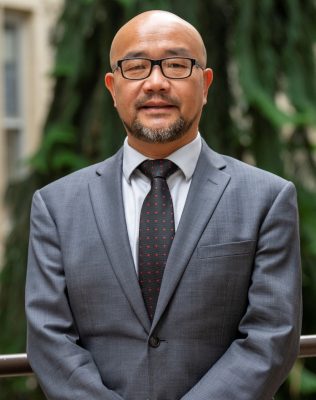
Zheng (Phil) Xiang
· ProfessorVerifiedVirginia Tech · Hospitality and Tourism Management
Active 1989–2025
About
Zheng (Phil) Xiang, Ph.D., is a Professor in the Howard Feiertag Department of Hospitality and Tourism Management at Virginia Tech. His research interests include travel information search, social media marketing, and business analytics for the tourism and hospitality industries. He has served as a board member for the International Federation for IT and Travel & Tourism (IFITT) from 2014 to 2021 and as President from 2020 to 2021. Currently, he is Co-Editor-in-Chief of the Journal of Information Technology & Tourism and serves on the editorial boards of several international journals including Tourism Management, Journal of Travel Research, and Journal of Hospitality and Tourism Research. Dr. Xiang has been recognized as a Highly Cited Researcher by Clarivate for multiple years (2019-2023). His academic background includes a Ph.D. from the Fox School of Business at Temple University, an M.S. from the University of Illinois at Urbana-Champaign, and a B.S. from Xi’An Jiaotong University in China. His professional experience includes roles in academia and industry, notably serving as Department Director at the Yibin Municipal Tourism Bureau in China. His contributions to the field encompass research on travel behavior, e-Tourism, information technology, tourism analytics, and text analytics, with numerous awards and recognitions for his scholarly work.
Research topics
- Biochemistry
- Immunology
- Cancer research
- Medicine
- Social Science
- Political Science
- Sociology
- Pharmacology
- Law
- Public relations
- Biology
- Pathology
- Internal medicine
- Environmental ethics
- Cell biology
- Chemistry
Selected publications
Tourism Management · 2025-06-16
articleOpen accessSenior authorDestination Marketing Organization Legitimacy Scale
PsycTESTS Dataset · 2025-01-01
datasetGenerative AI vs. humans in online hotel review management: A Task-Technology Fit perspective
Tourism Management · 2025-03-15 · 27 citations
reviewOpen accessAI-powered smart tourism 2.0: A 10-year retrospective and updated model
Electronic Markets · 2025-12-01 · 6 citations
articleOpen accessSenior authorAbstract This paper revisits the publication “Smart Tourism: Foundations and Developments” published in Electronic Markets in 2015, which presented a data-centric definition of smart tourism and a foundational model of smart tourism layers and components. Recognizing the dramatic evolution of smart technologies over the past decade, the extensive digital transformation of tourism accelerated by the global COVID-19 pandemic, the Artificial Intelligence revolution fueled by large language models, and the continuing efforts to advance the Metaverse, the paper is a 10-year retrospective and incorporates recent developments in Artificial Intelligence and Metaverse technologies, resulting in an updated “AI-powered smart tourism 2.0” model. The new framework bridges past insights with future possibilities and reflects on emerging smart tourism experiences, smart tourism industry practices, and governance approaches. It thus offers an updated vision for smart tourism to guide future research, policymaking, and industry innovation in an era of extremely rapid and profound technological changes.
SAGE Open · 2024-04-01 · 6 citations
articleOpen accessAlthough many studies have considered the effects of online reviews on tourists’ decisions, none have directly investigated how to leverage open data analyses to create early choice sets and facilitate destination planning. This paper illustrates how salient characteristics can be mined from the shared experiences embedded in review data and incorporated into a predictive model to build a travel counseling approach. The model is designed by first defining a prediction-based mechanism from online reviews and then generating a multinomial classification problem on all candidate destinations of interest. The model is implemented by applying Natural Language Processing (NLP) and Deep Learning (DL) technologies to review textual features. The model is validated using 75,315 reviews from TripAdvisor along with destinations from 257 U.S. national parks. Empirical results indicate a best classification accuracy of 67%, outperforming two previous approaches. Findings shed light on how to exploit past tourists’ experiences to generate early destination recommendations to identify items for choice sets and reduce tourists’ travel-planning effort. Theoretical and managerial implications regarding social media analytics are provided based on online review meta-data in touristic management.
Rubus chingii Hu: Ethnopharmacology, phytochemistry, quality control, functions and products
Future Foods · 2024-09-12 · 5 citations
articleOpen accessSenior authorCorresponding• Botany, phytochemistry, functions, and applications of R. chingii were investigated. • R. chingii has a long history of drug and food use in the world. • R. chingii is rich in flavonoids, diterpenoids, terpenes, coumarins, and vitamins. • R. chingii can be made into wine, jam, vinegar, tea, and other beverages. • R. chingii foods have anti-oxidation, enhancing immunity, anti-fatigue functions. Rubus fructus, the dried fruit of Rubus chingii Hu, is a versatile medicinal and edible plant. In this review, we used “ Rubus chingii ” or “Fupengzi” as the keyword and collected relevant information from classical Chinese herbal texts, PubMed, Web of Science, China National Knowledge Infrastructure database, and patent websites. An ethnopharmacological survey shows that R. chingii Hu belongs to a class of Rubus plants known for nourishing the kidneys and liver, consolidating essence, reducing urine, and improving vision. R. chingii is rich in flavonoids, phenolic compounds, terpenes, amino acids, and vitamins. Currently, ellagic acid and kaempferol-3-O-rutinoside are used as quality markers of R. chingii . Modern medical research indicates that it has multiple functional activities, including antioxidation/anti-aging, blood glucose regulation, immune enhancement, growth promotion, reproductive support, regulation of intestinal flora, and improvement of gastrointestinal function. Due to its numerous health benefits, various health products such as canned foods, fruit wine, fruit vinegar, beverages, teas, jams, and other foods have been developed worldwide. In summary, this review provides a comprehensive and up-to-date overview of the ethnopharmacology, phytochemistry, quality control, functions, and food application of R. chingii , contributing to the advancement of health food and medical development related to this plant .
Optimal distinctiveness of short-term rental property design
International Journal of Hospitality Management · 2024-03-27 · 3 citations
articleOpen accessSenior authorCorrespondingTenure and Research Trajectories
arXiv (Cornell University) · 2024-11-15 · 1 citations
preprintOpen accessTenure is a cornerstone of the US academic system, yet its relationship to faculty research trajectories remains poorly understood. Conceptually, tenure systems may act as a selection mechanism, screening in high-output researchers; a dynamic incentive mechanism, encouraging high output prior to tenure but low output after tenure; and a creative search mechanism, encouraging tenured individuals to undertake high-risk work. Here, we integrate data from seven different sources to trace US tenure-line faculty and their research outputs at an unprecedented scale and scope, covering over 12,000 researchers across 15 disciplines. Our analysis reveals that faculty publication rates typically increase sharply during the tenure track and peak just before obtaining tenure. Post-tenure trends, however, vary across disciplines: in lab-based fields, such as biology and chemistry, research output typically remains high post-tenure, whereas in non-lab-based fields, such as mathematics and sociology, research output typically declines substantially post-tenure. Turning to creative search, faculty increasingly produce novel, high-risk research after securing tenure. However, this shift toward novelty and risk-taking comes with a decline in impact, with post-tenure research yielding fewer highly cited papers. Comparing outcomes across common career ages but different tenure years or comparing research trajectories in tenure-based and non-tenure-based research settings underscores that breaks in the research trajectories are sharply tied to the individual's tenure year. Overall, these findings provide a new empirical basis for understanding the tenure system, individual research trajectories, and the shape of scientific output.
User-generated photos in hotel demand forecasting
Annals of Tourism Research · 2024-08-16 · 16 citations
articleTourism Management · 2024-09-13 · 12 citations
articleOpen accessRestaurant constitutes an essential part of the tourism industry . In times of uncertainty and transition, restaurant survival prediction is vital for deepening organizations' understanding of business performance and facilitating decisions. By tapping into online reviews , a prevalent form of user-generated content, this study identifies review variance as a leading indicator of restaurants’ survival drawing from data on 2838 restaurants in Boston and their corresponding reviews. Machine learning–based survival analysis shows that models integrating fine-grained review variance (i.e., review rating variance, overall review sentiment variance, and fine-grained review sentiment variance) outperform models that do not account for these factors in restaurant survival prediction before and during the pandemic. Furthermore, in most cases, expert reviews hold stronger predictive power for pre-pandemic restaurant survival than non-expert and all forms of reviews. This study contributes to the literature on business survival prediction and guides industry practitioners in monitoring and enhancing their enterprises .
Frequent coauthors
- 51 shared
Daniel R. Fesenmaier
MODUL University Vienna
- 29 shared
Ulrike Gretzel
- 25 shared
F. Zach
Virginia Tech
- 10 shared
Rob Law
- 9 shared
Bing Pan
Pennsylvania State University
- 9 shared
Yufeng Ma
Verizon (United States)
- 8 shared
Seunghun Shin
- 8 shared
Qianzhou Du
University of Science and Technology of China
Labs
Education
- 2007
Ph.D. in Business Adminitration, Fox School of Business
Temple University
- 2003
Master of Science, Department of Leisure Studies
University of Illinois at Urbana-Champaign
Awards & honors
- Web of Science 2019 top 1% cited researchers
- Best Research Paper of the Year Award at the ICHRIE Conferen…
- Certificate of Teaching Award for the department by Pamplin…
- Best Paper Award (1st Place) at ENTER 2017 eTourism Conferen…
- Best Paper of the Year Award (2016) in Electronic Markets
- Resume-aware match score
- Save to shortlist
- AI-drafted outreach
See your match with Zheng (Phil) Xiang
PhdFit ranks faculty by your research interests, methods, and publications — grounded in their actual work, not templates.
- Free to start
- No credit card
- 30-second signup