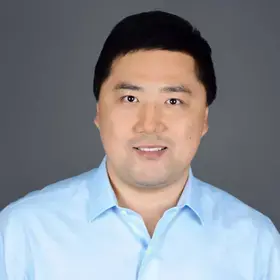
Zeyu Zhang
Columbia University · American Language Program
Active 2000–2024
About
Zeyu Zhang is a Machine Learning Engineer at Meta, where he currently leads the video recommendation team at Instagram Reels. He has a rich background in data science and previously served as a data science manager at Supstat, managing the NYC Data Science Academy, an ACCET-accredited institution. Since 2015, Zeyu has been dedicated to shaping the next generation of data scientists by equipping them with essential skills and knowledge to secure data science positions across various organizations. In addition to his role as an educator, he has demonstrated his expertise by spearheading consulting projects for Fortune 500 companies, including PepsiCo, Aetna, and Barclays, delivering comprehensive end-to-end data science solutions to drive tangible results and provide actionable insights.
Research topics
- Genetics
- Computer Science
- Cancer research
- Biology
- Medicine
- Computational biology
Selected publications
Neuro-Oncology · 2023 · 1 citations
- Cancer research
- Biology
- Computational biology
Abstract Diffuse Midline Glioma (DMG) are fatal pediatric brain tumors. We leveraged network-based methodologies to dissect the heterogeneity of DMG tumors and to discover Master Regulator (MR) proteins representing pharmacologically accessible, mechanistic determinants of molecularly distinct cell states. We produced a DMG regulatory network from 122 publicly available RNAseq profiles with ARACNe, and inferred sample-specific MR protein activity with VIPER. A CRISPR/Cas9 KO screen across 3 DMG patient cell lines identified a set of 73/77 essential genes that were enriched in the MR signature of 80% of patient samples (GSEA p=0.000034). FOXM1 emerged as an essential MR, significantly activated across virtually all patients. We then generated RNAseq profiles following perturbation with ~300 oncology drugs in 2 DMG cell lines most representative of patient MR signatures, and used this to identify drugs that invert patient MR activity profiles using the NYS/CA Dept.of Health approved OncoTreat algorithm. OncoTreat predicted sensitivity to HDAC, MEK, CDK, PI3K, and proteosome inhibitors in subsets of patients. 80%of OncoTreat-predicted drugs (p<10-5) from 3 DMG patient tumor biopsies showed in vitro sensitivity in cultured tumor cells from the respective patients, with overall 68% accuracy among 223 drugs evaluated by both OncoTreat and in vitro (Fisher’s Exact Test p=0.0449). Further analysis of DMG intra-tumor heterogeneity via protein activity inference from published scRNAseq profiles identified 6 tumor clusters with unique MR signatures representing distinct cellular states. Targetable MRs and OncoTreat-predicted drugs were distinct between these states. Bulk RNAseq analysis recapitulated predictions seen in the more prevalent Oligodendrocyte progenitor cell-like states, but failed to capture MR and drug predictions for the Astrocyte-like states. Ongoing validations of cell state-specific drug predictions in vivo in subcutaneous patient-derived xenograft and orthotopic syngeneic DMG models have already shown tumor volume and subpopulation differences (e.g. Trametinib-treated). This provides a platform to nominate much-needed novel drugs to treat DMG.
Cancer Research · 2023 · 1 citations
- Computer Science
- Cancer research
- Medicine
Abstract Diffuse Midline Glioma (DMG) are fatal pediatric brain tumors with no therapies. We leveraged network-based methodologies to dissect the heterogeneity of DMG tumors and to discover Master Regulator (MR) proteins representing pharmacologically accessible, mechanistic determinants of molecularly distinct cell states. We produced the first DMG regulatory network from 122 publicly available RNAseq profiles with ARACNe (Basso et al. Nat Genet 2005), and inferred sample-specific MR protein activity with VIPER (Alvarez et al. Nat Genet 2016) based on the differential expression of their targets. 7 of the top 25 most active MRs found comprise a well-characterized MR block (MRB2) (Paull et al.Cell 2021), frequently activated across aggressive tumors, and enriched in DMG patient MR signatures (Fisher’s Exact Test p=4.4 × 10⁻¹⁸). A CRISPR/Cas9 KO screen across 3 DMG patient cell lines identified a set of 73/77 essential genes that were enriched in the MR signature of 80% of patient samples (GSEA p=0.000034). FOXM1 emerged as an essential MR, significantly activated across virtually all patients. We then generated RNAseq profiles following perturbation with ~300 oncology drugs in 2 DMG cell lines most representative of patient MR signatures, and used this to identify drugs that invert patient MR activity profiles using the NYS/CA Dept. of Health approved OncoTreat algorithm (Alvarez et al. Nat Genet 2018). OncoTreat predicted sensitivity to HDAC, MEK, CDK, PI3K, and proteosome inhibitors in subsets of patients, overlapping with published DMG drug screens. Importantly, 80% of OncoTreat-predicted drugs (p<10−5) from 3 DMG patient tumor biopsies showed in vitro sensitivity in cultured tumor cells from the respective patients, with overall 68% accuracy among 223 drugs evaluated by both OncoTreat and in vitro (Fisher’s Exact Test p=0.0449). Further analysis of DMG intra-tumor heterogeneity via protein activity inference across DMG single cells from 6 published scRNAseq profiles identified 6 tumor clusters with unique MR signatures co-existing in virtually all patients representing distinct cellular states (2 astrocyte-, 1 oligodendrocyte-, and 3 oligodendrocyte precursor cell-like states). Targetable MRs and OncoTreat-predicted drugs were distinct between these states. Bulk RNAseq analysis recapitulated predictions seen in the more prevalent OPC-like states, but failed to capture MR and drug predictions for the AC-like states (e.g. JAK1/Ruxolitinib and STAT3/Napabucasin). We are currently validating cell state-specific drug predictions in vivo at single-cell resolution in subcutaneous patient-derived xenograft and orthotopic syngeneic DMG models that we have shown recapitulate patient tumor heterogeneity, including with focused ultrasound-mediated drug delivery. This provides a platform to nominate much-needed novel drugs and drug combinations to treat DMG. Citation Format: Ester Calvo Fernandez, Junqiang Wang, Xu Zhang, Hong-Jian Wei, Hanna E. Minns, Aaron T. Griffin, Lukas Vlahos, Timothy J. Martins, Pamela S. Becker, John Crawford, Robyn D. Gartrell, Luca Szalontay, Stergios Zacharoulis, Zhiguo Zhang, Robert Wechsler-Reya, Cheng-Chia Wu, Andrea Califano, Jovana Pavisic. Network-based inference identifies cell state-specific drugs targeting master regulator vulnerabilities in diffuse midline glioma. [abstract]. In: Proceedings of the American Association for Cancer Research Annual Meeting 2023; Part 1 (Regular and Invited Abstracts); 2023 Apr 14-19; Orlando, FL. Philadelphia (PA): AACR; Cancer Res 2023;83(7_Suppl):Abstract nr 4304.
Recent grants
NIH · $1.2M · 2017
Mechanism of Epigenetic Inheritance
NIH · $8.6M · 2016–2026
NIH · $2.9M · 2017
NIH · $2.4M · 2017
NIH · $1.6M · 2018
Frequent coauthors
- 150 shared
Hui Zhou
- 137 shared
Haiyun Gan
Shenzhen Institutes of Advanced Technology
- 94 shared
Xu Hua
- 86 shared
Xu Zhang
Peking University
- 72 shared
Shoufu Duan
- 70 shared
Albert Serra‐Cardona
Columbia University
- 58 shared
Cheng–Chia Wu
- 56 shared
Fang Dong
Western University of Health Sciences
Education
- 1998
PhD, Department of Biochemistry
University of Utah
Similar researchers at Columbia University
- Resume-aware match score
- Save to shortlist
- AI-drafted outreach
See your match with Zeyu Zhang
PhdFit ranks faculty by your research interests, methods, and publications — grounded in their actual work, not templates.
- Free to start
- No credit card
- 30-second signup