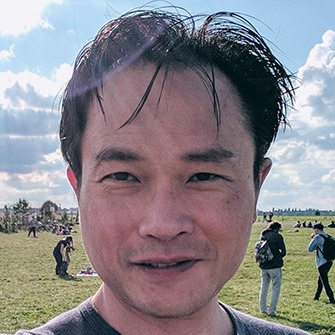
Zachary Sng
· Senior Associate Dean of the Faculty, Professor of German Studies, Professor of Comparative LiteratureBrown University · Comparative Literature
Active 1998–2025
About
Zachary Sng is a senior associate dean of the faculty and a professor of German Studies and Comparative Literature at Brown University. He is a comparative scholar specializing in British and German romanticism, with research and teaching interests that extend to critical theory, rhetoric, aesthetics, and literary theory. His work also engages with queer theory, theories of translation, diaspora, and multilingualism. Sng joined Brown in Fall 2004 after completing his Ph.D. in Comparative Literature with a focus on German at Johns Hopkins University, and he holds a B.A. and M.A. from Brown University. His academic background includes teaching English literature at the high school level in Singapore before pursuing graduate studies. His research explores the literature and philosophy of Britain and Germany around the 18th century, emphasizing the Enlightenment and Romanticism movements. He has authored books such as 'The Rhetoric of Error from Locke to Kleist' and 'Middling Romanticism,' and is working on a manuscript titled 'Romancing the Negative: Reading With / Without Kant.' His scholarly interests also encompass rhetoric, visual studies, concepts of community, the sublime, and the uncanny.
Research topics
- Philosophy
- Political Science
- Computer Science
- Linguistics
- Sociology
- Art
- Literature
- Psychology
- Epistemology
- History
- Economics
- Law
- Theology
- Art history
Selected publications
Lessons from Stifter’s Bunte Steine
2025-01-16
book-chapter1st authorCorresponding7 Lessons from Stifter’s Bunte Steine
Boydell and Brewer eBooks · 2025-03-12
book-chapter1st authorCorrespondingOn Debt and Community in Tieck's "Der Runenberg"
MLN · 2024
1st authorCorresponding- Sociology
- Political Science
- Literature
Abstract: Kant's discussion of the sensus communis is embedded in a larger project of negative, subtractive thinking in the third Critique . I explore this project by tracing its resonance in two twentieth-century commentaries on community by Jean-Luc Nancy and Roberto Esposito, who associate community with deficit, exposure, and debt rather than the possession or sharing of common property. Finally, I turn to a romantic fairy-tale by Ludwig Tieck, "Der Runenberg," to sketch out a reading that examines how the romantic fairy-tale represents debt and obligation as constitutive of both self and community.
MLN · 2021
1st authorCorresponding- Literature
- History
- Art
Reading A Free Life Zachary Sng (bio) In Ha Jin's 2007 novel A Free Life, poetry gets the last word. Over the course of 650 pages or so, the book tracks its protagonist, Nan Wu, as he searches for a place to call home. Having come to the United States from China as a foreign student, he decides in the wake of the 1989 Tiananmen Massacre to stay. Joined by his wife and young son, Nan embarks on a search for a new life. His journey takes him through various jobs, stations, and settings, ranging from the suburbs of Boston to New York City's Chinatown to a strip mall in the Greater Atlanta area where they set up a restaurant. Through it all, we never lose sight of one thing: what Nan really wants to do is write poems.1 His attempts at poetry remain sporadic and plagued by self-doubt, and as the book winds down to a quiet conclusion, we sense that the dream has run its course. But then, unexpectedly, we are asked to read on for a bit more: there is an epilogue with a few pages from Nan's poetry journal and 25 of his poems, written in English (his adopted language). The journal entries contain Nan's notes about writing and trying to get published. The final entry is dated October 30th, 1998: Sent out five poems to the Kenyon Review this morning. These days I have tried to memorize a few lines by Auden every day. Sadly, my memory is no longer as strong as ten years ago. Today I can hardly [End Page 491] recall what I learned yesterday. Probably my creative powers have passed the peak and I started too late. Yet for me there is only trying, and I will be happy if I can work this motel job for many years. (629) The reference to the motel job is telling. After a string of health problems beset the family, his anxieties about health insurance finally convince him to trade in the successful family restaurant for a regular job with benefits. The weariness we hear in "there is only trying" reflects Nan's state of mind about his writing but also a general resignation to the disappointment that is his American life. In the end, Nan does not manage to get any of his poems accepted for publication. The sporadic notes of encouragement that come his way pale in comparison to the harshness of one editor, Gail Upchurch: she is cited in his journal urging him to quit because his clumsy English "almost amounts to an insult" to a "native speaker" (626). Left with this odd combination of editorial savagery and authorial reticence, how are we meant to read Nan's poems? The novel does not frame them for absorption into any specific narrative. Do they support a story about progress, of incremental growth or reconciliation? Do they represent a modest triumph against everything that has worked to grind Nan down? Or do they record his quiet defeat in the face of insurmountable odds? It is hard to tell. John Updike's review of the novel judges it to be "relatively lumpy and uncomfortable" compared to some of Ha Jin's earlier work. Somehow languid and choppy at the same time, A Free Life measures out its slow pace in short, vignette-like chapters that drag against the forward-facing story of gradual progress. "It's a long trudge," Updike admits, "but then so is assimilation." The novel's lack of ease with itself is simply the price it pays for telling a tale of assimilation, which is bound to be flecked with regret and loss. If A Free Life is, indeed, a novel of assimilation, surely it is significant that it ends with something that resists assimilation. The poems ask us to read beyond narrative resolution, and in doing so, append a question mark to that resolution. Poetry's recalcitrance does not represent an unaltered core of authenticity or resolve in Nan, immune to the pressures that urge conformity. Rather, it is the sheer superfluity of poetry to the novel's formal economy that makes them...
Fordham University Press eBooks · 2020-06-02
book-chapter1st authorCorrespondingRomanticism is often understood as an age of extremes, yet it also marks the birth of the modern medium in all senses of the word. Engaging with key texts of the romantic period, the book outlines a wide-reaching project to re-imagine the middle as a constitutive principle. Sng argues that Romanticism dislodges such terms as medium, moderation, and mediation from serving as mere self-evident tools that conduct from one pole to another. Instead, they offer a dwelling in and with the middle: an attention to intervals, interstices, and gaps that make these terms central to modern understandings of relation.
Fordham University Press eBooks · 2020-06-02
book-chapter1st authorCorrespondingRevisiting Susan Buck-Morss’s work on Hegel and Haiti, the chapter considers the political and epistemological implications of romantic middling. Buck-Morss imagines a universal history that comprises lateral, virtual connections in the place of static differences and identities. Universal history challenges the coercive thinking represented by Hegelian dialectics and celebrates instead free circulation and connection around a middle ground of radical neutrality. Central to this promise is the trope of “syncretism”—harmonious mixture and exchange of properties across porous borders. A counter-image can be found in Kleist’s “Betrothal in Santo Domingo,” whose tale of betrayal exposes the violence that remains repressed but legible in the term “syncretism,” first introduced into the modern European languages to describe closing-off rather than an opening-up of borders. The chapter considers Kleist’s critique of medial thinking alongside some passages from <italic>The Phenomenology of Spirit</italic> to show how the medial is already, even for Hegel, fraught with contradiction.
Fordham University Press eBooks · 2020-06-02
book1st authorCorresponding1. Corrupting the Fountains of Knowledge
Stanford University Press eBooks · 2020-09-09
book-chapter1st authorCorrespondingFordham University Press eBooks · 2020-06-02
book-chapter1st authorCorrespondingThe readings of Hölderlin’s poetry by Walter Benjamin and Martin Heidegger place emphasis on the principle of articulation or joining, with particular attention to the question of how this principle of middling itself makes its appearance in literary representation. The figure of palintropic, invisible <italic>harmonia</italic>—borrowed from Heraclitus by Heidegger—is a vivid example of a joint that holds together and also apart, but must itself withdraw from appearance. This doubling-back of appearance has important parallels in Heidegger and Benjamin’s texts, which share a concern about preserving a sphere of “un-mediatizability” (Unmittelbarkeit). Their interest in representation at the very limits of what can be represented is considered alongside their use and thematization of punctuation, which is evoked at crucial junctures as a paradigmatic figure that brings word and image together in an ekphrastic comparison that also undercuts its own mimetic claims.
3. Kant and the Error of Subreption
Stanford University Press eBooks · 2020-09-09
book-chapter1st authorCorresponding
Frequent coauthors
- 9 shared
Michael Gizzi
New York University
- 9 shared
Paul D. Fleming
Western Michigan University
- 9 shared
Jeffrey Wallen
- 9 shared
Werner Hamacher
- 9 shared
Karen Newman
University of Miami
- 9 shared
Susan Thanks
Brown Institute for Media Innovation
- 9 shared
Popahna Brandes
Brown University
- 9 shared
Avital Ronell
New York University
Labs
Zachary Sng LabPI
Awards & honors
- Doctoral Fellow of the Deutscher Akademischer Austausch Dien…
- Member of the Graduate Research Group (Graduiertenkolleg) on…
- Guest at the Network Transatlantic Cooperation, University o…
- Faculty Fellow at the Cogut Center for the Humanities, Brown…
- John Rowe Workman Award for Excellence in Undergraduate Teac…
- Resume-aware match score
- Save to shortlist
- AI-drafted outreach
See your match with Zachary Sng
PhdFit ranks faculty by your research interests, methods, and publications — grounded in their actual work, not templates.
- Free to start
- No credit card
- 30-second signup