
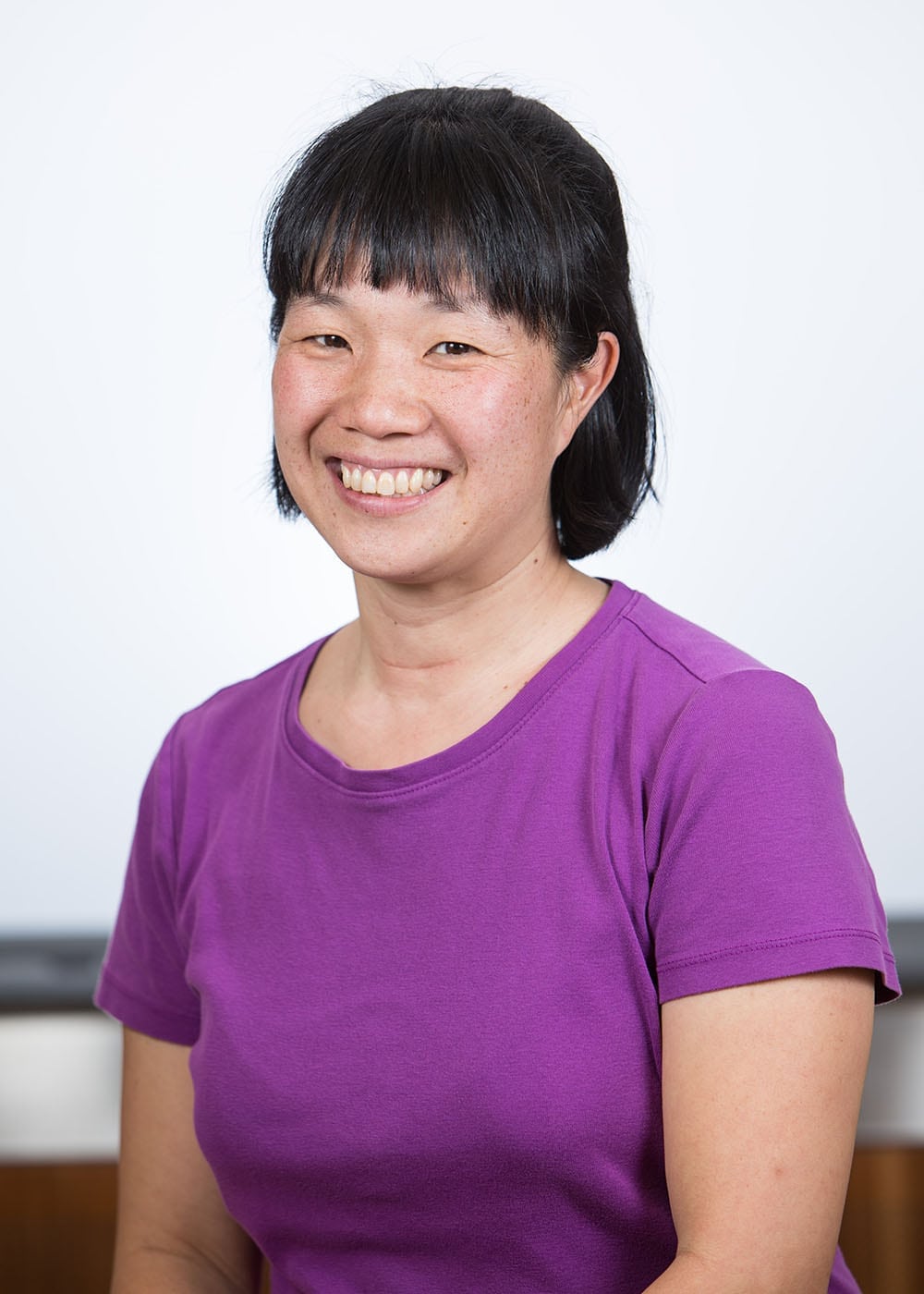
Yvonne Lin
· Assistant Dean for Academic Affairs; Associate ProfessorUniversity of Washington · Pharmacology
Active 1997–2026
Academic metrics are sourced from OpenAlex and public funding records; values may differ from Google Scholar.
About
Dr. Yvonne Lin is an Assistant Dean for Academic Affairs and an Associate Professor in the Department of Pharmaceutics at the University of Washington School of Pharmacy. She holds a BA in Biophysics from the University of California at Berkeley and a PhD in Pharmaceutical Sciences from the University of Washington. Her research interests include natural product-drug interactions, regulation of drug metabolizing enzymes in children and pregnant women, and the use of metabolomics to discover endogenous biomarkers of drug metabolism and transport. Dr. Lin completed a postdoctoral fellowship at St. Jude Children’s Research Hospital. She is actively involved in teaching courses such as PHARBE 506, PHARBE 510, PCEUT 507, and PCEUT 537, and accepts students into her lab for research.
Research topics
- Internal medicine
- Biochemistry
- Medicine
- Urology
- Computational biology
- Bioinformatics
- Genetics
- Endocrinology
- Chemistry
- Environmental chemistry
Selected publications
Differences in 25-Hydroxyvitamin D Clearance by eGFR and Race: A Pharmacokinetic Study
Journal of the American Society of Nephrology · 2020 · 24 citations
BACKGROUND: Conversion of 25-hydroxyvitamin D (25[OH]D) to the active form of vitamin D occurs primarily in the kidney. Observational studies suggest 25(OH)D clearance from the circulation differs by kidney function and race. However, these potential variations have not been tested using gold-standard methods. METHODS: supplementation. RESULTS: supplementation did not differ. CONCLUSIONS: Using direct pharmacokinetic measurements, we show that 25(OH)D clearance is reduced in CKD and may differ b…
Environmental Science & Technology · 2024 · 21 citations
), and MS/MS spectra for 19 parent QACs and 81 QAC metabolites. Using this database, we confidently identified 13 parent QACs and 35 metabolites in de-identified human fecal samples. This is the first study to integrate in vitro metabolite biosynthesis with LC-IM-MS/MS for the simultaneous monitoring of parent QACs and their metabolites in humans.
Sources of Interindividual Variability
Methods in molecular biology · 2021 · 16 citations
1st authorCorrespondingThe Impact of Proximal Roux‐en‐Y Gastric Bypass Surgery on Acetaminophen Absorption and Metabolism
Pharmacotherapy The Journal of Human Pharmacology and Drug Therapy · 2020-01-21 · 15 citations
articleSenior authorCorrespondingBACKGROUND: Roux-en-Y gastric bypass (RYGBS), a surgery that creates a smaller stomach pouch and reduces the length of small intestine, is one of the most common medical interventions for the treatment of obesity. AIM: The aim of this study was to determine how RYGBS affects the absorption and metabolism of acetaminophen. MATERIALS AND METHODS: Ten morbidly obese patients received 1.5 g of liquid acetaminophen (APAP) orally on three separate pharmacokinetic study days (i.e., pre-RYGBS baseline a…
The Journal of Steroid Biochemistry and Molecular Biology · 2021-12-22 · 14 citations
articleOpen access
Recent grants
NIH · $2.7M · 2016
Building Research across Interdisciplinary Gaps (BRIDG) T90/R90 Training Program
NIH · $3.9M · 2015–2025
Frequent coauthors
- 43 shared
Kenneth E. Thummel
University of Washington
- 28 shared
Erin G. Schuetz
- 25 shared
Mary F. Paine
Washington State University Spokane
- 16 shared
Scott J. Brantley
- 16 shared
Swati Nagar
Temple University
- 16 shared
Aneesh A. Argikar
Syneos Health (United States)
- 15 shared
Jatinder K. Lamba
Florida College
- 15 shared
Danny D. Shen
University of Washington
Education
B.A., Biophysics
University of California at Berkeley
Ph.D., Pharmaceutical Sciences
University of Washington
Similar researchers at University of Washington
- Resume-aware match score
- Save to shortlist
- AI-drafted outreach
See your match with Yvonne Lin
PhdFit ranks faculty by your research interests, methods, and publications — grounded in their actual work, not templates.
- Free to start
- No credit card
- 30-second signup