
Resume-aware faculty matching

Find professors who actually fit you

Upload your resume. Four AI agents analyze your background, rank the faculty who fit, inspect their recent research, and help you draft outreach — grounded in their actual work, not templates.

Free to startNo credit cardCancel anytime
Top matches Balanced preset
Dr. Sarah Chen
Stanford · Interpretability · NLP
91
Dr. Marcus Holloway
MIT · Robotics · RL
84
Dr. Aisha Okonkwo
CMU · Fairness · HCI
82
Nova · Professor Researcher · re-ranking top 20…
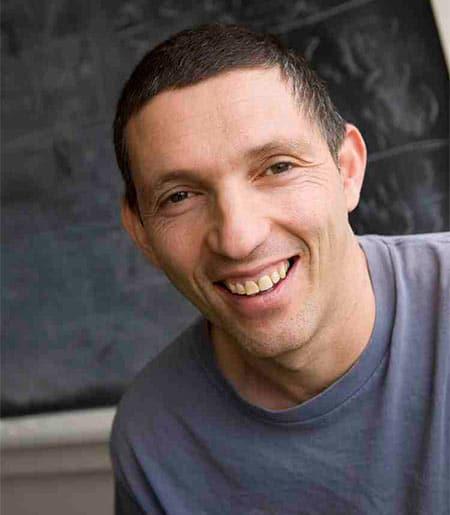
Yuval Grossman

Yuval Grossman

· Professor Physics

Cornell University · Physics

Active 1993–2026

h-index73
Citations15.1k
Papers31534 last 5y
Funding
See your match with Yuval Grossman — sign in to PhdFit.Sign in

About

Yuval Grossman is a professor in the Department of Physics at Cornell University, with a focus on theoretical high energy physics phenomenology. His research interests encompass a wide range of topics including model building, astroparticle physics, neutrinos, and collider phenomenology. His primary focus is on interpreting experimental data and proposing new analyses for current and upcoming experiments, particularly in B physics and neutrino physics, as well as topics related to the Large Hadron Collider (LHC). Grossman's work aims to connect theoretical models with experimental results, contributing to the understanding of fundamental particles and interactions. He holds a B.Sc. in Physics and Computer Science from Bar-Ilan University, an M.Sc. in Theoretical Physics from the Weizmann Institute of Science, and a Ph.D. in Theoretical Physics from the Weizmann Institute of Science. His professional experience includes positions at Stanford Linear Accelerator Center, Technion, and Cornell University, where he has been a faculty member since 2007 and a full professor since 2010. Grossman has been recognized as a Simmons Fellow in Mathematics and Theoretical Physics and has contributed to the field through research, teaching, and mentoring graduate students.

Research topics

  • Physics
  • Particle physics
  • Quantum mechanics
  • Nuclear physics

Selected publications

  • CP violation in decays into states with neutral kaons

    Journal of High Energy Physics · 2026-04-22

    articleOpen access1st author

    A bstract CP violation in the kaon system can manifest itself in decays to final states containing neutral kaons. The effect is governed by an efficiency function that reflects the specific experimental setup. We demonstrate that this efficiency function factorizes into two components: the kaon energy spectrum and a detector-dependent factor that is independent on the decay process. We show that matter effects on kaon oscillations can have a significant effect on CP asymmetries. We provide estimates of the theoretical prediction for some such CP asymmetries for a Belle II-type experiment.

  • Neutrino force at all length scales

    Physical review. D/Physical review. D. · 2025-12-17 · 4 citations

    articleOpen access

    The Standard Model predicts a long-range force mediated by a pair of neutrinos, known as “the neutrino force.” It scales as <a:math xmlns:a="http://www.w3.org/1998/Math/MathML" display="inline"> <a:msubsup> <a:mi>G</a:mi> <a:mi>F</a:mi> <a:mn>2</a:mn> </a:msubsup> <a:mo>/</a:mo> <a:msup> <a:mi>r</a:mi> <a:mn>5</a:mn> </a:msup> </a:math> , where <c:math xmlns:c="http://www.w3.org/1998/Math/MathML" display="inline"> <c:msub> <c:mi>G</c:mi> <c:mi>F</c:mi> </c:msub> </c:math> is the Fermi constant. However, as <e:math xmlns:e="http://www.w3.org/1998/Math/MathML" display="inline"> <e:mi>r</e:mi> <e:mo>≲</e:mo> <e:msqrt> <e:msub> <e:mi>G</e:mi> <e:mi>F</e:mi> </e:msub> </e:msqrt> </e:math> , the four-Fermi theory breaks down and the neutrino force no longer has the <g:math xmlns:g="http://www.w3.org/1998/Math/MathML" display="inline"> <g:mn>1</g:mn> <g:mo>/</g:mo> <g:msup> <g:mi>r</g:mi> <g:mn>5</g:mn> </g:msup> </g:math> scaling. For the first time, we derive a complete expression for the neutrino force that is valid at all distances. For <i:math xmlns:i="http://www.w3.org/1998/Math/MathML" display="inline"> <i:mi>r</i:mi> <i:mo>≫</i:mo> <i:msqrt> <i:msub> <i:mi>G</i:mi> <i:mi>F</i:mi> </i:msub> </i:msqrt> </i:math> , the result reduces to the known <k:math xmlns:k="http://www.w3.org/1998/Math/MathML" display="inline"> <k:msubsup> <k:mi>G</k:mi> <k:mi>F</k:mi> <k:mn>2</k:mn> </k:msubsup> <k:mo>/</k:mo> <k:msup> <k:mi>r</k:mi> <k:mn>5</k:mn> </k:msup> </k:math> ; for <m:math xmlns:m="http://www.w3.org/1998/Math/MathML" display="inline"> <m:mi>r</m:mi> <m:mo>≪</m:mo> <m:msqrt> <m:msub> <m:mi>G</m:mi> <m:mi>F</m:mi> </m:msub> </m:msqrt> </m:math> , it scales as <o:math xmlns:o="http://www.w3.org/1998/Math/MathML" display="inline"> <o:mn>1</o:mn> <o:mo>/</o:mo> <o:mi>r</o:mi> </o:math> . We explore the implications of this result for atomic parity violation (APV) experiments. A key feature of the neutrino force is that it is a long-range effect compared to the atomic length scale. Thus, in general, it cannot be simply treated as a correction to the tree-level <q:math xmlns:q="http://www.w3.org/1998/Math/MathML" display="inline"> <q:mi>Z</q:mi> </q:math> -exchange diagram without considering the atomic wave functions. We calculate the effects in muonium and positronium, finding that the neutrino force contributes about 4% and 16%, respectively, compared to the leading <s:math xmlns:s="http://www.w3.org/1998/Math/MathML" display="inline"> <s:mi>Z</s:mi> </s:math> exchange. This indicates a significant impact on APV, with important implications for detecting the neutrino force and measuring the weak mixing angle in APV experiments.

  • CP violation in $K\toμ^+μ^-$ with and without time dependence through a tagged analysis

    arXiv (Cornell University) · 2025-07-17

    preprintOpen access

    We point out that using current knowledge of ${\cal B}(K^0_L\toμ^+μ^-)$ and $ {\cal B}(K^0_L\to γγ)$, one can extract short-distance information from the combined measurement of the time-integrated CP asymmetry, $A_{\rm CP}(K^0\toμ^+μ^-)$, and of ${\cal B}(K^0_S\toμ^+μ^-)$. We discuss the interplay between this set of observables, and demonstrate that determining ${\rm sign}[A_{\rm CP}(K^0\toμ^+μ^-)]$ would eliminate the discrete ambiguity in the Standard Model prediction for ${\cal B}(K^0_L\toμ^+μ^-)$. We then move on to feasibility studies within an LHCb-like setup, using both time-integrated and time-dependent information, employing $K^0$ and $\overline K{}^0$ tagging methods. We find that, within an optimistic scenario, the short-distance amplitude, proportional to the CKM parameter combination $|A^2λ^5\barη|$, could be constrained by LHCb at the level of about $35\%$ of its Standard Model value, and the discrete ambiguity in ${\cal B}(K^0_L\toμ^+μ^-)_{\rm SM}$ could be resolved at more than $3σ$ by the end of the high luminosity LHC.

  • Strongly Coupled Quantum Forces

    ArXiv.org · 2025-12-05

    preprintOpen access1st authorCorresponding

    Quantum forces are long-range interactions originating from vacuum fluctuations of mediator fields. Such forces inevitably arise between ordinary matter particles whenever they couple to light mediator species. Conventional computations of quantum forces rely on evaluating one-loop Feynman diagrams of the relevant scattering processes. In this work, we introduce a novel framework to compute quantum forces. Instead of relying on perturbative scattering amplitudes, we directly evaluate the quantum fluctuations of the mediator field by solving its quantized equation of motion with appropriate boundary conditions. This approach remains valid beyond the Born approximation and thus applies to regimes of strong coupling between the mediator and matter fields. In the weak-coupling limit, our results reproduce the known expressions from the Feynman diagram approach. In the strong-coupling regime, the result is modified by a factor that can suppress or enhance the effect. In contrast to classical forces, quantum forces intrinsically violate the superposition principle. Our approach may therefore offer a useful tool for probing non-perturbative effects in the infrared regime.

  • CP violation in K → μ+μ− with and without time dependence through a tagged analysis

    Journal of High Energy Physics · 2025-09-24 · 1 citations

    articleOpen access

    A bstract We point out that using current knowledge of $$ \mathcal{B}\left({K}_L^0\to {\mu}^{+}{\mu}^{-}\right) $$ <mml:math xmlns:mml="http://www.w3.org/1998/Math/MathML"> <mml:mi>B</mml:mi> <mml:mfenced> <mml:mrow> <mml:msubsup> <mml:mi>K</mml:mi> <mml:mi>L</mml:mi> <mml:mn>0</mml:mn> </mml:msubsup> <mml:mo>→</mml:mo> <mml:msup> <mml:mi>μ</mml:mi> <mml:mo>+</mml:mo> </mml:msup> <mml:msup> <mml:mi>μ</mml:mi> <mml:mo>−</mml:mo> </mml:msup> </mml:mrow> </mml:mfenced> </mml:math> and $$ \mathcal{B}\left({K}_L^0\to \gamma \gamma \right) $$ <mml:math xmlns:mml="http://www.w3.org/1998/Math/MathML"> <mml:mi>B</mml:mi> <mml:mfenced> <mml:mrow> <mml:msubsup> <mml:mi>K</mml:mi> <mml:mi>L</mml:mi> <mml:mn>0</mml:mn> </mml:msubsup> <mml:mo>→</mml:mo> <mml:mi>γγ</mml:mi> </mml:mrow> </mml:mfenced> </mml:math> , one can extract short-distance information from the combined measurement of the time-integrated CP asymmetry, A CP ( K 0 → μ + μ − ), and of $$ \mathcal{B}\left({K}_S^0\to {\mu}^{+}{\mu}^{-}\right) $$ <mml:math xmlns:mml="http://www.w3.org/1998/Math/MathML"> <mml:mi>B</mml:mi> <mml:mfenced> <mml:mrow> <mml:msubsup> <mml:mi>K</mml:mi> <mml:mi>S</mml:mi> <mml:mn>0</mml:mn> </mml:msubsup> <mml:mo>→</mml:mo> <mml:msup> <mml:mi>μ</mml:mi> <mml:mo>+</mml:mo> </mml:msup> <mml:msup> <mml:mi>μ</mml:mi> <mml:mo>−</mml:mo> </mml:msup> </mml:mrow> </mml:mfenced> </mml:math> . We discuss the interplay between this set of observables, and demonstrate that determining sign[ A CP ( K 0 → μ + μ − )] would eliminate the discrete ambiguity in the Standard Model prediction for $$ \mathcal{B}\left({K}_L^0\to {\mu}^{+}{\mu}^{-}\right) $$ <mml:math xmlns:mml="http://www.w3.org/1998/Math/MathML"> <mml:mi>B</mml:mi> <mml:mfenced> <mml:mrow> <mml:msubsup> <mml:mi>K</mml:mi> <mml:mi>L</mml:mi> <mml:mn>0</mml:mn> </mml:msubsup> <mml:mo>→</mml:mo> <mml:msup> <mml:mi>μ</mml:mi> <mml:mo>+</mml:mo> </mml:msup> <mml:msup> <mml:mi>μ</mml:mi> <mml:mo>−</mml:mo> </mml:msup> </mml:mrow> </mml:mfenced> </mml:math> . We then move on to feasibility studies within an LHCb-like setup, using both time-integrated and time-dependent information, employing K 0 and $$ {\overline{K}}^0 $$ <mml:math xmlns:mml="http://www.w3.org/1998/Math/MathML"> <mml:msup> <mml:mover> <mml:mi>K</mml:mi> <mml:mo>¯</mml:mo> </mml:mover> <mml:mn>0</mml:mn> </mml:msup> </mml:math> tagging methods. We find that, within an optimistic scenario, the short-distance amplitude, proportional to the CKM parameter combination $$ \mid {A}^2{\lambda}^5\overline{\eta}\mid $$ <mml:math xmlns:mml="http://www.w3.org/1998/Math/MathML"> <mml:mo>∣</mml:mo> <mml:msup> <mml:mi>A</mml:mi> <mml:mn>2</mml:mn> </mml:msup> <mml:msup> <mml:mi>λ</mml:mi> <mml:mn>5</mml:mn> </mml:msup> <mml:mover> <mml:mi>η</mml:mi> <mml:mo>¯</mml:mo> </mml:mover> <mml:mo>∣</mml:mo> </mml:math> , could be constrained by LHCb at the level of about 35% of its Standard Model value, and the discrete ambiguity in $$ \mathcal{B}{\left({K}_L^0\to {\mu}^{+}{\mu}^{-}\right)}_{\textrm{SM}} $$ <mml:math xmlns:mml="http://www.w3.org/1998/Math/MathML"> <mml:mi>B</mml:mi> <mml:msub> <mml:mfenced> <mml:mrow> <mml:msubsup> <mml:mi>K</mml:mi> <mml:mi>L</mml:mi> <mml:mn>0</mml:mn> </mml:msubsup> <mml:mo>→</mml:mo> <mml:msup> <mml:mi>μ</mml:mi> <mml:mo>+</mml:mo> </mml:msup> <mml:msup> <mml:mi>μ</mml:mi> <mml:mo>−</mml:mo> </mml:msup> </mml:mrow> </mml:mfenced> <mml:mi>SM</mml:mi> </mml:msub> </mml:math> could be resolved at more than 3 σ by the end of the high luminosity LHC.

  • LHCb Delivers a Key Piece in the CP-Violation Puzzle

    Physics · 2025-03-12

    article1st authorCorresponding
  • Axion forces in axion backgrounds

    ArXiv.org · 2025-03-31

    preprintOpen access1st authorCorresponding

    Axions can naturally be very light due to the protection of an (approximate) shift symmetry. Because of their pseudoscalar nature, the long-range force mediated by the axion at tree level is spin dependent, which cannot lead to observable effects between two unpolarized macroscopic objects. At the one-loop level, however, the exchange of two axions does mediate a spin-independent force. This force is coherently enhanced in the presence of an axion background. In this work, we study the two-axion exchange force in a generic axion background. We find that the breaking of the axion shift symmetry plays a crucial role in determining this force. The background-induced axion force $V_{\rm bkg}$ vanishes in the shift-symmetry restoration limit. The shift symmetry can be broken either explicitly by non-perturbative effects or effectively by the axion background. When the shift symmetry is broken, $V_{\rm bkg}$ scales as $1/r$ and could be further enhanced by a large occupation number of the background axions. We investigate possible experimental probes of this effect in two distinct scenarios: an axion dark matter background and a solar axion flux, using fifth-force searches and atomic spectroscopy experiments. In the axion dark matter case, we find that the background-induced axion force can place strong constraints on axion couplings and masses, comparable to existing astrophysical bounds.

  • Physics Briefing Book: Input for the 2026 update of the European Strategy for Particle Physics

    Desy publication database (The Deutsches Elektronen-Synchrotron) · 2025-01-01 · 7 citations

    preprintOpen access

    The European Strategy for Particle Physics (ESPP) reflects the vision and presents concrete plans of the European particle physics community for advancing human knowledge in fundamental physics. The ESPP is updated every five-to-six years through a community-driven process. It commences with the submission of specific proposals and other input from the community at large, outlining projects envisioned for the near-, mid-, and long-term future. All submitted contributions are evaluated by the Physics Preparatory Group (PPG), and a preliminary analysis is presented at a Symposium meant to foster a broad community discussion on the scientific value and feasibility of the various ideas proposed. The outcomes of the analysis and the deliberations at the Symposium are synthesized in the current Briefing Book, which provides an important input in the deliberations of the Strategy recommendations by the European Strategy Group (ESG).

  • $$ {B}_s\to {K}^0{\overline{K}}^0 $$ beyond the Standard Model

    Journal of High Energy Physics · 2025-05-23 · 3 citations

    articleOpen access1st author

    A bstract Within the Standard Model, the branching fraction of the rare decay $$ {B}_s\to {K}^0{\overline{K}}^0 $$ <mml:math xmlns:mml="http://www.w3.org/1998/Math/MathML"> <mml:msub> <mml:mi>B</mml:mi> <mml:mi>s</mml:mi> </mml:msub> <mml:mo>→</mml:mo> <mml:msup> <mml:mi>K</mml:mi> <mml:mn>0</mml:mn> </mml:msup> <mml:msup> <mml:mover> <mml:mi>K</mml:mi> <mml:mo>¯</mml:mo> </mml:mover> <mml:mn>0</mml:mn> </mml:msup> </mml:math> is related to other decay rates and CP asymmetries through the approximate SU(3) flavor symmetry of the strong interactions and the heavy-quark limit. Three such relations were shown to be violated at a level of about 3 σ each. By means of a systematic search for new-physics explanations of these puzzles, we find that possible solutions are highly fine-tuned and either excluded by other data or rather implausible. The tight correlation between $$ {B}_s\to K\overline{K} $$ <mml:math xmlns:mml="http://www.w3.org/1998/Math/MathML"> <mml:msub> <mml:mi>B</mml:mi> <mml:mi>s</mml:mi> </mml:msub> <mml:mo>→</mml:mo> <mml:mi>K</mml:mi> <mml:mover> <mml:mi>K</mml:mi> <mml:mo>¯</mml:mo> </mml:mover> </mml:math> and B → πK decays, which is maintained even in the presence of flavor-specific new-physics operators, plays a central role in our analysis.

  • Neutrino Effects on Atomic Measurements of the Weinberg Angle

    Physical Review Letters · 2025-12-05 · 1 citations

    articleOpen access

    We derive a complete expression for the neutrino-mediated quantum force beyond the four-Fermi approximation within the standard model. Using this new result, we study the effect of atomic parity violation caused by neutrinos. We find that the neutrino effect is sizable compared to the current experimental sensitivity and can also significantly affect the value of the Weinberg angle measured in atomic systems. This offers a promising method for detecting the neutrino force in the future and facilitates the application of precision atomic physics as a probe for neutrino physics and the electroweak sector of the standard model.

Frequent coauthors

  • Zoltan Ligeti

    University of California, Berkeley

    70 shared
  • Yosef Nir

    54 shared
  • Jure Zupan

    University of Cincinnati

    49 shared
  • Michael Gronau

    Technion – Israel Institute of Technology

    37 shared
  • Nima Arkani–Hamed

    36 shared
  • Mihir P. Worah

    32 shared
  • Helen R. Quinn

    26 shared
  • Gino Isidori

    23 shared

Labs

  • Yuval GrossmanPI

Awards & honors

  • Simmons Fellow in Mathematics and Theoretical Physics, 2013-…
  • Resume-aware match score
  • Save to shortlist
  • AI-drafted outreach

See your match with Yuval Grossman

PhdFit ranks faculty by your research interests, methods, and publications — grounded in their actual work, not templates.

  • Free to start
  • No credit card
  • 30-second signup