
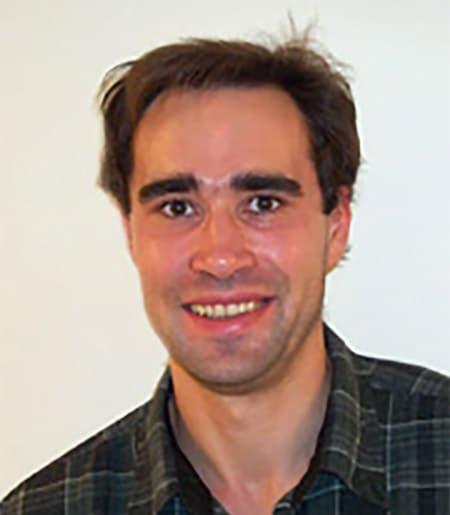
Yuri Berest
· ProfessorCornell University · Mathematics
Active 1994–2025
About
Yuri Berest is a professor in the Department of Mathematics at Cornell University, with an educational background that includes a Ph.D. from Université de Montreal obtained in 1997. His research interests encompass representation theory, algebraic geometry, homological algebra, and mathematical physics, with a particular focus on the interactions between these fields. His recent work involves derived algebraic geometry, algebraic homotopy theory, and their applications in representation theory and low-dimensional topology. Berest has contributed to various areas including representation homology, Lie algebra cohomology, derived Harish-Chandra homomorphism, and the study of double affine Hecke algebras, among others.
Research topics
- Pure mathematics
- Mathematics
- Combinatorics
- Mathematical physics
- Mathematical analysis
Selected publications
Quasi-flag manifolds and moment graphs
ArXiv.org · 2025-09-27
preprintOpen access1st authorCorrespondingWe introduce and study a new class of topological $G$-spaces generalizing the classical flag manifolds $G/T$ of compact connected Lie groups. These spaces, which we call the $m$-quasi-flag manifolds $ F_m = F_m(G,T) $, are topological realizations of the algebras $ Q_k(W) $ of $k$-quasi-invariant polynomials of the Weyl group $ W $ in the sense that their (even-dimensional) $G$-equivariant cohomology $ H_G(F_m, {\mathbb C}) $ is naturally isomorphic to $ Q_k(W) $, where $ m $ is a $W$-invariant integer-valued multiplicity function on the system of roots of $W$ and $ k = \frac{m}{2}$ or $ \frac{m+1}{2}$ depending on whether $m$ is even or odd. Many topological properties and algebraic structures related to the flag manifolds can be extended to quasi-flag manifolds. We compute the cohomology of quasi-flag manifolds by constructing their rational algebraic models in terms of coaffine stacks -- a certain kind of derived stacks introduced by B.Toën and J. Lurie to provide an algebro-geometric framework for rational homotopy theory. Besides cohomology, we also compute the equivariant K-theory of quasi-flag manifolds and extend some of our cohomological results to the multiplicative setting. On the topological side, our approach is strongly influenced by the classical work on homotopy decompositions of classifying spaces of compact Lie groups; however, the diagrams that we use in our decompositions do not arise from collections of subgroups of $G$ but rather from moment graphs -- combinatorial objects introduced in a different area of topology called the GKM theory.
Derived character maps of group representations
Algebraic & Geometric Topology · 2024-12-27
articleOpen access1st authorCorrespondingWe define and study (derived) character maps of finite-dimensional representations of 1-groups.As models for 1-groups we take homotopy simplicial groups, ie the homotopy simplicial algebras over the algebraic theory of groups (in the sense of Badzioch ( 2002)).We introduce cyclic, symmetric and representation homology for "group algebras" kOE of such groups and construct canonical trace maps (natural transformations) relating these homology theories.We show that, in the case of one-dimensional representations, our trace maps are of topological origin: they are induced by natural maps of (iterated) loop spaces known in stable homotopy theory.Using this topological interpretation, we deduce some algebraic results on representation homology: in particular, we prove that the symmetric homology of group algebras and one-dimensional representation homology are naturally isomorphic, provided the base ring k is a field of characteristic zero.We also study the stable behavior of the derived character maps of n-dimensional representations as n ! 1, in which case we show that these maps "converge" to become isomorphisms.18A25, 18G15, 19D55, 55N35; 14A30, 55P42
Symmetric homology and representation homology
Transactions of the American Mathematical Society · 2023-03-22 · 1 citations
articleOpen access1st authorCorrespondingSymmetric homology is a natural generalization of cyclic homology, in which symmetric groups play the role of cyclic groups. In the case of associative algebras, the symmetric homology theory was introduced by Z. Fiedorowicz (1991) and was further developed in the work of S. Ault (2010). In this paper, we show that, for algebras defined over a field of characteristic <inline-formula content-type="math/mathml"> <mml:math xmlns:mml="http://www.w3.org/1998/Math/MathML" alttext="0"> <mml:semantics> <mml:mn>0</mml:mn> <mml:annotation encoding="application/x-tex">0</mml:annotation> </mml:semantics> </mml:math> </inline-formula> , the symmetric homology is naturally equivalent to the (one-dimensional) representation homology introduced by the authors in joint work with G. Khachatryan (2013). Using known results on representation homology, we compute symmetric homology explicitly for basic algebras, such as polynomial algebras and universal enveloping algebras of (DG) Lie algebras. As an application, we prove two conjectures of Ault and Fiedorowicz, including their main conjecture (2007) on topological interpretation of symmetric homology of polynomial algebras.
Open MIND · 2023-05-17
preprint1st authorCorrespondingThis is the first in a series of papers, where we introduce and study topological spaces that realize the algebras of quasi-invariants of finite reflection groups. Our result can be viewed as a generalization of a well-known theorem of A. Borel that realizes the ring of invariant polynomials a Weyl group $W$ as a cohomology ring of the classifying space $BG$ of the associated Lie group $G$. In the present paper, we state our realization problem for the algebras of quasi-invariants of Weyl groups and give its solution in the rank one case (for $G = SU(2)$). We call the resulting $G$-spaces $ F_m(G,T) $ the $m$-quasi-flag manifolds and their Borel homotopy quotients $ X_m(G,T) $ the spaces of $m$-quasi-invariants. We compute the equivariant $K$-theory and the equivariant (complex analytic) elliptic cohomology of these spaces and identify them with exponential and elliptic quasi-invariants of $W$. We also extend our construction of spaces quasi-invariants to a certain class of finite loop spaces $ ΩB $ of homotopy type of $ S^3 $ originally introduced by D. L. Rector. We study the cochain spectra $ C^*(X_m,k) $ associated to the spaces of quasi-invariants and show that these are Gorenstein commutative ring spectra in the sense of Dwyer, Greenlees and Iyengar.
Symmetric Homology is Representation Homology
arXiv (Cornell University) · 2022-10-18
preprintOpen access1st authorCorrespondingSymmetric homology is a natural generalization of cyclic homology, in which symmetric groups play the role of cyclic groups. In the case of associative algebras, the symmetric homology theory was introduced by Z. Fiedorowicz \cite{F} and was further developed in the work of S. Ault \cite{Au1, Au2}. In this paper, we show that, for algebras defined over a field of characteristic $0$, the symmetric homology theory is naturally equivalent to the (one-dimensional) representation homology theory introduced by the authors (jointly with G. Khachatryan) in \cite{BKR}. Using known results on representation homology, we compute symmetric homology explicitly for basic algebras, such as polynomial algebras and universal enveloping algebras of (DG) Lie algebras. As an application, we prove two conjectures of Ault and Fiedorowicz, including the main conjecture of \cite{AF07} on topological interpretation of symmetric homology of polynomial algebras.
Representation homology of simply connected spaces
Journal of Topology · 2022-05-09 · 3 citations
article1st authorCorrespondingLet G $G$ be an affine algebraic group defined over a field k $k$ of characteristic 0. We study the derived moduli space of G $G$ -local systems on a pointed connected CW complex X $X$ trivialized at the basepoint of X $X$ . This derived moduli space is represented by an affine DG scheme R Loc G ( X , * ) $ \bm{\mathrm{R}}\mathrm{Loc}_G(X,\ast )$ : we call the (co)homology of the structure sheaf of R Loc G ( X , * ) $ \bm{\mathrm{R}}\mathrm{Loc}_G(X,\ast )$ the representation homology of X $X$ in G $G$ and denote it by HR * ( X , G ) $ \mathrm{HR}_\ast (X,G)$ . The 0-dimensional homology, HR 0 ( X , G ) $ \mathrm{HR}_0(X,G)$ , is isomorphic to the coordinate ring of the G $G$ -representation variety Rep G [ π 1 ( X ) ] $ {\rm {Rep}}_G[\pi _1(X)]$ of the fundamental group of X $X$ — a well-known algebro-geometric invariant that plays a role in many areas of topology. The higher representation homology is much less studied. In particular, when X $X$ is simply connected, HR 0 ( X , G ) $ \mathrm{HR}_0(X,G)$ is trivial but HR ∗ ( X , G ) $ \mathrm{HR}_*(X,G)$ is still an interesting rational invariant of X $X$ that depends on the Lie algebra of G $G$ . In this paper, we use Quillen's rational homotopy theory to compute the representation homology of an arbitrary simply connected space (of finite rational type) in terms of its Lie and Sullivan algebraic models. When G $G$ is reductive, we also compute HR * ( X , G ) G $ \mathrm{HR}_\ast (X,G)^G$ , the G $G$ -invariant part of representation homology, and study the question when HR * ( X , G ) G $ \mathrm{HR}_\ast (X,G)^G$ is free of locally finite type as a graded commutative algebra. This question turns out to be related to the so-called Strong Macdonald Conjecture, a celebrated result in representation theory proposed (as a conjecture) by Feigin and Hanlon in the 1980s and proved by Fishel, Grojnowski and Teleman in 2008. Reformulating the Strong Macdonald Conjecture in topological terms, we give a simple characterization of spaces X $X$ for which HR * ( X , G ) G $ \mathrm{HR}_\ast (X,G)^G$ is a graded symmetric algebra for any complex reductive group G $G$ .
Deformed Calogero–Moser Operators and Ideals of Rational Cherednik Algebras
Communications in Mathematical Physics · 2022 · 5 citations
1st authorCorresponding- Mathematics
- Pure mathematics
- Combinatorics
Derived Character Maps of Groups Representations
arXiv (Cornell University) · 2022-10-04
preprintOpen access1st authorCorrespondingIn this paper, we construct and study derived character maps of finite-dimensional representations of $\infty$-groups. As models for $\infty$-groups we take homotopy simplicial groups, i.e. homotopy simplicial algebras over the algebraic theory of groups (in the sense of Badzioch). We define cyclic, symmetric and representation homology for `group algebras' over such groups and construct canonical trace maps relating these homology theories. In the case of one-dimensional representations, we show that our trace maps are of topological origin: they are induced by natural maps of (iterated) loop spaces that are well studied in homotopy theory. Using this topological interpretation, we deduce some algebraic results about representation homology: in particular, we prove that the symmetric homology of group algebras and one-dimensional representation homology are naturally isomorphic, provided the base ring $k$ is a field of characteristic zero. We also study the behavior of the derived character maps of $n$-dimensional representations in the stable limit as $ n\to \infty$, in which case we show that they `converge' to become isomorphisms.
Cyclotomic expansion of generalized Jones polynomials
Letters in Mathematical Physics · 2021 · 4 citations
1st authorCorresponding- Mathematics
- Combinatorics
- Pure mathematics
Deformed Calogero--Moser operators and ideals of rational Cherednik algebras
White Rose Research Online (University of Leeds, The University of Sheffield, University of York) · 2020-02-20 · 1 citations
preprintOpen access1st authorCorrespondingWe consider a class of hyperplane arrangements $\mathcal A$ in ${\mathbb C}^n$ that generalise the locus configurations of \cite{CFV}. To such an arrangement we associate a second order partial differential operator of Calogero-Moser type, and prove that this operator is completely integrable (in the sense that its centraliser in $\mathcal{D}({\mathbb C}^n\setminus\mathcal A)$ contains a maximal commutative subalgebra of Krull dimension $n$). Our approach is based on the study of shift operators and associated ideals in the spherical Cherednik algebra that may be of independent interest. The examples include all known families of deformed (rational) Calogero-Moser systems that appeared in the literature; we also construct some new examples, including a BC-type analogues of completely integrable operators recently found by D. Gaiotto and M. Rapčák in \cite{GR}. We describe these examples in a general framework of rational Cherednik algebras close in spirit to \cite{BEG} and \cite{BC}.
Recent grants
NSF · $196k · 2017–2020
Rings of Differential Operators and the Hadamard Problem
NSF · $130k · 2004–2009
Rings of Algebraic Differential Operators in Mathematical Physics and Geometry
NSF · $287k · 2009–2012
Frequent coauthors
- 39 shared
Farkhod Eshmatov
- 37 shared
Alimjon Eshmatov
University of Toledo
- 26 shared
Ajay C. Ramadoss
Indiana University Bloomington
- 19 shared
George Wilson
Beaumont Hospital, Royal Oak
- 15 shared
Pavel Etingof
- 15 shared
Victor Ginzburg
- 9 shared
Peter Samuelson
- 9 shared
Oleg Chalykh
Awards & honors
- 2019 Simons Fellowships
- Resume-aware match score
- Save to shortlist
- AI-drafted outreach
See your match with Yuri Berest
PhdFit ranks faculty by your research interests, methods, and publications — grounded in their actual work, not templates.
- Free to start
- No credit card
- 30-second signup