
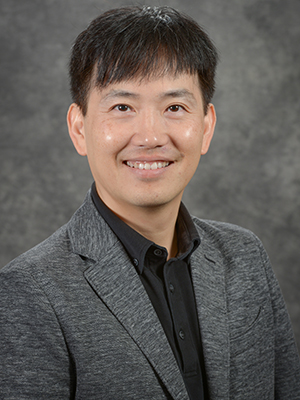
Yoonsuck Choe
· Professor, Computer Science & EngineeringVerifiedTexas A&M University · Computer Science & Engineering
Active 1985–2025
About
Yoonsuck Choe is a Professor in the Department of Computer Science & Engineering at Texas A&M University. He holds a Ph.D. and M.A. in Computer Sciences from the University of Texas at Austin, obtained in 2001 and 1995 respectively, and a B.S. in Computer Science from Yonsei University in 1993. His research interests include brain networks, neural intelligence, and multi-scale modeling of mouse brain networks. He is involved in projects such as the Brain Networks Lab, Neural Intelligence Lab, the Mouse Brain Networks project, and the Topographica cortical map simulator project. Dr. Choe has received numerous awards, including the 30th Anniversary Distinguished Alumni Award from Yonsei University, the College of Engineering Faculty Fellow at Texas A&M, and teaching excellence awards. His work focuses on understanding neural dynamics, cortical development, and brain-inspired computational models, contributing to the fields of neural networks, brain modeling, and artificial intelligence.
Research topics
- Computer Science
- Artificial Intelligence
- Machine Learning
- Mathematics
- Engineering
- Control engineering
- Human–computer interaction
- Simulation
- Algorithm
- Multimedia
Selected publications
Evolutionary Factors Contributing to the Emergence of Prediction
Adaptive Behavior · 2025-08-11 · 1 citations
articleOpen accessSenior authorCorrespondingPrediction is an important foundation of cognitive and intelligent behavior. However, how such predictive capabilities emerged from simple organisms has not been investigated fully. Our prior works have shown the relationship between input delay and predictive function. Furthermore, we showed that environmental change can help predictive properties to evolve. In this paper, we investigate two other key factors contributing to the evolution of prediction. We set up a reaching task with a two-segment articulated arm with the goal of touching a moving target. In Task 1, the target’s location is received with a delay in the sensors. In Task 2, we introduced occlusion in the form of input blank-out. When the hand is too close to the moving target, the target disappears from the sensors, and reappears when it is farther than a threshold. In both tasks, prediction is needed to keep track of the target’s correct location. For the controller, we used the NeuroEvolution of Augmenting Topologies (NEAT) algorithm. Our results from Task one indicate that an important fitness criterion for the emergence of predictive behavior is energy conservation. The results from Task two show that more occlusion leads to network types with stronger predictive power become more successful. Through our prior and current experiments, we identified four seemingly unrelated and unlikely factors that may have led to the evolution of prediction: delay, environmental change, energy constraint, and occlusion. These are prevalent conditions in the natural environment, thus it seems inevitable that predictive capabilities will emerge in evolving agents.
ArXiv.org · 2025-09-18
preprintOpen accessSenior authorThe original Convolutional Neural Networks (CNNs) and their modern updates such as the ResNet are heavily inspired by the mammalian visual system. These models include afferent connections (retina and LGN to the visual cortex) and long-range projections (connections across different visual cortical areas). However, in the mammalian visual system, there are connections within each visual cortical area, known as lateral (or horizontal) connections. These would roughly correspond to connections within CNN feature maps, and this important architectural feature is missing in current CNN models. In this paper, we present how such lateral connections can be modeled within the standard CNN framework, and test its benefits and analyze its emergent properties in relation to the biological visual system. We will focus on two main architectural features of lateral connections: (1) recurrent activation and (2) separation of excitatory and inhibitory connections. We show that recurrent CNN using weight sharing is equivalent to lateral connections, and propose a custom loss function to separate excitatory and inhibitory weights. The addition of these two leads to increased classification accuracy, and importantly, the activation properties and connection properties of the resulting model show properties similar to those observed in the biological visual system. We expect our approach to help align CNN closer to its biological counterpart and better understand the principles of visual cortical computation.
The Role of Energy Constraints on the Evolution of Predictive Behavior
Lecture notes in computer science · 2024-09-06 · 1 citations
book-chapterSenior authorIndexing Analytics to Instances: How Integrating a Dashboard can Support Design Education
arXiv (Cornell University) · 2024-04-08 · 1 citations
preprintOpen accessWe investigate how to use AI-based analytics to support design education. The analytics at hand measure multiscale design, that is, students' use of space and scale to visually and conceptually organize their design work. With the goal of making the analytics intelligible to instructors, we developed a research artifact integrating a design analytics dashboard with design instances, and the design environment that students use to create them. We theorize about how Suchman's notion of mutual intelligibility requires contextualized investigation of AI in order to develop findings about how analytics work for people. We studied the research artifact in 5 situated course contexts, in 3 departments. A total of 236 students used the multiscale design environment. The 9 instructors who taught those students experienced the analytics via the new research artifact. We derive findings from a qualitative analysis of interviews with instructors regarding their experiences. Instructors reflected on how the analytics and their presentation in the dashboard have the potential to affect design education. We develop research implications addressing: (1) how indexing design analytics in the dashboard to actual design work instances helps design instructors reflect on what they mean and, more broadly, is a technique for how AI-based design analytics can support instructors' assessment and feedback experiences in situated course contexts; and (2) how multiscale design analytics, in particular, have the potential to support design education. By indexing, we mean linking which provides context, here connecting the numbers of the analytics with visually annotated design work instances.
International Journal of Neural Systems · 2024-04-05 · 5 citations
articleOpen accessVision and proprioception have fundamental sensory mismatches in delivering locational information, and such mismatches are critical factors limiting the efficacy of motor learning. However, it is still not clear how and to what extent this mismatch limits motor learning outcomes. To further the understanding of the effect of sensory mismatch on motor learning outcomes, a reinforcement learning algorithm and the simplified biomechanical elbow joint model were employed to mimic the motor learning process in a computational environment. By applying a reinforcement learning algorithm to the motor learning of elbow joint flexion task, simulation results successfully explained how visual-proprioceptive mismatch limits motor learning outcomes in terms of motor control accuracy and task completion speed. The larger the perceived angular offset between the two sensory modalities, the lower the motor control accuracy. Also, the more similar the peak reward amplitude of the two sensory modalities, the lower the motor control accuracy. In addition, simulation results suggest that insufficient exploration rate limits task completion speed, and excessive exploration rate limits motor control accuracy. Such a speed-accuracy trade-off shows that a moderate exploration rate could serve as another important factor in motor learning.
Proportional sway-based electrotactile feedback improves lateral standing balance
Frontiers in Neuroscience · 2024-03-18 · 2 citations
articleOpen accessIntroduction Plantar cutaneous augmentation is a promising approach in balance rehabilitation by enhancing motion-dependent sensory feedback. The effect of plantar cutaneous augmentation on balance has been mainly investigated in its passive form (e.g., textured insole) or on lower-limb amputees. In this study, we tested the effect of plantar cutaneous augmentation on balance in its active form (i.e., electrical stimulation) for individuals with intact limbs. Methods Ten healthy subjects participated in the study and were instructed to maintain their balance as long as possible on the balance board, with or without electrotactile feedback evoked on the medial side of the heel, synched with the lateral board sway. Electrotactile feedback was given in two different modes: 1) Discrete-mode E-stim as the stimulation on/off by a predefined threshold of lateral board sway and 2) Proportional-mode E-stim as the stimulation frequency proportional to the amount of lateral board sway. All subjects were distracted from the balancing task by the n-back counting task, to test subjects’ balancing capability with minimal cognitive involvement. Results Proportional-mode E-stim, along with the n-back counting task, increased the balance time from 1.86 ± 0.03 s to 1.98 ± 0.04 s ( p = 0.010). However, discrete-mode E-stim did not change the balance time ( p = 0.669). Proportional-mode E-stim also increased the time duration per each swayed state ( p = 0.035) while discrete-mode E-stim did not ( p = 0.053). Discussion These results suggest that proportional-mode E-stim is more effective than discrete-mode E-stim on improving standing balance. It is perhaps because the proportional electrotactile feedback better mimics the natural tactile sensation of foot pressure than its discrete counterpart.
Use of External Markers by Reactive Agents as an Easier Evolutionary Route Toward Memory
2024-06-30
articleSenior authorMemory is a key functional requirement for cognitive agents. There are three basic ways to implement memory using neural networks: (1) RNN: recurrent neural networks, (2) TDNN: time-delayed neural networks (feed-forward), and (3) DROPPER: external marker dropper/detector (feed-forward). All three have been found to be effective in prior research. In this paper, we ask which of these mechanisms could have evolved earlier/easier? To answer this question, we set up a simple ball-catching task where two balls fall from above at different speeds, and an agent at the bottom has to catch the balls using range sensors. Depending on the relative speed of the balls, sometimes the slow ball will go out of sensor range, thus to catch the fast ball first then remember to catch the second (slow) ball, memory is required. We used the Neuroevolution of Augmenting Topologies (NEAT) algorithm to evolve all three types of memory mechanisms, where not only the connection weights but also the network topologies are evolved. Our results show that the DROPPER mechanism is the fastest to evolve a successful controller, followed by TDNN and RNN. Among the feed-forward topologies, we also found that DROPPER is more robust than TDNN (less sensitive to the relative speed of the balls). These results show that a simple reactive agent could quickly evolve a rudimentary form of memory through depositing and detecting external markers, long before other internalized memory mechanisms evolve. These findings shed light on the evolutionary route toward memory in cognitive agents.
Meaning versus information, prediction versus memory, and question versus answer
Elsevier eBooks · 2023-10-20 · 1 citations
book-chapter1st authorCorrespondingAdvances in AI, neural networks, and brain computing: An introduction
Elsevier eBooks · 2023-10-20 · 11 citations
book-chapterSenior authorAdjointBackMapV2: Precise reconstruction of arbitrary CNN unit’s activation via adjoint operators
Neural Networks · 2023-11-09
articleOpen accessSenior author
Recent grants
CRCNS: Data Sharing: Open Web Atlas for High-Resolution 3D Mouse Brain Data
NSF · $207k · 2012–2015
NIH · $962k · 2010
Enhanced Knife-Edge Scanning Microscopy for Sub-micrometer Imaging of Whole Small Animal Organs
NSF · $502k · 2013–2017
CRCNS data sharing: Whole Mouse Brain Neuronal Morphology and Neurovasculature Browser
NSF · $131k · 2009–2011
Frequent coauthors
- 31 shared
David Mayerich
University of Houston
- 29 shared
John Keyser
Texas A&M University
- 26 shared
Jaerock Kwon
- 23 shared
Louise C. Abbott
- 18 shared
Yingwei Yu
Wuhan Textile University
- 15 shared
Heeyoul Choi
- 12 shared
Péter Érdi
- 11 shared
Huei‐Fang Yang
Education
- 2001
Ph.D., Computer Sciences
The University of Texas at Austin
- 1995
M.A., Computer Sciences
The University of Texas a Austin
- 1993
B.S., Computer Science
Yonsei University
Awards & honors
- 30th Anniversary Distinguished Alumni Award (2013), Departme…
- Charles H. Barclay, Jr. ’45 Fellow (College of Engineering F…
- Graduate Faculty Teaching Excellence Award, Department of Co…
- Best Student Paper Award IEEE CIMSVP 2009
- Best Scientific Paper Award ICPR 2008
- Resume-aware match score
- Save to shortlist
- AI-drafted outreach
See your match with Yoonsuck Choe
PhdFit ranks faculty by your research interests, methods, and publications — grounded in their actual work, not templates.
- Free to start
- No credit card
- 30-second signup