
Resume-aware faculty matching

Find professors who actually fit you

Upload your resume. Four AI agents analyze your background, rank the faculty who fit, inspect their recent research, and help you draft outreach — grounded in their actual work, not templates.

Free to startNo credit cardCancel anytime
Top matches Balanced preset
Dr. Sarah Chen
Stanford · Interpretability · NLP
91
Dr. Marcus Holloway
MIT · Robotics · RL
84
Dr. Aisha Okonkwo
CMU · Fairness · HCI
82
Nova · Professor Researcher · re-ranking top 20…
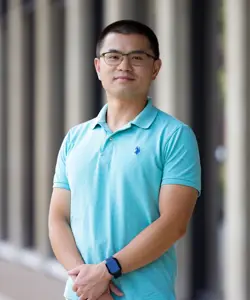
Xu Li

Xu Li

· Associate ProfessorVerified

University of Illinois Urbana-Champaign · Educational Psychology

Active 1991–2026

h-index64
Citations18.0k
Papers489135 last 5y
Funding$2.7M
See your match with Xu Li — sign in to PhdFit.Sign in

Research topics

  • Materials science
  • Physics
  • Chemistry
  • Optoelectronics
  • Nanotechnology
  • Engineering
  • Crystallography
  • Artificial Intelligence
  • Computer Science
  • Inorganic chemistry
  • Optics
  • Photochemistry
  • Acoustics
  • Nuclear magnetic resonance
  • Computer vision
  • Electrical engineering
  • Structural engineering
  • Electronic engineering

Selected publications

  • Graduate Training in Quantum Information Science and Engineering: Lessons, Challenges, and a Roadmap from the NSF Research Traineeship Programs

    arXiv (Cornell University) · 2026-05-08

    preprintOpen access

    Since 2019, eighteen NSF Research Traineeship (NRT) awards in quantum information science and engineering (QISE) and adjacent fields have been funded, constituting the largest NSF-coordinated investment in graduate QISE training in the United States. Synthesizing lessons from our programs, we work through the central tensions that every QISE graduate program must negotiate: between depth in a home discipline and breadth across the field, between structured instruction and open-ended experiential and hands-on learning, and between training individual specialists and cultivating teams that collectively cover all areas of QISE. We describe the structural and pedagogical innovations the NRT programs have developed in response, assess what is working and what remains unresolved, and sketch 12 open problems the community will need to address as QISE graduate education scales beyond the well-resourced research universities where it has up till now been mainly concentrated. Eight concrete recommendations follow: (1) adopt the startup model of team-based training as an organizing philosophy; (2) invest immediately in sensing and communication curriculum development; (3) build student agency into program governance, not just activities; (4) establish structural mechanisms for industrial engagement rather than depending on goodwill; (5) design for sustainability from year one; (6) develop graduate-level textbooks spanning all three QISE pillars: computing, sensing, and communications; (7) establish shared outcome assessment instruments across programs; and (8) develop structured mechanisms for faculty professional development in QISE.

  • Graduate Training in Quantum Information Science and Engineering: Lessons, Challenges, and a Roadmap from the NSF Research Traineeship Programs

    ArXiv.org · 2026-05-08

    articleOpen access

    Since 2019, eighteen NSF Research Traineeship (NRT) awards in quantum information science and engineering (QISE) and adjacent fields have been funded, constituting the largest NSF-coordinated investment in graduate QISE training in the United States. Synthesizing lessons from our programs, we work through the central tensions that every QISE graduate program must negotiate: between depth in a home discipline and breadth across the field, between structured instruction and open-ended experiential and hands-on learning, and between training individual specialists and cultivating teams that collectively cover all areas of QISE. We describe the structural and pedagogical innovations the NRT programs have developed in response, assess what is working and what remains unresolved, and sketch 12 open problems the community will need to address as QISE graduate education scales beyond the well-resourced research universities where it has up till now been mainly concentrated. Eight concrete recommendations follow: (1) adopt the startup model of team-based training as an organizing philosophy; (2) invest immediately in sensing and communication curriculum development; (3) build student agency into program governance, not just activities; (4) establish structural mechanisms for industrial engagement rather than depending on goodwill; (5) design for sustainability from year one; (6) develop graduate-level textbooks spanning all three QISE pillars: computing, sensing, and communications; (7) establish shared outcome assessment instruments across programs; and (8) develop structured mechanisms for faculty professional development in QISE.

  • Mechanical Properties of Precast Recycled Concrete Thermal Insulation Panels with GFRP Connectors

    Buildings · 2025-03-12 · 2 citations

    articleOpen access1st authorCorresponding

    To improve both the composite performance of precast thermal insulation wall panels and the environmental sustainability of the structure, this study employs recycled concrete, and introduces an innovative four-footstool Glass Fiber Reinforced Plastic (GFRP) connector to join the inner and outer panels of precast thermal insulation wall systems. The experimental program included pull-out, shear, and bending tests to compare the performance of wall panels equipped with traditional Thermomass MS connectors and the novel GFRP connectors, using both conventional and fully recycled concrete. The results indicate that, when paired with recycled concrete, the GFRP connectors exhibited a 14.8% higher pull-out bearing capacity than the traditional connectors. Additionally, shear tests demonstrated that the GFRP connectors offered a 20.6% improvement in shear resistance compared to the Thermomass MS connectors. The bending strength of panels with GFRP connectors also showed an enhancement, with a 16.5% increase in flexural strength relative to those using traditional connectors. Notably, the GFRP connectors contributed to a more uniform crack distribution under loading, thereby improving the overall structural integrity. A reduction factor γ for the GFRP four-footstool connector was proposed based on a fully composite model, and the analysis of the composite degree calculation showed that the recycled concrete sample using the new GFRP connector had the highest composite degree.

  • Quantum Sensing with Spin Defects Beyond Diamond

    ACS Nano · 2025-06-16 · 8 citations

    reviewSenior authorCorresponding

    Spin defects in solid-state materials offer a platform for quantum sensing that combines the properties of atom-like systems with the scalability, versatility, and technological maturity of semiconductor devices. The past decade has seen increasing interest in host materials beyond diamond which can offer additional functionality and more effectively leverage the advantage of the existing semiconductor ecosystem. This review provides a survey and comparison of spin defects in silicon carbide, hexagonal boron nitride, and gallium nitride with an emphasis on their applications to magnetometry, electrometry, thermometry, and strain sensing. A practical overview of quantum sensing protocols and sensitivity enhancement is provided along with a final discussion of the future direction of the field and remaining challenges.

  • CADRES: An Analytical Pipeline for Precise Identification of Differential RNA Editing Events Across Varied Biological Conditions

    Research Square · 2025-04-28

    preprintOpen accessSenior author
  • Ultra‐Efficient, Broadband‐Excitable NIR Emission in Lead‐Free Cs <sub>2</sub> NaYbCl <sub>6</sub> via Cl → Yb Charge Transfer and Cr <sup>3+</sup> Sensitization

    Advanced Optical Materials · 2025-09-15 · 4 citations

    article

    Abstract Ytterbium ions (Yb 3+ ) are commonly employed to extend the luminescent properties of metal halide perovskites due to their characteristic narrow‐band near‐infrared (NIR) emission. However, Yb 3+ still suffers from weak emission in lead‐free halide double perovskite systems owing to the parity‐forbidden 4f‐4f transitions with intrinsically weak absorption. In this study, undoped Cs 2 NaYbCl 6 single crystals demonstrate an exceptional NIR photoluminescence quantum yield (PLQY) of 43.6%. Through strategic incorporation of 5% transition metal Cr 3+ ions, the system achieves an ultra‐broad excitation spectrum spanning UV, visible, and NIR regions while preserving the characteristic narrow‐band Yb 3+ emission. Theoretical investigations encompassing band structure analysis, Bader charge calculations, and electron localization function (ELF) reveal that the highly localized [YbCl 6 ] 3− octahedra facilitate efficient NIR emission through Cl − →Yb 3+ charge transfer (CT) transitions. Cr 3+ doping introduces impurity levels, disrupts the Cl − →Yb 3+ CT process, and induces sublattice distortion, thereby serving as sensitization channels for intrinsic Yb 3+ emission. Leveraging the broadened excitation spectrum, a NIR solid‐state lighting system excitable by UV/visible/NIR illumination is engineered. These findings provide novel design principles for photo‐sensitization processes and application scenarios in lanthanide‐based perovskites and coordination compounds.

  • Effects of Light Quality on Flowering and Physiological Parameters of Cymbidium ensifolium ‘Longyan Su’

    Plants · 2025-12-02 · 1 citations

    articleOpen access

    As a highly valued orchid species, Cymbidium ensifolium (C. ensifolium) exhibits a natural flowering period mainly from July to September, which does not align with the market demand and shows low flowering quality, thereby significantly constraining the development of the C. ensifolium floriculture industry. To address this key issue, the study used C. ensifolium ‘Longyan Su’ as the experimental material, with white light as the control and composite light with varying ratios of red and blue light as the treatments, and investigated the influence of light quality on flowering. The results showed that blue light could significantly advance the flowering time, while red light could markedly improve the flower quality. Blue light promoted the accumulation of soluble protein and soluble sugar during flower bud differentiation, while red light enhanced their accumulation during floral organ development. During the flower bud differentiation and development stage, blue light increased the synthesis of abscisic acid (ABA) in leaves, and red light promoted the production of gibberellic acid (GA3) and zeatin riboside (ZR). The study provides an important foundation and reference for further analysis of the flowering mechanism of C. ensifolium under different light quality treatments, and also provides technical support for flowering regulation of orchids in practical production.

  • Combined effects of microplastics and copper on antioxidant capacity, gut microbiome, and metabolomics of Pseudorasbora parva

    Comparative Biochemistry and Physiology Part C Toxicology & Pharmacology · 2025-07-22 · 1 citations

    articleCorresponding
  • Comprehensive study of β-Ga2O3 epitaxial growth using a variable closed-coupled showerhead MOCVD reactor

    Applied Physics Reviews · 2025-05-13 · 12 citations

    articleSenior author

    β-Ga2O3 is a highly promising ultrawide bandgap semiconductor material that is poised to transform the high-power electronics field. The manufacturability of device quality β-Ga2O3 epitaxial films at scale is urgently needed. Using a production-ready closed-coupled showerhead MOCVD reactor with in situ reflectance monitoring, this study presents a detailed investigation of the impact of growth parameters on the epitaxial growth of β-Ga2O3 on both (010) and (001) oriented native substrates, as well as on c-plane sapphire substrates with 0°–8° off-axis orientations. By tuning the showerhead–susceptor gap and mapping the other growth parameters, including annealing, nucleation, growth temperature, reactor pressure, and substrate orientation, we achieved state-of-the-art crystal quality, extraordinary wafer-level thickness uniformity of &amp;lt;1% variation for both 2-in. and 4-in. substrates for growth rates as high as 7.2 μm/h. All growth was performed using TMGa and pure O2 as the precursors and N2 as the carrier gas instead of the more widely used argon; no detectable nitrogen and carbon incorporation was observed by secondary ion mass spectrometry. For the homoepitaxy of Si-doped β-Ga2O3 films on (010) substrates, a room temperature Hall mobility of 148 cm2/V s was achieved at a carrier concentration of 1.26 × 1017 cm−3, with a growth rate of 2.6 μm/h. For the heteroepitaxy on sapphire, off-axis substrates exhibited enhanced crystallinity, as shown by the continued reduction of x-ray diffraction rocking curve full width at half maximum from 2834 to 1300 arcsec for 0° and 8° offcut sapphire substrates, respectively. The results demonstrate the scalability and potential advantages of this reactor design for manufacturing-scale β-Ga2O3 growth and offer new insights into the controllability of uniform high-quality films for power electronics applications.

  • High‐Performance NIR‐II Sn‐Based Perovskite LEDs Enabled by the Functionalization of Sulfaguanidine

    Advanced Materials · 2025-12-19 · 2 citations

    articleOpen access1st author

    ABSTRACT Eco‐friendly CsSnI 3 ‐based perovskite light‐emitting diodes (PeLEDs) with the emission peak extending to the near‐infrared‐II (NIR‐II) region hold tremendous potential for applications in biological monitoring, night vision, and optical communications. However, the various defects caused by the instability of Sn 2+ within the CsSnI 3 film, and the non‐equilibrium carrier injection rate in the devices are the two major factors that limit the device performance. Here, we report high‐performance NIR‐II CsSnI 3 ‐based PeLEDs achieved by employing functional sulfaguanidine (SG) molecules. Due to the strong S═O─Sn coordination bonds, NH 2 ···I − hydrogen bonds could be formed between CsSnI 3 and SG, which effectively eliminated various Sn(II)‐related defects in the CsSnI 3 film. Moreover, the SG molecules significantly improved the morphological uniformity and regulated the carrier injection balance, resulting in more balanced carrier injection that enhanced the effective radiation recombination rate. Consequently, the optimized CsSnI 3 ‐SG PeLEDs achieved a breakthrough external quantum efficiency (EQE) of 8.1%, which is the highest efficiency reported for CsSnI 3 ‐based PeLEDs to date.

Recent grants

Frequent coauthors

  • Hsien-Chih Huang

    University of Illinois Urbana-Champaign

    94 shared
  • Parsian K. Mohseni

    Rochester Institute of Technology

    79 shared
  • Xiaojun Wu

    79 shared
  • Bing Zhao

    Chinese Academy of Sciences

    50 shared
  • Zhendong Yang

    The University of Texas at Austin

    50 shared
  • Xiao Han

    Harbin Institute of Technology

    48 shared
  • Kelson D. Chabak

    United States Air Force Research Laboratory

    47 shared
  • Zhongjie Ren

    Nantong University

    45 shared

Education

  • PhD, Chemistry

    University of California

    1993
  • Resume-aware match score
  • Save to shortlist
  • AI-drafted outreach

See your match with Xu Li

PhdFit ranks faculty by your research interests, methods, and publications — grounded in their actual work, not templates.

  • Free to start
  • No credit card
  • 30-second signup