Resume-aware faculty matching

Find professors who actually fit you

Upload your resume. Four AI agents analyze your background, rank the faculty who fit, inspect their recent research, and help you draft outreach — grounded in their actual work, not templates.

Free to startNo credit cardCancel anytime
Top matches Balanced preset
Dr. Sarah Chen
Stanford · Interpretability · NLP
91
Dr. Marcus Holloway
MIT · Robotics · RL
84
Dr. Aisha Okonkwo
CMU · Fairness · HCI
82
Nova · Professor Researcher · re-ranking top 20…
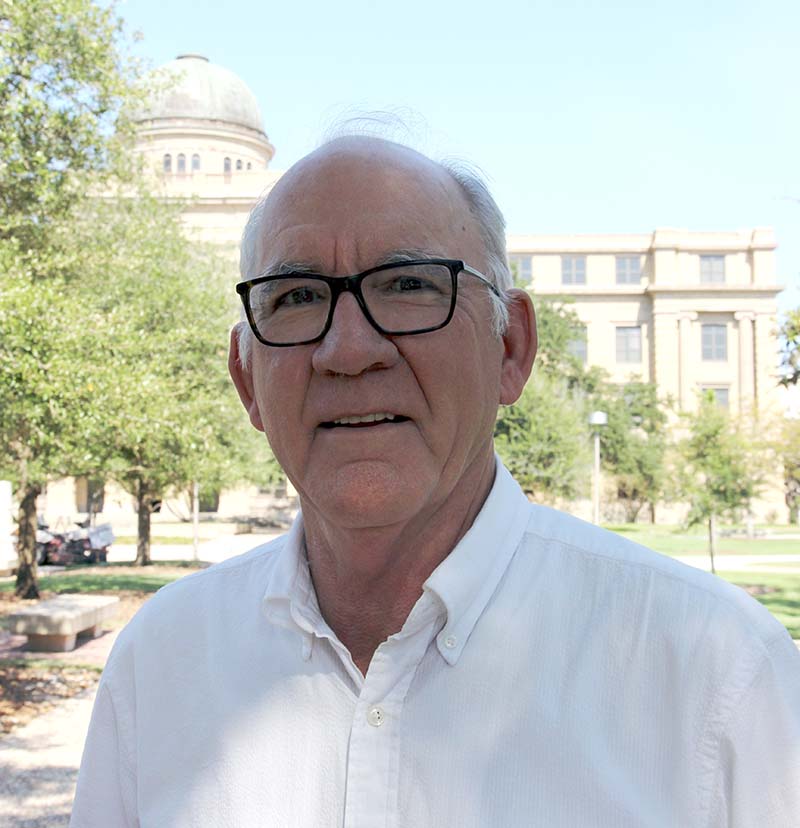
Walter Kamphoefner

Walter Kamphoefner

· Professor

Texas A&M University · History

Active 1977–2024

h-index10
Citations378
Papers13023 last 5y
Funding
See your match with Walter Kamphoefner — sign in to PhdFit.Sign in

About

Walter D. Kamphoefner is a Professor of History at Texas A&M University, having joined the university in 1988. He earned his Ph.D. from the University of Missouri in 1978 and specializes in the fields of immigration history and the U.S. Civil War. Kamphoefner has spent three yearlong guest professorships at German universities, including two Fulbright lectureships. He served as President of the Society for German-American Studies from 2015 to 2017 and received the Society's Distinguished Achievement Award in 2024. His scholarly work includes extensive publications in the field of immigration and ethnicity, with articles in four languages and three books published in both German and English. His latest book, 'Germans in America: A Concise History' (2021), offers a comprehensive survey of the German American experience over more than 300 years. Kamphoefner also contributes op-eds on historical and contemporary issues to various newspapers such as the Eagle, Houston Chronicle, Austin American-Statesman, Columbia Missourian, and Washington Post.

Research topics

  • Political Science
  • Sociology
  • History
  • Archaeology
  • Law
  • Psychology
  • Physics
  • Astronomy
  • Anthropology

Selected publications

  • The German-American Experience in World War I: A Reassessment

    transcript Verlag eBooks · 2024-08-22

    book-chapter1st authorCorresponding
  • The Quest of the Historical Jurnjakob: A Centennial Evaluation of an Immigrant Novel and the Real-Life Figure Behind It

    Yearbook of German-American Studies · 2022-07-20

    articleOpen access1st authorCorresponding
  • Doughboys auf Deutsch: U.S. Soldiers Writing Home in German from France

    Yearbook of German-American Studies · 2022-07-20 · 1 citations

    articleOpen access1st authorCorresponding

    In his 1917 Independence Day address shortly after the United States entered World War I, former president Theodore Roosevelt fulminated against what he called hyphenated Americans, conflating language and loyalty: "We have room for but one language here, and that is the English language . . . and we have room for but one sole loyalty and that is a loyalty to the American people." 1 Ever since then, nativists have echoed this statement and sentiment, conflating heritage language preservation with political disloyalty. 2 But they have missed something important. There are refutations of this claim written in stone in cemeteries across the nation: commemorations of Americans who died in service to their country during World War I on gravestones in a half-dozen languages other than English. The first to catch my attention was a chance discovery at New Ulm, Texas: an American soldier who paid the ultimate sacrifice in France, commemorated with a bilingual tombstone in Czech and English, and this for someone of the third generation. Further investigation on Find-a-Grave.com revealed tombstones of other men who died in American service in World War I commemorated in Polish, Spanish, Hebrew, Italian, and even in German, the latter from Wisconsin to Missouri to Texas, sometimes with no English whatsoever on the monument. Like the Czech-American soldier, many of these doughboys were of the third generation. 3 Recent investigations have turned up something even more surprising: despite the widespread crusades against all things German, some U.S. soldiers in the field were writing home in the German language. On the basis of digitized German American newspapers alone, evidence of such German letters was located in five different states. Unlike the tombstone inscriptions probably selected by the parental generation, these men themselves, some of them in the third generation, chose to write home in German. This discov-

  • The German-American Experience in World War I: A Centennial Assessment

    Yearbook of German-American Studies · 2022 · 4 citations

    1st authorCorresponding
    • Political Science
    • Political Science
    • History

    Pohlman was wounded in battle on July 26, 1918, and died of his wounds on August 4. Riebling suffered a similar fate the next month. But because of their German names and ancestry, their sacrifice went unrecognized. Instead, the town was renamed after a hard-luck doughboy who caught typhoid fever on the ship over and died in an army hospital on August 18, 1918, never having laid eyes on the enemy, much less come under fire. What set him apart from the others was his Anglo name, Raymond Garland. 5 Pohlman and Riebling are symptomatic of the unappreciated loyalty of most German-Americans during World War I. But even the fates of various "Germantowns" around the United States are indicative of a wide range of ethnic experiences. Texas followed the same principle as Nebraska but actually applied it fairly, bringing little "improvement." The town was renamed after Paul Schroeder, a second-generation German who paid the ultimate sacrifice. 6 Two Germantowns did receive new names with clearly anti-German overtones. The California hamlet was transformed into Artois, (reportedly after the old name nearly caused a riot when a troop train stopped there), commemorating a French region on the Western Front. The German Catholic community in Kansas was renamed Mercier after the Belgian cardinal who led resistance to German occupation. But across the country, in Pennsylvania, Maryland, Indiana, Tennessee, Wisconsin, and ironically in Illinois just thirty miles east of where Prager was lynched, other Germantowns survived the war unscathed.

  • German Language Persistence in Texas and Missouri

    Yearbook of German-American Studies · 2022-07-20

    articleOpen access1st authorCorresponding

    We aimed to identify factors associated with the not adjusting of babies to daycare, such as, baby’s temperament, parents-baby relationship and beliefs and practices about alternative care. Participants were four families whose babies entered into daycare between 10 and 12 months of age and were removed by not adjusting as evaluated by their parents. Interviews were applied during pregnancy, and when the baby was three, eight and twelve months old. Qualitative content analysis indicated that the most relevant factors to understand the not adjustment were related to dynamics of parents-baby interaction, like: feelings related to separation and the way that parents experienced daycare center entrance. The results highlight the importance of promoting the acceptance of parents-baby separation in transition to daycare.

  • German-Americans: Still Divided by the Reformation 500 Years Later?

    Yearbook of German-American Studies · 2022-07-20

    articleOpen access1st authorCorresponding
  • 10 The Radical Side of German America

    Rowman & Littlefield Publishers eBooks · 2021-01-01

    book-chapter1st authorCorresponding

    This book offers a fresh look at the Germans—the largest and perhaps the most diverse foreign-language group in 19th century America. Drawing upon the latest findings from both sides of the Atlantic, emphasizing history from the bottom up and drawing heavily upon examples from immigrant letters, this work presents a number of surprising new insights. Particular attention is given to the German-American institutional network, which because of the size and diversity of the immigrant group was especially strong. Not just parochial schools, but public elementary schools in dozens of cities offered instruction in the mother tongue. Only after 1900 was there a slow transition to the English language in most German churches. Still, the anti-German hysteria of World War I brought not so much a sudden end to cultural preservation as an acceleration of a decline that had already begun beforehand. It is from this point on that the largest American ethnic group also became the least visible, but especially in rural enclaves, traces of the German culture and language persisted to the end of the twentieth century.

  • 6 German Niches in the American Economy

    Rowman & Littlefield Publishers eBooks · 2021-01-01

    book-chapter1st authorCorresponding

    This book offers a fresh look at the Germans—the largest and perhaps the most diverse foreign-language group in 19th century America. Drawing upon the latest findings from both sides of the Atlantic, emphasizing history from the bottom up and drawing heavily upon examples from immigrant letters, this work presents a number of surprising new insights. Particular attention is given to the German-American institutional network, which because of the size and diversity of the immigrant group was especially strong. Not just parochial schools, but public elementary schools in dozens of cities offered instruction in the mother tongue. Only after 1900 was there a slow transition to the English language in most German churches. Still, the anti-German hysteria of World War I brought not so much a sudden end to cultural preservation as an acceleration of a decline that had already begun beforehand. It is from this point on that the largest American ethnic group also became the least visible, but especially in rural enclaves, traces of the German culture and language persisted to the end of the twentieth century.

  • 5 The German-Language Press and German Culture in America

    Rowman & Littlefield Publishers eBooks · 2021-01-01

    book-chapter1st authorCorresponding

    This book offers a fresh look at the Germans—the largest and perhaps the most diverse foreign-language group in 19th century America. Drawing upon the latest findings from both sides of the Atlantic, emphasizing history from the bottom up and drawing heavily upon examples from immigrant letters, this work presents a number of surprising new insights. Particular attention is given to the German-American institutional network, which because of the size and diversity of the immigrant group was especially strong. Not just parochial schools, but public elementary schools in dozens of cities offered instruction in the mother tongue. Only after 1900 was there a slow transition to the English language in most German churches. Still, the anti-German hysteria of World War I brought not so much a sudden end to cultural preservation as an acceleration of a decline that had already begun beforehand. It is from this point on that the largest American ethnic group also became the least visible, but especially in rural enclaves, traces of the German culture and language persisted to the end of the twentieth century.

  • Preface

    Rowman & Littlefield Publishers eBooks · 2021-01-01

    book-chapterOpen access1st authorCorresponding

    This book offers a fresh look at the Germans—the largest and perhaps the most diverse foreign-language group in 19th century America. Drawing upon the latest findings from both sides of the Atlantic, emphasizing history from the bottom up and drawing heavily upon examples from immigrant letters, this work presents a number of surprising new insights. Particular attention is given to the German-American institutional network, which because of the size and diversity of the immigrant group was especially strong. Not just parochial schools, but public elementary schools in dozens of cities offered instruction in the mother tongue. Only after 1900 was there a slow transition to the English language in most German churches. Still, the anti-German hysteria of World War I brought not so much a sudden end to cultural preservation as an acceleration of a decline that had already begun beforehand. It is from this point on that the largest American ethnic group also became the least visible, but especially in rural enclaves, traces of the German culture and language persisted to the end of the twentieth century.

Frequent coauthors

  • Wolfgang Helbich

    8 shared
  • Jochen Oltmer

    5 shared
  • Ülrike Sommer

    Heidelberg University

    3 shared
  • Pieter Emmer

    3 shared
  • Tobias Brinkmann

    3 shared
  • Maren Möhring

    University of Göttingen

    3 shared
  • Heike Bungert

    3 shared
  • Ulrich Herbert

    3 shared

Awards & honors

  • Society for German-American Studies Distinguished Achievemen…
  • President of the Society for German-American Studies (2015-2…
  • Resume-aware match score
  • Save to shortlist
  • AI-drafted outreach

See your match with Walter Kamphoefner

PhdFit ranks faculty by your research interests, methods, and publications — grounded in their actual work, not templates.

  • Free to start
  • No credit card
  • 30-second signup