
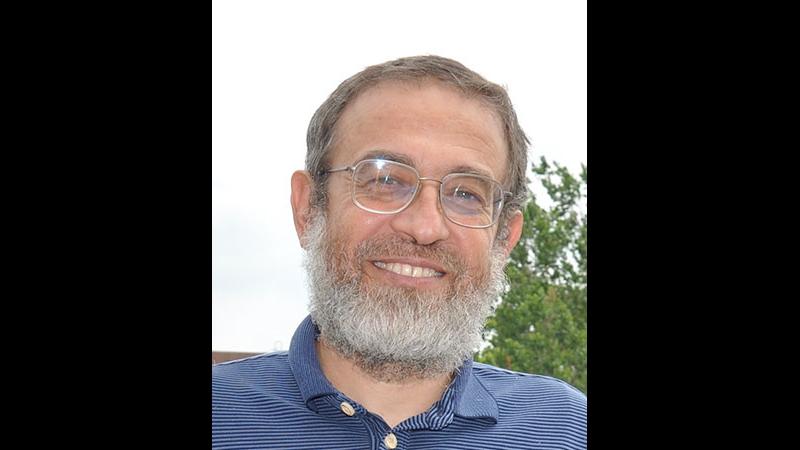
Walid G. Aref
Purdue University · Computer Science
Active 1990–2026
Academic metrics are sourced from OpenAlex and public funding records; values may differ from Google Scholar.
About
Walid G. Aref is a professor of computer science at Purdue University. His research interests are in extending the functionality of database systems to support emerging applications, including spatial, spatio-temporal, graph, biological, and sensor databases. He is also interested in query processing, indexing, data streaming, and geographic information systems (GIS). Walid's research has been supported by various organizations such as the National Science Foundation, the National Institute of Health, Purdue Research Foundation, CERIAS, Panasonic, and Microsoft Corp. He received his BSc and MSc in Computer Science from Alexandria University, Egypt, in 1983 and 1986 respectively, and his PhD from the University of Maryland at College Park in 1993. Walid has been a faculty member at Purdue since Fall 1999, and he has received several awards including the NSF CAREER Award in 2001 and a Purdue University Faculty Scholar award in 2004. He is a member of Purdue's CERIAS, serves as the Editor-in-Chief of the ACM Transactions of Spatial Algorithms and Systems, and has held editorial positions in other prominent journals. Walid is a Fellow of the IEEE and a member of the ACM, and he has served as the chair of the ACM Special Interest Group on Spatial Information (SIGSPATIAL) from 2011 to 2014.
Research topics
- Computer Science
- Data Mining
- Theoretical computer science
- Data science
Selected publications
Communications of the ACM · 2021 · 152 citations
Ensuring the success of big graph processing for the next decade and beyond.
Proceedings of the VLDB Endowment · 2021-07-01 · 36 citations
articleA large class of data repair algorithms rely on integrity constraints to detect and repair errors. A well-studied class of constraints is Functional Dependencies (FDs, for short). Although there has been an increased interest in developing general data cleaning systems for a myriad of data errors, scalability has been left behind. This is because current systems assume data cleaning is performed offline and in one iteration. However, developing data science pipelines is highly iterative and requ…
LocationSpark: In-memory Distributed Spatial Query Processing and Optimization
Frontiers in Big Data · 2020-10-16 · 24 citations
articleOpen accessSenior authorDue to the ubiquity of spatial data applications and the large amounts of spatial data that these applications generate and process, there is a pressing need for scalable spatial query processing. In this paper, we present new techniques for spatial query processing and optimization in an in-memory and distributed setup to address scalability. More specifically, we introduce new techniques for handling query skew that commonly happens in practice, and minimizes communication costs accordingly. W…
Mobility Data Science: Perspectives and Challenges
ACM Transactions on Spatial Algorithms and Systems · 2024-05-07 · 22 citations
articleOpen accessMobility data captures the locations of moving objects such as humans, animals, and cars. With the availability of Global Positioning System (GPS)–equipped mobile devices and other inexpensive location-tracking technologies, mobility data is collected ubiquitously. In recent years, the use of mobility data has demonstrated a significant impact in various domains, including traffic management, urban planning, and health sciences. In this article, we present the domain of mobility data science. To…
Cache Coherence Over Disaggregated Memory
Proceedings of the VLDB Endowment · 2025-05-01 · 5 citations
articleSenior authorDisaggregating memory from compute offers the opportunity to better utilize stranded memory in cloud data centers. It is important to cache data in the compute nodes and maintain cache coherence across multiple compute nodes. However, the limited computing power on disaggregated memory servers makes traditional cache coherence protocols suboptimal, particularly in the case of stranded memory. This paper introduces SELCC; a Shared-Exclusive Latch Cache Coherence protocol that maintains cache cohe…
Recent grants
NSF · $193k · 2008–2012
III:Small: Commugrate -- A Community-based Data Integration System
NSF · $498k · 2009–2014
CAREER: Research and Development of Database Technologies for Modern Applications
NSF · $300k · 2001–2007
Frequent coauthors
- 80 shared
Mohamed F. Mokbel
University of Minnesota System
- 77 shared
Ahmed K. Elmagarmid
- 46 shared
Mourad Ouzzani
Hamad bin Khalifa University
- 43 shared
Ahmed R. Mahmood
Google (United States)
- 39 shared
Moustafa A. Hammad
- 27 shared
Ahmed M. Aly
Future University in Egypt
- 23 shared
Mingjie Tang
Sichuan University
- 22 shared
Arif Ghafoor
Education
- 1993
Ph.D., Computer Science
The University of Maryland
Awards & honors
- CAREER Award from the National Science Foundation (2001)
- Purdue University Faculty Scholar award (2004)
- VLDB ten-year best paper award (2016)
Similar researchers at Purdue University
- Resume-aware match score
- Save to shortlist
- AI-drafted outreach
See your match with Walid G. Aref
PhdFit ranks faculty by your research interests, methods, and publications — grounded in their actual work, not templates.
- Free to start
- No credit card
- 30-second signup