Resume-aware faculty matching

Find professors who actually fit you

Upload your resume. Four AI agents analyze your background, rank the faculty who fit, inspect their recent research, and help you draft outreach — grounded in their actual work, not templates.

Free to startNo credit cardCancel anytime
Top matches Balanced preset
Dr. Sarah Chen
Stanford · Interpretability · NLP
91
Dr. Marcus Holloway
MIT · Robotics · RL
84
Dr. Aisha Okonkwo
CMU · Fairness · HCI
82
Nova · Professor Researcher · re-ranking top 20…
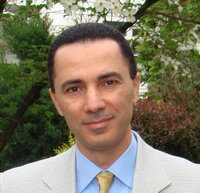
Waïl S Hassan

Waïl S Hassan

· ProfessorVerified

University of Illinois Urbana-Champaign · Asian American Studies

Active 1994–2024

h-index12
Citations594
Papers9018 last 5y
Funding
See your match with Waïl S Hassan — sign in to PhdFit.Sign in

About

Waïl S Hassan is a Professor specializing in Comparative Literature and English at the University of Illinois. He holds affiliations with multiple departments and centers including French & Italian, Spanish & Portuguese, and several area studies centers such as African, Global, Latin American and Caribbean, South Asian and Middle Eastern, European Union, and Translation Studies. He is also connected with the Lemann Institute for Brazilian Studies and the Unit for Criticism and Interpretive Theory. Hassan earned his Ph.D. in Comparative Literature from the University of Illinois Urbana-Champaign in 1998. His research interests encompass Arabic and Arab Diaspora literatures, Arabic intellectual history, comparative literature, transnational studies, postcolonial theory, and translation theory. Currently, his research focuses on the Arabic novel and the literary and cultural relations between the Arab world and the Americas. Throughout his career, Hassan has contributed significantly to the understanding of Arab literary production in a global context, particularly emphasizing the intersections of Arab culture with the Americas and the broader Global South.

Research topics

  • History
  • Literature
  • Sociology
  • Art
  • Political science

Selected publications

  • Shahrazad in the Tropics

    2024-03-21

    book-chapter1st authorCorresponding

    Abstract In Vozes do deserto (2004, Voices of the Desert), Nélida Piñon (1937-2022) reworks The Book of a Thousand and One Nights by centering it on its famous storyteller, Shahrazad. Set in Baghdad during the Abbasid Caliphate (ad 750–1258, the novel presents the Arab world not as the repository of “Oriental wisdom,” as it was for Malba Tahan, Humberto de Campos, and Glória Perez, but as a paradigm of patriarchal despotism and masculinist sexual violence. Like the Orient of Montesquieu’s Lettres persanes and Voltaire’s Le fanatisme, ou Mahomet le prophète, Piñon’s Orient is a convenient trope through which to criticize domestic Brazilian norms.

  • Islam on Primetime TV

    2024-03-21

    book-chapter1st authorCorresponding

    Abstract The most popular telenovela in the history of Brazilian television at the time, O Clone (2001–2, The Clone) was conceived by its author, Glória Perez, as a work that undermines Islamophobia by portraying Muslim families and sympathetically explaining Islamic beliefs. O Clone began to air less than three weeks after the terrorist attacks of September 11, 2001. Rather than hurting the production, the coincidence contributed to the success of the telenovela, dampening fear of Muslims and increasing interest in belly dancing and other Oriental exotica. Highly progressive and anti-Islamophobic in its promotion of tolerance and mistura, O Clone nevertheless fetishizes belly dancing, the desert, and a host of other Orientalist clichés, evidence of tertiary Orientalism’s debt to colonial discourse.

  • The Arab American Novel

    2024-04-30

    book-chapter1st authorCorresponding

    Abstract This chapter investigates the Arab American novel as a transnational, multilingual phenomenon, even in its narrowest sense as the novel written in English by Arab immigrants and their descendants in the United States. Arab immigrant novelists have tended to focus on the home country and/or the experience of coming to America, while most novels by US-born (second- and third-generation) writers have focused on Arab American identity. The Arab American novel responds to a particular kind of Orientalist representation that reaches back to the nineteenth century and that, since the mid-twentieth century, has reflected US attitudes toward, and foreign policy in, the Middle East. This discourse has been inescapable: writers wishing to address the subject of the Arab American experience in English have had to define their position in relation to it, whether through confirmation, rejection, or negotiation that accepts some of its tenets while challenging others.

  • Amazonian Orient

    2024-03-21

    book-chapter1st authorCorresponding

    Abstract In Relato de um certo Oriente (1989, Tale of a Certain Orient) and Dois irmãos (2000, The Brothers), both set in the city of Manaus, Milton Hatoum (b. 1952) depicts the disappearance of the legacy of immigrants over the course of two generations. Mixture, understood as cultural assimilation, is seen as predicated upon a necessary erasure. The customs, language, and religious practices (both Islamic and Christian) of the immigrants become burdens that children must cast off. Hatoum develops this idea while at the same time sidestepping the discursive trap of colonial Orientalism as a translator and disseminator of Edward Said’s works in Brazil.

  • Conclusion

    2024-03-21

    book-chapter1st authorCorresponding

    Abstract The conclusion reflects on the place of Arab Brazilians in the national imaginary today, suggesting that the nineteenth-century French imperial construct of Latinity continues to shape national identity for Brazilian elites and to downplay the role of Indigenous, African, Arab, and other elements. Encumbered with numerous limitations—from socioeconomic injustice to racial, ethnic, religious, class, and other prejudices—mistura remains an unfinished business. But it is a wonderfully democratic ideal and the key to a decolonial epistemology that enables a reorientation toward the Global South, with important implications for comparative literature.

  • Parable of Integration

    2024-03-21

    book-chapter1st authorCorresponding

    Abstract In his novel Lavoura arcaica (1975, Ancient Tillage), Raduan Nassar (b. 1935) tells a story of generational conflict and rebellion against patriarchal authority in a Christian Levantine farming family. Reworking the biblical parable of the prodigal son, the novel’s critique of authoritarianism has been interpreted by critics as an attack on Brazil’s military dictatorship (1964–85), but it is also the story of a struggle for integration on the part of Brazilian-born children against the immigrant parents’ effort to preserve ancestral traditions. Told from the perspective of a troubled son, the novel shows how Orientalism begins to shape the children of immigrants’ perceptions of those traditions.

  • Feline Mermaid

    2024-03-21

    book-chapter1st authorCorresponding

    Abstract Until today, there continues to be a noticeable dearth of Arab Brazilian women writers, in contrast to the United States, where women are a majority among contemporary Arab American poets and novelists. This dearth explains the surprising fact that it was not until Ana Miranda (b. 1951) published her sixth novel Amrik (1997, America) that a woman of Arab descent figured as narrator or protagonist of a Brazilian novel. Formally and stylistically innovative in its portrayal of the Arab community in São Paulo at the turn of the twentieth century, the novel features a Christian Lebanese belly dancer as narrator and protagonist. The novel also explicitly invokes the authority of British and French Orientalist texts in its portrayal of Arab women in the stereotypical role of belly dancer. As such, Brazilian feminism seems incapable of conceiving Arab womanhood beyond the confines of colonial Orientalism’s masculinist imaginary.

  • Al-Andalus Re-Imagined

    2024-03-21

    book-chapter1st authorCorresponding

    Abstract O escriba de Granada (2014, The Scribe of Granada) by Gilberto Abrão (b. 1943), and Enigmas da primavera (2015, Enigmas of Spring) by João Almino (b. 1950) evoke the memory of al-Andalus to comment on contemporary crises: the Arab Spring uprisings, the emergence of ISIL, the rise of xenophobia and Islamophobia, the economic downturn, corruption scandals, and a worsening political impasse in Brazil. Abrão creates a proto-fascist character who descends into madness following his discovery of his descent from a fifteenth-century Spanish Arab, while Almino’s teenage protagonist, also of Arab descent and obsessed with Granada’s fall in 1492, has a nervous breakdown before he finds direction in his life in the context of the youth movements sweeping the Arab world, Spain, and Brazil. The mental illness of both protagonists is a metaphor for an aggravating crisis of national identity.

  • Merchants to Landowners

    2024-03-21

    book-chapter1st authorCorresponding

    Abstract The first two Arab Brazilian novelists, Cecílio Carneiro (1911–70) and Permínio Asfora (1913–2001), challenge the split image of admirable Arabs of the past and undesirable Arab immigrants in the present. In A fogueira (1942, The Bonfire), Carneiro fictionalizes the life of his father, who came from Lebanon penniless but within a couple of decades became one of the wealthiest cocoa plantation owners in the state of São Paulo. Similarly, Asfora’s Noite Grande (1947, Long Night) emphasizes the Arab role in the country’s economic growth during the rubber boom by depicting a Palestinian immigrant as a model citizen who participates in the establishment of law and order in the backlands of Piauí. But the two novelists differ in their approach to the racialization of Arabs: Carneiro inscribes his protagonist within dominant whiteness whereas Asfora denounces racial and ethnic criteria of citizenship.

  • Introduction

    2024-03-21

    book-chapter1st authorCorresponding

    Abstract How do Arab immigrants fit in Brazil as a society built on racial and cultural mixture? Under the influence of European racial theory, mixture was seen in the late nineteenth and early twentieth centuries as an impediment to national progress. However, in the 1920s Modernists like Oswald de Andrade described it as an enriching kind of cultural anthropophagy, and in the early 1930s sociologist Gilberto Freyre turned nineteenth-century racial theory on its head by arguing that the special richness and unique character of Brazil was the result of the racial and cultural mixture of Native Brazilian, Portuguese, and African elements—the Portuguese one being itself hybridized through the Arab-Moorish presence in medieval Iberia. Yet the discrimination and stereotyping faced by Arab immigrants in Brazil point to fissures within this notion of mistura that Brazilian Orientalism explains: faced with immigrants who did not fit easily within one of the three recognizable racial groups (Amerindians, Europeans, Africans), Brazilian intellectuals appropriated Euro-American Orientalism to make sense of the Arab presence in Brazil and to define the country’s place in the world. In so doing, they revealed both their overwhelmingly European orientation and their anxiety about the kind of mixing that was being celebrated as Brazil’s defining feature.

Frequent coauthors

  • Adam Bates

    27 shared
  • Riccardo Paccagnella

    Carnegie Mellon University

    10 shared
  • Wouter Joosen

    KU Leuven

    9 shared
  • Tara Matthews

    9 shared
  • Vanessa Teague

    Australian National University

    9 shared
  • Ombeline Leclerc-Istria

    Regional Municipality of Niagara

    9 shared
  • Lorenz Breidenbach

    Cornell University

    9 shared
  • Nicolas Roels

    Université de Toulouse

    9 shared

Education

  • Ph.D., Comparative Literature

    University of Illinois System

    1998
  • BA (2nd Class Honors/Magna cum laude), English

    King Saud University

    1986
  • Resume-aware match score
  • Save to shortlist
  • AI-drafted outreach

See your match with Waïl S Hassan

PhdFit ranks faculty by your research interests, methods, and publications — grounded in their actual work, not templates.

  • Free to start
  • No credit card
  • 30-second signup