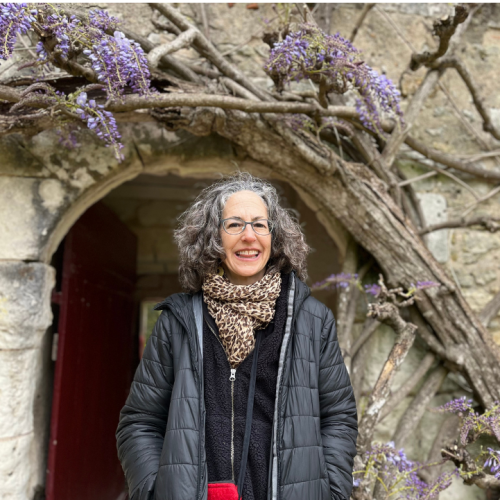
Virginia Krause
· Professor, Departmental ChairBrown University · French and Francophone Studies
Active 1996–2025
About
Virginia Krause is a Professor of French and Francophone Studies at Brown University and serves as the Chair of the department. Her research focuses on Renaissance France, with particular interest in confessional practices, the history of witchcraft, the history of leisure, and the literature and culture of Renaissance France. She has explored themes such as the social and cultural implications of idleness, witchcraft, and the rise of the novel during the early modern period. Her work emphasizes the exploration of obscure and shadowy pursuits of the Renaissance, aiming to uncover what remains unknown about this era. Krause's scholarly contributions include examining the social strata that produced France's literary elite, the mechanisms behind early modern witch-hunts, and the cultural and literary landscape that allowed the early novel to develop outside classical poetics. Her research is characterized by a focus on the opaque, less visible aspects of Renaissance society and literature, seeking new answers and questions about the period's social and cultural dynamics. She has authored books such as 'Witchcraft, Demonology, and Confession in Early Modern France' and 'Idle Pursuits: Literature and ‘Oisiveté’ in the French Renaissance,' and has co-edited works on Jean Bodin. Her work is supported by fellowships and research grants, and she is actively involved in scholarly societies related to her fields of study.
Research topics
- Political Science
- Sociology
- Humanities
- Chemical engineering
- Gender studies
- Composite material
- Metallurgy
- Law
- Materials science
- Pedagogy
- Art
- Nanotechnology
Selected publications
Pascale Mounier, <i>Le Roman à la Renaissance</i>
French Studies · 2025-10-07
article1st authorCorrespondingRenaissance and Reformation · 2024-07-22
articleOpen access1st authorCorrespondingIn 1609, Madeleine de Demandolx, a young Ursuline nun, was praying in Sainte-Claire Church in Aix-en-Provence when she collapsed, trembling.Following this crisis, her condition only worsened as she began to suffer from incapacitating bouts of convulsions accompanied by visions.It was not long before the cause of her suffering was determined to be demonic possession, which then spread to other nuns in her convent, with blame soon falling on Louis Gaufridy, a priest from Marseille, subsequently accused of witchcraft.In the course of his trial, Gaufridy confessed to having bewitched Madeleine de Demandolx, her mother, and "more than a thousand women" by breathing on them.If some demons could exist as a breath of air (spiritus in Latin and pneuma in Greek), they could thus be exhaled by Gaufridy and inhaled by his victims.Gaufridy further confessed to having practised demonic magic (which he learned from books given to him by his uncle), participated in the orgies and devilries of the sabbat, and signed a pact with the devil, who subsequently granted him the power to "souffler" with aphrodisiac breath.On the basis of this confession, which was used as proof of guilt in his trial, Gaufridy was condemned for witchcraft and burned alive on 20 April 1611.The broad arc of this scandal foreshadowed what would take place in Loudun in the 1630s and Louviers in the 1640s, with the highly theatrical spectacle of public exorcisms, possessed nuns from aristocratic families, demonic voices and writings, and the figure of the priest-witch: causes clbres attracting broad public attention, including from intellectuals and members of the court.The scandalous events in Aix became a media sensation, circulated in pamphlets and retold in novella collections, as publishers found a market for "true crime fiction" straddling and crisscrossing the lines between news, predication, and storytelling.This is the fertile field of inquiry examined by Thibaut Maus de Rolley, who takes his title from an anonymous pamphlet titled Confession faicte par messire Louis Gaufridi printed by Jean Tholosan in 1611 and purporting to relate the confession Gaufridy made to two priests in his prison cell.Maus de Rolley examines the Confession alongside several other archival works:
Witches and Demonologists in Early Modern France
2024-07-19
reference-entry1st authorCorrespondingWhile some form of witchcraft belief exists or has existed in almost every culture, the European “witchcraze” remains a singularity by virtue of the number of its victims, estimated at around 50,000 men and especially women. 1 Moreover, “the witch” was not only a figure of popular belief, but the object of both theoretical speculation and organized repression. Demons had long been part of science – understood broadly for this period to include literature, philosophy, and history as well as astronomy, medicine, and other disciplines. They were in particular intimately connected to philosophical inquiry, from Socrates’ daimon through medieval theology. However, for a relatively small though influential number of specialists of “demonology,” 2 witches constituted a clandestine sect of demon-worshipers. These men believed that witches were working to sabotage the very fabric of human life, striking hard where the community was most vulnerable through jeopardizing material subsistence (by destroying crops); preventing reproduction (by causing impotence among men and by killing infants); and threatening the community’s religious foundation (by signing a pact with the devil and by participating in the sabbat’s black mass or inversion of the liturgy). It was in the most literal way possible that these men took the Biblical injunction “thou shalt not suffer the witch to live” (Exodus 22:17). 3 In this way, a theoretical agenda of understanding demons and their earthly contacts converged with a politico-religious campaign to identify and prosecute witches in early modern Europe.
Refugees and Forced Migration: An Engaged Humanities Course in French and Francophone Studies
Political pedagogies · 2023
1st authorCorresponding- Sociology
- Humanities
- Political Science
Abstract This chapter recounts the development of a community-engaged course on refugees and displacement with a broad Humanities orientation offered in the Department of French and Francophone Studies at Brown University. It relates the overall structure of the course as well as the forging of a partnership with Women’s Refugee Care, an NGO supporting refugees from Central Africa living in Providence. Finally, the chapter explores the connections between the literary and theoretical texts on the course syllabus and the projects that students undertook in collaboration with the Women’s Refugee Care community.
Silver–Copper Alloy Nanoinks for Ambient Temperature Sintering
Langmuir · 2022 · 13 citations
- Materials science
- Chemical engineering
- Metallurgy
There is an increasing need to reduce the silver content in silver-based inks or pastes and achieve low-temperature sintering for scalable and low-cost production of printed wearable electronics. This need depends on the ability to control the metal composition and the surface properties of the nanoinks. Alloying silver with copper provides a pathway for meeting the need in terms of cost reduction, but little is known about the composition controllability and the low-temperature sintering capability. We report herein a scalable wet chemical synthesis of bimetallic silver-copper alloy nanoinks with room temperature sintering properties. The bimetallic alloy nanoparticles with a controllable composition can be formulated as stable nanoinks. The nanoinks printed on paper substrates are shown to sinter under room temperature. In addition to composition dependence, the results reveal an intriguing dependence of sintering on humidity above the printed nanoink films. These findings are assessed based on theoretical simulation of the sintering processes via surface-mediated sintering and interparticle necking mechanisms in terms of nanoscale adsorption, adhesion and diffusion, and surface free energies. Implications of the findings for room temperature fabrication of wearable sensors are also discussed.
Valente, Michaela. Johann Wier: Debating the Devil and Witches in Early Modern Europe
Renaissance and Reformation · 2022-12-01
articleOpen access1st authorCorrespondingValente, Michaela. Johann Wier: Debating the Devil and Witches in Early Modern Europe. An article from journal Renaissance and Reformation / Renaissance et Réforme (Special issue: Interpoetics in Renaissance Poetry), on Érudit.
: <i>Into the Dark Night and Back: The Mystical Writings of Jean-Joseph Surin</i>
Renaissance Quarterly · 2021-06-01
article1st authorCorrespondingInto the Dark Night and Back: The Mystical Writings of Jean-Joseph Surin. Moshe Sluhovsky, ed. Patricia M. Ranum, trans. Jesuit Studies: Modernity through the Prism of Jesuit History 19. Leiden: Brill, 2019. viii + 548 pp. €175. - Volume 74 Issue 2
The Rise of the Novel in Sixteenth-Century France?
Cambridge University Press eBooks · 2021-02-04
book-chapter1st authorCorrespondingIn the first decades of printing, medieval romances were edited and printed en masse, sometimes in luxurious in-folio formats. Sixteenth-century works of long prose narrative also drew on Classical epic and the dialogue. Notwithstanding these significant classical and medieval influences, there was no formal theorization of the novel in the sixteenth century—and indeed no single term to designate 'the novel' in this period. This absence of rigorous theorization and terminology contributed to making the period's vernacular prose narrative a privileged medium for literary experimentation: Rabelais's works were of course experimental in the highest sense, but other forms were also forged and promoted: in particular, sentimental and pastoral forms as well as the humanist model of the Greek novel based on Heliodorus. This period also forged new devices such as suspense and serialization, which would become signature features of the novel in the nineteenth century. Through all its incarnations and in the midst of formal experimentation, long prose narrative in this period opened a new horizon for reading: as a hobby, a pleasurable activity to fill the idle moments of life.
Surface-mediated interconnections of nanoparticles towards multi-functional fibrous sensors
2021-09-08
preprintThe will to know and the unknowable
2020-03-18
book-chapter1st authorCorrespondingDemonology’s confessional regime had two sides, one practical and the other theoretical. Moreover, witchcraft trials and witchcraft theory worked in tandem: the former functioned as an elaborate machinery for generating confession while the latter disseminated and interpreted witches’ confessions from trials. With the Old Testament’s injunctions against witchcraft thus functioning as a kind of master-source, Jean Bodin constituted his dossier of evidence documenting witchcraft through the ages along with a practical ‘how to’ manual for prosecutors. Bodin for his part acknowledges that the crimes committed by witches seemed fantastic: ‘Often judges are puzzled by the confessions of witches and are reluctant to base a sentence on them, given the strange things that they confess, because some think that they are telling fables.’ The chapter relates the experiences of a ‘friend’ who received the gift of prophecy, but it is not difficult to see that this is a largely transparent conceit for relating an autobiographical account of Bodin’s own experiences.
Frequent coauthors
- 2 shared
Serena Tycko
Binghamton University
- 2 shared
Shan Wang
Sichuan University
- 2 shared
Chuan‐Jian Zhong
- 1 shared
Bruno Tremblay
McGill University
- 1 shared
Hugues Daussy
Centre Lucien Febvre
- 1 shared
Nathalie Dauvois
- 1 shared
Jean Céard
- 1 shared
utopie de l'amour
Awards & honors
- Wendy J. Strothman Faculty Research Award in the Humanities…
- Newberry Library Fellowship, 1999
- Office of the Vice President for Research (OVPR) grants awar…
- Resume-aware match score
- Save to shortlist
- AI-drafted outreach
See your match with Virginia Krause
PhdFit ranks faculty by your research interests, methods, and publications — grounded in their actual work, not templates.
- Free to start
- No credit card
- 30-second signup