Resume-aware faculty matching

Find professors who actually fit you

Upload your resume. Four AI agents analyze your background, rank the faculty who fit, inspect their recent research, and help you draft outreach — grounded in their actual work, not templates.

Free to startNo credit cardCancel anytime
Top matches Balanced preset
Dr. Sarah Chen
Stanford · Interpretability · NLP
91
Dr. Marcus Holloway
MIT · Robotics · RL
84
Dr. Aisha Okonkwo
CMU · Fairness · HCI
82
Nova · Professor Researcher · re-ranking top 20…
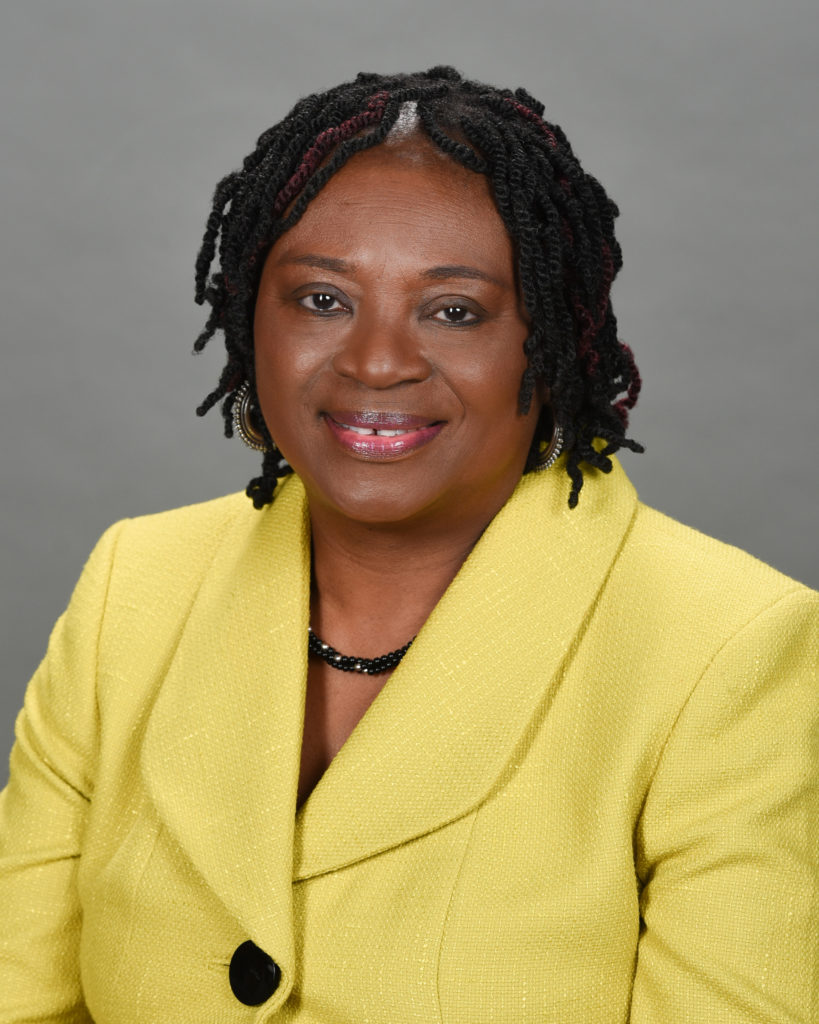
Violet Showers Johnson

Violet Showers Johnson

· Senior Associate Dean for Faculty Development, Qatar, Professor

Texas A&M University · History

Active 2005–2025

h-index3
Citations42
Papers178 last 5y
Funding
See your match with Violet Showers Johnson — sign in to PhdFit.Sign in

About

Violet Showers Johnson is a Professor of History at Texas A&M University. She received her BA with Honors in History from Fourah Bay College, University of Sierra Leone; an MA from the University of New Brunswick, Canada; and a Ph.D. from Boston College. Prior to her tenure at Texas A&M University starting in 2012, she was a faculty member at Agnes Scott College, a women's liberal arts college in Atlanta, where she also chaired the Department of History and served as the inaugural director of the Africana Studies Program and the Women's Global Leadership Center. At Texas A&M University, she has held roles including Director of Africana Studies and Associate Dean for Faculty in the College of Liberal Arts, as well as Senior Associate Dean for Faculty Excellence and Development at Texas A&M University, Qatar, and Interim Director of the Division of Arts and Sciences. Her international personal and academic background, being born in West Africa and educated in West Africa and North America, has significantly shaped her work as a teacher and scholar. Her research focuses on race, ethnicity, and immigration; African American history; African history; and the history of the African Diaspora. She has authored and co-authored books and articles on the Black immigrant experience in America, including 'The Other Black Bostonians: West Indians in Boston, 1900-1950,' 'African and American: West Africans in Post-Civil Rights America,' and co-edited 'Deferred Dreams, Defiant Struggles: Critical Perspectives on Blackness, Belonging, and Civil Rights.' She is currently completing a monograph titled 'Black While Foreign: The Complicated History of the Killing of Two African Immigrants in Late Twentieth-Century America.'

Research topics

  • Sociology
  • History
  • Media studies
  • Gender studies
  • Ethnology
  • Ancient history
  • Genealogy
  • Anthropology

Selected publications

  • In Pursuit of the Boundary:

    2025-02-01

    book-chapter1st authorCorresponding
  • From Banana Zones to the Big Easy: West Indian and Central American Immigration to New Orleans, 1910–1940. Glenn A.Chambers. Baton Rouge: Louisiana State University Press, 2019. 199 pp.

    The Journal of Latin American and Caribbean Anthropology · 2022-06-01

    article1st authorCorresponding
  • African Americans and Africa: A New History by Nemata Amelia Ibitayo Blyden

    African American Review · 2021

    1st authorCorresponding
    • Sociology
    • History
    • Gender studies

    Reviewed by: African Americans and Africa: A New History by Nemata Amelia Ibitayo Blyden Violet Showers Johnson Nemata Amelia Ibitayo Blyden. African Americans and Africa: A New History. New Haven: Yale UP, 2019. 280 pp. $28.00. In African Americans and Africa: A New History, African diaspora historian Nemata Blyden outlines the complex engagement of African Americans with Africa and Africans. Against the backdrop of landmark historical developments—emigration and "Back to Africa," pan-Africanism, anticolonial movements, the civil rights movement, independence movements, the anti-apartheid movement, the Cold War, and postcolonial transformations in Africa—Blyden explores centuries of the multidimensional ways that US Blacks have viewed and connected with Africa. The span of this book is vast, covering the eighteenth century to the present. Blyden deftly navigates this ambitious chronological expanse by focusing particularly on the nineteenth and twentieth centuries. By focusing on the question "what is Africa to me," she provides rich commentaries about discourses, protagonists, and events that illustrate how enslaved Africans as well as their descendants in the United States expressed their views of affiliation with or detachment from Africa, and developed connections, both real and imagined, to the continent. The book's epilogue ends with this portion of the twenty-first century that summarizes the phenomenal growth of African immigrant populations in America and highlights key themes such as the debate over who is entitled to the label "African American," and the complicated relationships between African Americans and African-born immigrants. Accounts about African American engagement with Africa and Africans are illuminated by the life and work of the people who shaped and pursued understanding [End Page 355] of and links between Africa and Black America. Although Blyden apologizes preemptively for leaving out many historical moments and figures (12), the book is a mine of individuals, events, and discourses that illustrate the complex centuries of engagement of African Americans with Africa. Blyden recounts familiar histories of various waves of emigration to Liberia and elsewhere in Africa, the debates for and against such movements, African American anticolonial efforts on behalf of African colonies, African American support and admiration of evolving African nations, the ambivalent interactions with Africans, mostly students, on American soil, and the inevitable shifts in the dynamics of the relationship between African Blacks and American Blacks that followed independent, emergent African nation-hood. In retelling these diverse stories of engagement, Blyden revisits numerous icons such as Phillis Wheatley, Paul Cuffee, Frederick Douglass, and Marcus Garvey, to name a few She highlights activist thinkers, including David Walker, Martin Delany, Henry Highland Garnet, Edward Wilmot Blyden III, W. E. B. Du Bois, Paul Robeson, and Eslanda Goode Robeson, and literary figures like Countee Cullen and Richard Wright. To create the useful miniature life histories interspersed throughout the book, Blyden uses documents from many primary sources but also relies heavily on a variety of published scholarship. She uses very effectively the works of many of the most renowned scholars of African, African American, and larger African diasporan histories—among them E. Franklin Frazier, George Shepperson, Darlene Clark Hine, Michael Gomez, Leslie Alexander, James Meriweather, Brenda Stevenson, and John Hope Franklin. African Americans and Africa advances new ways of understanding familiar histories of African American engagement with Africa mostly through rediscovering and analyzing neglected or understudied historical participants and crucial aspects of the familiar histories. In retelling the story of resettlement in Liberia, which often spotlights the American Colonization Society and influential families like that of Joseph Jenkins Roberts, Blyden chooses to highlight the story of George Erskine and his family. In focusing on this lesser-known family, Blyden underscores the centrality of women through references to Martha Ann Ricks, George's daughter, and other lesser-known women of the African republic. Positioning women more prominently is a new emphasis that Blyden brings to the scholarship of African American engagement with Africa. For every instance in which she recounts the familiar stories of Black men, she complements these narratives with contemporaneous experiences of Black women. For example, as she notes familiar historical figures such as Alexander Crummell in reexamining the history of African American missionaries in Africa during the nineteenth and early twentieth centuries, she also spotlights understudied...

  • AN AFRICAN IN IMPERIAL LONDON - An African in Imperial London: The Indomitable Life of A. B. C. Merriman-Labor. By Danell Jones. New York: Oxford University Press, 2018. Pp. 320. $34.95, hardcover (ISBN: 9781849049603).

    The Journal of African History · 2020

    1st authorCorresponding
    • Sociology
    • History
    • Media studies

    AN AFRICAN IN IMPERIAL LONDON - An African in Imperial London: The Indomitable Life of A. B. C. Merriman-Labor. By Danell Jones. New York: Oxford University Press, 2018. Pp. 320. $34.95, hardcover (ISBN: 9781849049603). - Volume 61 Issue 2

  • Notes

    New York University Press eBooks · 2020-12-31

    book-chapterSenior author
  • Index

    New York University Press eBooks · 2020-12-31

    paratextSenior author
  • Preface: Griots from Different Shores

    New York University Press eBooks · 2020-12-31

    book-chapterOpen accessSenior author
  • Contents

    New York University Press eBooks · 2020-12-31

    paratextOpen accessSenior author
  • Bibliography

    New York University Press eBooks · 2020-12-31

    book-chapterSenior author
  • Frontmatter

    New York University Press eBooks · 2020-12-31

    book-chapterOpen accessSenior author

Frequent coauthors

  • Marilyn Halter

    6 shared
  • Patricia Williams Lessane

    2 shared
  • Gundolf Graml

    2 shared
  • Megan Finke

    University of Wisconsin–Madison

    1 shared
  • Mik Van Der Borght

    KU Leuven

    1 shared
  • Laura Gasco

    University of Turin

    1 shared
  • Jeffery K. Tomberlin

    Texas A&M University

    1 shared
  • D.G.A.B. Oonincx

    1 shared
  • Resume-aware match score
  • Save to shortlist
  • AI-drafted outreach

See your match with Violet Showers Johnson

PhdFit ranks faculty by your research interests, methods, and publications — grounded in their actual work, not templates.

  • Free to start
  • No credit card
  • 30-second signup