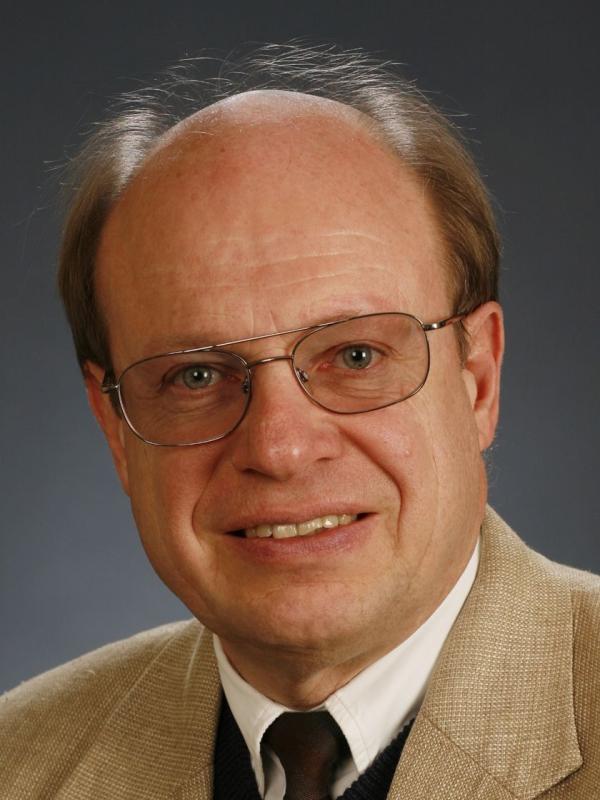
Ulrich Walter Heinz
VerifiedOhio State University · Physics
Active 1976–2026
About
Ulrich Walter Heinz is a Distinguished University Professor and Emeritus Professor at The Ohio State University, affiliated with the Department of Physics. His areas of expertise include the phenomenology of particle production in relativistic heavy-ion collisions, thermal quantum field theory in and out of equilibrium, relativistic kinetic theory, and relativistic (viscous) hydrodynamics. His research also encompasses theoretical nuclear physics, focusing on the creation, thermalization, and dynamics of quark-gluon plasma. He earned his M.Sc. in Physics in 1978 and his Ph.D. in Physics in 1980 from Goethe University in Frankfurt. Ulrich Heinz has been recognized as a Fellow of the American Association for the Advancement of Science in 2005 and received The Ohio State University Distinguished Scholar Award in 2007. His contributions have significantly advanced the understanding of high-energy nuclear physics and the behavior of matter under extreme conditions.
Research topics
- Physics
- Computer Science
- Particle physics
- Statistical physics
- Quantum mechanics
- Theoretical physics
- Nuclear physics
- Speech recognition
- Mathematical physics
- Thermodynamics
Selected publications
Electromagnetic Tomography of Radial Flow in the Quark-Gluon Plasma
Physical Review Letters · 2026-02-20
articleOpen accessSenior authorWe present a novel multimessenger approach to extract the effective radial flow of the quark-gluon plasma (QGP) by jointly analyzing thermal photon and dilepton spectra in heavy-ion collisions. A key feature of this method is that it circumvents the need for a directly unmeasurable reference-the photon temperature in the absence of flow-by establishing, within a calibrated model framework, a stable, approximately linear correlation with the dilepton-inferred temperature. This construction defines an experimentally constructible quantity, v_{r}^{eff}, which reflects early-time collectivity and exhibits a strong correlation with the spacetime-averaged radial velocity of the QGP. Together with previous results linking dilepton slopes to the initial QGP temperature, our work establishes a consistent framework for electromagnetic tomography of the QGP. Our framework quantifies the experimental precision target, thereby providing a concrete road map for future measurements at RHIC and the LHC and opening a new avenue to probe the early-time dynamics of hot QCD matter.
Bayesian model-data comparison incorporating theoretical uncertainties
ArXiv.org · 2025-04-17
preprintOpen accessAccurate comparisons between theoretical models and experimental data are critical for scientific progress. However, inferred physical model parameters can vary significantly with the chosen physics model, highlighting the importance of properly accounting for theoretical uncertainties. In this Letter, we present a Bayesian framework that explicitly quantifies these uncertainties by statistically modeling theory errors, guided by qualitative knowledge of a theory's varying reliability across the input domain. We demonstrate the effectiveness of this approach using two systems: a simple ball drop experiment and multi-stage heavy-ion simulations. In both cases incorporating model discrepancy leads to improved parameter estimates, with systematic improvements observed as additional experimental observables are integrated.
Bayesian model-data comparison incorporating theoretical uncertainties
Physics Letters B · 2025-10-14 · 5 citations
articleOpen accessAccurate comparisons between theoretical models and experimental data are critical for scientific progress. However, inferred physical model parameters can vary significantly with the chosen physics model, highlighting the importance of properly accounting for theoretical uncertainties. In this Letter, we present a Bayesian framework that explicitly quantifies these uncertainties by statistically modeling theory errors, guided by qualitative knowledge of a theory’s varying reliability across the input domain. We demonstrate the effectiveness of this approach using two systems: a simple ball drop experiment and multi-stage heavy-ion simulations. In both cases incorporating model discrepancy leads to improved parameter estimates, with systematic improvements observed as additional experimental observables are integrated.
Multiscale evolution of heavy flavor in the QGP
2024-02-16
articleOpen accessShower development dynamics for a jet traveling through the quark-gluon plasma (QGP) is a multiscale process, where the heavy flavor mass is an important scale. During the high virtuality portion of the jet evolution in the QGP, emission of gluons from a heavy flavor is modified owing to heavy quark mass. Medium-induced radiation of heavy flavor is sensitive to microscopic processes (e.g. diffusion), whose virtuality dependence is phenomenologically explored in this study. In the lower virtuality part of shower evolution, i.e. when the mass is comparable to the virtuality of the parton, scattering and radiation processes of heavy quarks differ from light quarks. The effects of these mechanisms on shower development in heavy flavor tagged showers in the QGP is explored here. Furthermore, this multiscale study examines dynamical pair production of heavy flavor (via virtual gluon splittings) and their subsequent evolution in the QGP, which is not possible otherwise. A realistic event-by-event simulation is performed using the JETSCAPE framework. Energy-momentum exchange with the medium proceeds using a weak coupling recoil approach. Using leading hadron and open heavy flavor observables, differences in heavy versus light quark energy-loss mechanisms are explored, while the importance of heavy flavor pair production is highlighted along with future directions to study.
Far-off-equilibrium early-stage dynamics in high-energy nuclear collisions
EPJ Web of Conferences · 2024-01-01
articleOpen accessWe explore the far-off-equilibrium aspects of the (1+1)-dimensional early-stage evolution of a weakly-coupled quark-gluon plasma using kinetic theory and hydrodynamics. For a large set of far-off-equilibrium initial conditions the system exhibits a peculiar phenomenon where its total equilibrium entropy decreases with time. Using a non-equilibrium definition of entropy based on Boltzmann’s H-function, we demonstrate how this apparently anomalous behavior is consistent with the second law of thermodynamics. We also use the H-function to formulate ‘maximum-entropy’ hydrodynamics, a far-offequilibrium macroscopic theory that can describe both free-streaming and nearequilibrium regimes of quark-gluon plasma in a single framework.
Bayesian calibration of viscous anisotropic hydrodynamic (VAH) simulations of heavy-ion collisions
EPJ Web of Conferences · 2024-01-01 · 3 citations
articleOpen access1st authorCorrespondingA Bayesian calibration, using experimental data from 2.76 A TeV Pb-Pb collisions at the LHC, of a novel hybrid model is presented in which the usual pre-hydrodynamic and viscous relativistic fluid dynamic (vRFD) stages are replaced by a viscous anisotropic hydrodynamic (VAH) core that smoothly interpolates between the initial expansion-dominated, approximately boost-invariant longitudinally free-streaming and the subsequent collision-dominated (3+1)- dimensional standard vRFD stages. This model yields meaningful constraints for the temperature-dependent specific shear and bulk viscosities, (η= s )( T ) and (ζ= s )( T ), for temperatures up to about 700MeV (i.e. over twice the range that could be explored with earlier models). With its best-fit model parameters the calibrated VAH model makes highly successful predictions for additional p T -dependent observables for which high-quality experimental data are available that were not used for the model calibration.
Photon-triggered jets as probes of multi-stage jet modification
arXiv (Cornell University) · 2024-01-30
preprintOpen accessPrompt photons are created in the early stages of heavy ion collisions and traverse the QGP medium without any interaction. Therefore, photon-triggered jets can be used to study the jet quenching in the QGP medium. In this work, photon-triggered jets are studied through different jet and jet substructure observables for different collision systems and energies using the JETSCAPE framework. Since the multistage evolution used in the JETSCAPE framework is adequate to describe a wide range of experimental observables simultaneously using the same parameter tune, we use the same parameters tuned for jet and leading hadron studies. The same isolation criteria used in the experimental analysis are used to identify prompt photons for better comparison. For the first time, high-accuracy JETSCAPE results are compared with multi-energy LHC and RHIC measurements to better understand the deviations observed in prior studies. This study highlights the importance of multistage evolution for the simultaneous description of experimental observables through different collision systems and energies using a single parameter tune.
Hydrodynamic Description of the Quark-Gluon Plasma
arXiv (Cornell University) · 2024-12-27 · 1 citations
preprintOpen access1st authorCorrespondingWe review the history and success of applying relativistic hydrodynamics to high-energy heavy-ion collisions. We emphasize the important role hydrodynamics has played in the discovery of the quark-gluon plasma and its quantitative exploration.
Measuring jet quenching with a Bayesian inference analysis of hadron and jet data by JETSCAPE
arXiv (Cornell University) · 2024-01-08
preprintOpen accessThe JETSCAPE Collaboration reports the first multi-messenger study of the QGP jet transport parameter $\hat{q}$ using Bayesian inference, incorporating all available hadron and jet inclusive yield and jet substructure data from RHIC and the LHC. The theoretical model utilizes virtuality-dependent in-medium partonic energy loss coupled to a detailed dynamical model of QGP evolution. Tension is observed when constraining $\hat{q}$ for different kinematic cuts of the inclusive hadron data. The addition of substructure data is shown to improve the constraint on $\hat{q}$, without inducing tension with the constraint due to inclusive observables. These studies provide new insight into the mechanisms of jet interactions in matter, and point to next steps in the field for comprehensive understanding of jet quenching as a probe of the QGP.
Physical review. C · 2024-06-06 · 11 citations
articleOpen accessWe study parton energy-momentum exchange with the quark gluon plasma (QGP) within a multistage approach composed of in-medium Dokshitzer-Gribov-Lipatov-Altarelli-Parisi evolution at high virtuality, and (linearized) Boltzmann transport formalism at lower virtuality. This multistage simulation is then calibrated in comparison with high-<a:math xmlns:a="http://www.w3.org/1998/Math/MathML"><a:msub><a:mi>p</a:mi><a:mi>T</a:mi></a:msub></a:math> charged hadrons, <b:math xmlns:b="http://www.w3.org/1998/Math/MathML"><b:mi>D</b:mi></b:math> mesons, and the inclusive jet nuclear modification factors, using Bayesian model-to-data comparison, to extract the virtuality-dependent transverse momentum broadening transport coefficient <c:math xmlns:c="http://www.w3.org/1998/Math/MathML"><c:mover accent="true"><c:mi>q</c:mi><c:mo>̂</c:mo></c:mover></c:math>. To facilitate this undertaking, we develop a quantitative metric for validating the Bayesian workflow, which is used to analyze the sensitivity of various model parameters to individual observables. The usefulness of this new metric in improving Bayesian model emulation is shown to be highly beneficial for future such analyses. Published by the American Physical Society 2024
Recent grants
Frequent coauthors
- 108 shared
Chun Shen
Jilin University
- 58 shared
Charles Gale
McGill University
- 54 shared
Lipei Du
- 50 shared
Gojko Vujanovic
- 49 shared
Hannah Elfner
- 43 shared
J. Sollfrank
University of Regensburg
- 42 shared
Steffen A. Bass
- 41 shared
Peter F. Kolb
Technical University of Munich
Education
Dr. phil. nat., Institut für Theoretische Physik
J. W. Goethe Universität
Awards & honors
- Fellow, American Association for the Advancement of Science,…
- The Ohio State University Distinguished Scholar Award, 2007
- Resume-aware match score
- Save to shortlist
- AI-drafted outreach
See your match with Ulrich Walter Heinz
PhdFit ranks faculty by your research interests, methods, and publications — grounded in their actual work, not templates.
- Free to start
- No credit card
- 30-second signup