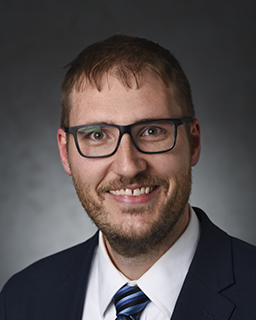
Tyler Dare
· Assistant Research ProfessorVerifiedPennsylvania State University · Acoustics
Active 2007–2025
About
Tyler Dare is an Assistant Research Professor affiliated with the Acoustics Center for Acoustics and Vibration at Penn State University. His contact information includes the email tpd10@psu.edu and phone number 814-865-4664. He is part of the graduate program in acoustics, which is recognized as a leading resource for graduate education in acoustics in the United States. The program offers degrees such as Master of Engineering in Acoustics, Master of Science in Acoustics, and Doctor of Philosophy in Acoustics, and is housed within the College of Engineering at Penn State. The program was founded in 1965 and emphasizes interdisciplinary research and education in acoustics.
Research topics
- Artificial Intelligence
- Computer Science
- Geometry
- Mathematics
- Acoustics
- Physics
- Algorithm
- Mathematical analysis
- Computer vision
- Engineering
Selected publications
Evaluation of machine learning performance on source separated passive acoustic recordings
NOISE-CON proceedings · 2025-07-25
articleThe United States National Park Service often deploys passive acoustic monitoring devices whose data is used to characterize the ecological health of the site and quantify the level of anthropogenic sources present. The analysis of the data is then used to inform conservation management policy that protects the natural soundscape of the National Parks. Traditional methods for analyzing the acoustic recordings involve human listeners annotating a subset of this data and labeling the acoustic sources present. Manual data processing is labor intensive and relies on human perception that varies between individuals, these limitations ultimately reduce the amount of data that can be analyzed. By augmenting the manual annotation of acoustic data with machine learning (ML) this research aims to increase the quantity of data that can be annotated while achieving higher annotation confidence for acoustic sources. Previous research has shown that separating the transient acoustic sources from the background acoustic environment reduces data complexity allowing for improved characterization of the sources. This paper will evaluate the performance of machine learning models using source-separated data to understand the effects it has on data annotation accuracy, hyperparameter complexity, and ML model training time.
Evaluation of Camera-Denoising Techniques towards ForceReconstruction
2025-01-01
articleOpen accessSenior authorEvaluation of machine learning performance on source separated passive acoustic recordings
Noise Control Engineering Journal · 2025-08-31
articleThe United States National Park Service often deploys passive acoustic monitoring devices whose data are used to characterize the ecological health of the site and quantify the level of anthropogenic sources present. The analysis of the data is then used to inform conservation management policy that protects the natural soundscape of the National Parks. Traditional methods for analyzing the acoustic recordings involve human listeners annotating a subset of this data and labeling the acoustic sources present. Manual data processing is labor intensive and relies on human perception that varies between individuals, these limitations ultimately reduce the amount of data that can be analyzed. By augmenting the manual annotation of acoustic data with machine learning (ML) this research aims to increase the quantity of data that can be annotated while achieving higher annotation confidence for acoustic sources. Previous research has shown that separating the transient acoustic sources from the background acoustic environment reduces data complexity allowing for improved characterization of the sources. This paper will evaluate the performance of machine learning models using source separated data to understand the effects it has on data annotation accuracy, hyperparameter complexity, and ML model training time.
Data and information management for acoustics research
The Journal of the Acoustical Society of America · 2024-03-01 · 1 citations
articleA critical part of verification and validation in academic research includes the important consideration of data and information management. As researchers grapple with escalating volumes of data, effective data management becomes imperative for optimizing operational processes and ensuring reproducibility and archivability. Data management involves the organization, storage, and retrieval of information to support research advancements and strengthen the foundation of decision making and scientific knowledge. Key components also include data operations, which involves the orchestration of data workflows, and data quality management, which focuses on maintaining accurate and reliable data. This talk explores the multifaceted aspects of data management, emphasizing its significance in ensuring data quality, accuracy and accessibility.
Using dynamic time warping to measure similarity between spectra
NOISE-CON proceedings · 2024-10-04
article1st authorCorrespondingMany situations in acoustics and noise control involve comparing two or more spectra. For example, when tuning a numerical model to match measured data, the measured and predicted sound pressure spectra will be compared. In machine learning applications, it is useful to express the similarity between two spectra as a single number, which can then be incorporated into a cost function. It is common to use the mean square difference between the two spectra as this number. However, the mean square difference does not always reflect an acoustician's intuition of the similarity between two spectra. For example, if the natural frequencies of the two spectra are slightly misaligned, the mean square difference can be quite high, even though the underlying system parameters are similar. In this paper, several different similarity metrics for spectra are explored. Most notably, dynamic time warping (DTW) and its variants are applied to spectra and compared to more traditional metrics. Modifications to the DTW algorithm to handle logarithmic frequency and amplitude spacing as commonly arise when considering spectra are also addressed.
Interpretation and use of coherence in multi-channel measurements
NOISE-CON proceedings · 2024-07-14
article1st authorCorrespondingThe coherence function can be a powerful tool when analyzing data from multi-channel measurements. Often, coherence is used to describe the amount of incoherent noise in an output signal, though more generally the coherence between two signals is a representation of the linearity of the relationship between the signals as a function of frequency. Such degradation in the coherence then can be understood to not only be caused by potential incoherent noise, but also by moving sensors or a changing acoustic environment. Aside from its use as a diagnostic tool, coherence can also be used to condition measured data. For example, a sensor can be placed on a source of unwanted sound, and the portion of the desired signal coherent with the sensor's output (the "coherent output power") can be removed. In this paper, methods for coherent noise removal and signal enhancement are presented in both the frequency and time domains. Example measurements are used to demonstrate the effectiveness of the techniques for situations where separating noise sources is otherwise difficult.
The applications of dynamic time warping in the source separation of percussive sounds
The Journal of the Acoustical Society of America · 2024-03-01
articleSenior authorMusic source separation (MSS) is the process of splitting various components of a musical piece into individual tracks. This process combines the fields of acoustics and machine learning to extract useful data from music, which assists in a variety of music information retrieval tasks. In the past decade, many methods have been employed to perform MSS with varying levels of success. This research explores the use of dynamic time warping (DTW) for MSS tasks in the time domain. DTW is an algorithm that performs a temporal alignment of two time series to measure their similarity. It is unique in that the algorithm will minimize the Euclidean distance between the two sequences by stretching or compressing them to optimize similarity. This makes DTW a distinctive method for MSS, as it operates entirely in the time domain and classifies sounds without the interference of time warping. The research performed focuses only on the separation of transient, percussive sounds. Measurements taken with a drum kit and a selection of digital drum sounds served as the foundation for tests of the algorithm. The results of this research illustrate the potential of DTW in time domain MSS applications.
Effects of Image-Pair Processing Styles on Phase-Based Motion Extraction
Conference proceedings of the Society for Experimental Mechanics · 2023-07-11
book-chapterSenior authorSynchronization in multi-sensor measurements: importance and methods
NOISE-CON proceedings · 2023-02-01 · 3 citations
article1st authorCorrespondingMeasurement methods with multiple sensors are powerful tools in assessing and diagnosing noise. As sensor counts increase, the number of sensors can exceed the number of available channels in a single data acquisition system. In these cases, multiple data acquisition systems can be used, but synchronizing the sampling of each system is critical for an accurate measurement. In this tutorial, different methods of synchronization are discussed, along with the benefits and drawbacks of each. Additionally, methods of post-processing data to synchronize measurements are presented for use in cases where hardware-based synchronization is not feasible.
Informed pixel pushing: A new method of large-motion handling for phase-based optical flow
Measurement · 2023 · 15 citations
Senior authorCorresponding- Artificial Intelligence
- Computer Science
- Artificial Intelligence
Frequent coauthors
- 16 shared
Robert J. Bernhard
- 8 shared
Sean Collier
Pennsylvania State University
- 7 shared
Rebecca McDaniel
- 5 shared
Micah R. Shepherd
Brigham Young University
- 4 shared
John B. Fahnline
Pennsylvania State University
- 4 shared
Stephen A. Hambric
HEAD Acoustics (Germany)
- 4 shared
Jan Olek
Purdue University West Lafayette
- 4 shared
Robert L. Campbell
University of Strathclyde
- Resume-aware match score
- Save to shortlist
- AI-drafted outreach
See your match with Tyler Dare
PhdFit ranks faculty by your research interests, methods, and publications — grounded in their actual work, not templates.
- Free to start
- No credit card
- 30-second signup