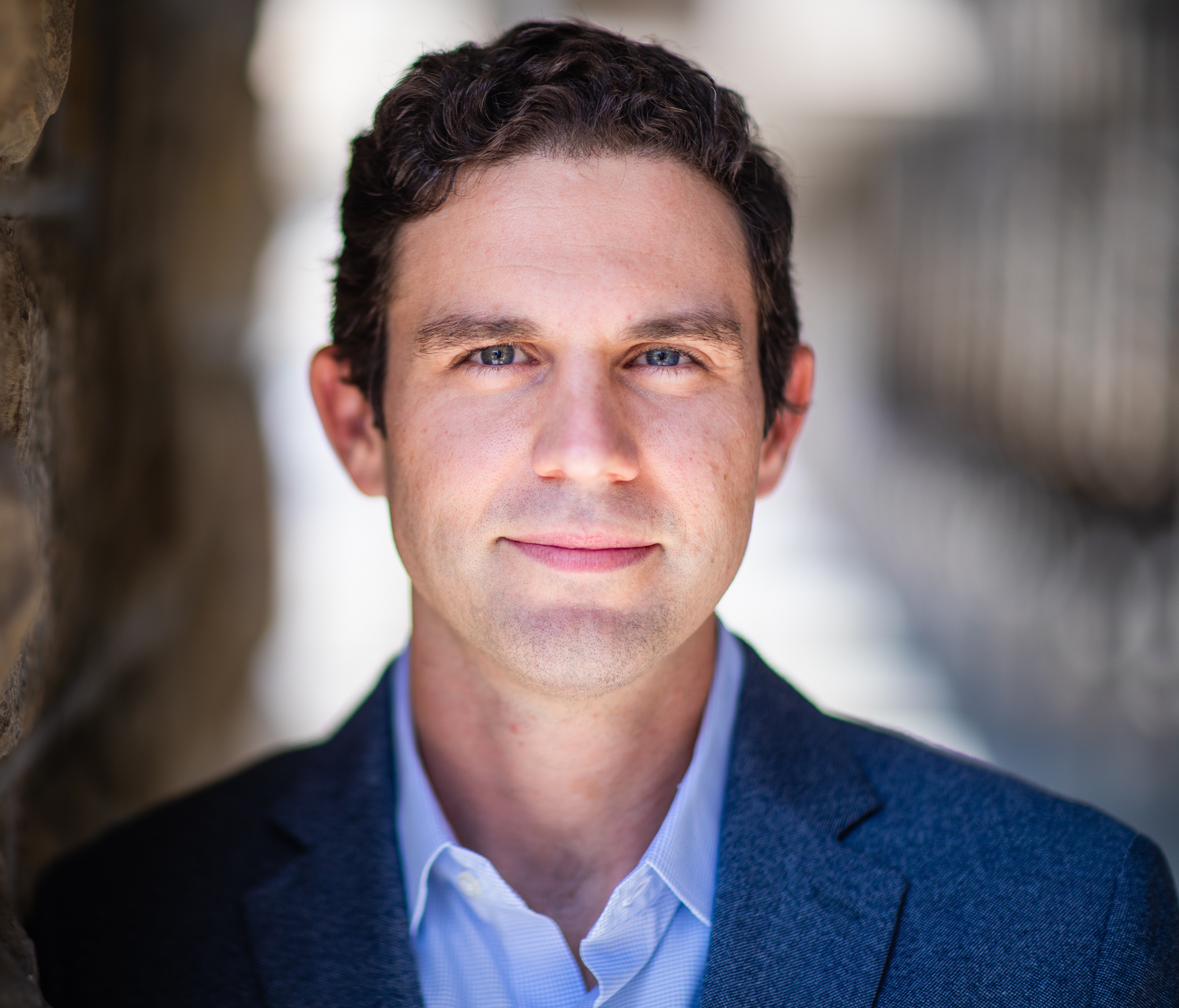
Tripp Shealy
· Associate Professor and Bowman Faculty Fellow in Sustainable Land DevelopmentVerifiedVirginia Tech · Civil and Environmental Engineering
Active 2014–2025
About
Tripp Shealy is an Associate Professor and Bowman Faculty Fellow in Sustainable Land Development in the Charles E. Via, Jr. Department of Civil & Environmental Engineering at Virginia Tech. His research focuses on engineering design with an emphasis on how engineers and stakeholders consider environmental, energy, and climate factors in land development and construction projects. He explores barriers to technology adoption, develops interventions to enhance design thinking, and measures the impact of information gaps and cognitive biases on decision-making processes. His work includes studying risk preferences, asymmetric information, climate adaptation, and the energy transition, particularly in the context of nature-based solutions for managing heat and stormwater, as well as challenges like NIMBYism and regulatory hurdles in infrastructure transition and large-scale solar farm projects. Additionally, Shealy investigates industrialization and modularization in construction, examining how off-site industrialized construction can support circular economy principles, influence design constraints, stakeholder coordination, risk ownership, and material optimization for sustainability.
Research topics
- Computer Science
- Psychology
- Engineering
- Artificial Intelligence
- Engineering management
- Mathematics education
- Political Science
- Cognitive science
- Engineering ethics
- Management
- Knowledge management
- Neuroscience
- Mechanical engineering
- Social psychology
- Cognitive psychology
- Pedagogy
- Civil engineering
- Law
- Ecology
Selected publications
Design Science: Why, What and How – Revisited
Design Science · 2025-01-01 · 3 citations
articleOpen accessAbstract Design Science is the discipline that studies the creation of artifacts – products, services, and systems and their embedding in our physical, virtual, psychological, economic, and social environments. This editorial is a collective effort of the Design Science Journal’s editorial board members, past and present. The journal’s inaugural 2015 editorial, “Design Science: Why, What and How,” reflected the thoughts and vision of that first editorial board for the new journal and the discipline it represented. The present contribution offers the reflections of editors who served the journal in the past 10 years. The individual contributions were not primed and are presented here unedited for conformity or consistency. Differently from the 2015 editorial, there is no effort to synthesize the individual contributions, leaving the task to our readers, who can draw their own conclusions about the Design Science Journal and community accomplishments to date, and the challenges ahead.
2025-12-11
articleSenior authorCorrespondingThe public’s preference is a critical driver for the transition from traditional concrete systems to more sustainable green infrastructure. Understanding how preferences are constructed is essential to enhancing the acceptance and implementation of green infrastructure. This study analyzes responses from a national survey with 946 participants from the United States when they construct their preferences for stormwater infrastructure in cost-risk-benefit evaluation. The preferences were modeled using Logistic regression with Bayesian Markov Chain Monte Carlo methods. Multiple models were developed to estimate the dynamic effects of individual characteristics on preferences. The results show that education, environmental attitude, risk attitude, familiarity with green infrastructure, and gender (specifically identifying as female) were highly likely to increase the public’s initial preference for green infrastructure. Variations were observed in the effects, indicating the dynamic nature of preference construction. For example, the effect of gender on preference is reduced when evaluating the risks but higher when evaluating the costs and benefits. The biggest takeaway for practitioners is that increasing the public’s familiarity with the benefits of green infrastructure can help reduce perceived risks. The study advances our understanding of how individual factors dynamically impact public preferences. The insights gained can enhance tailor-made public engagement during the engineering design processes, particularly in promoting sustainable stormwater management.
How Predisaster Planning Helped Rural West Virginia Overcome Barriers to Long-Term Flood Recovery
Natural Hazards Review · 2025-09-08 · 1 citations
articleSenior authorThe slow allocation of funding, poor coordination among organizations, and limited management capacity of local governments are persistent problems following disasters triggered by natural hazards. The research presented in this paper explores solutions to these problems following a flooding event in rural West Virginia. Semistructured interviews were conducted with stakeholders, including local, state, and federal governments, nonprofit organizations, and engineering companies. Site visits accompanied interviews and thematic content analysis was used to analyze interview transcripts. The findings suggest that while funding is necessary, collaborative predisaster planning contributed to more efficient and effective recovery. Predisaster planning led to the faster allocation of financial resources for a unique bridge replacement program. Predisaster planning also helped reduce confusion around stakeholder responsibilities and build social capital between diverse organizations. This social capital helped fill the gaps in local government capacity. These insights underscore the value of predisaster planning and could be used to develop scalable programs. Future research is needed to understand the impact of varying degrees of social capital and the dynamics of preexisting relationships among organizations.
Risk Hazards & Crisis in Public Policy · 2025-09-01
articleSenior authorABSTRACT The 2016 West Virginia floods highlighted specific barriers to long‐term disaster recovery, including regulatory delays, lengthy permitting processes, and socio‐cultural obstacles such as distrust in federal agencies and resistance to relocation. Semi‐structured interviews were conducted with 25 individuals from 15 organizations, including state cabinet secretaries, mayors, engineers, and nonprofit workers. Transcribed interviews were thematically coded and validated by an independent third‐party coder. The findings highlight the importance of cross‐sector collaboration between government agencies before disasters to address regulatory barriers. Pre‐established reconstruction guidelines for critical infrastructure, can streamline recovery efforts. Access to private funding and skilled volunteer labor alleviated financial barriers by reducing reliance on complex federal reimbursement processes. Socio‐cultural barriers, such as preserving residents' connections to their flood‐prone land, were mitigated through innovative strategies. Vacated properties were transformed into public parks, allowing relocated residents to maintain ties to their former homes. Additionally, in‐person interactions between disaster survivors and recovery officials helped build trust and reduce the sense of alienation often associated with federal aid processes. This study provides critical lessons for mitigating legal and socio‐cultural barriers to recovery in rural communities. Future research should explore mechanisms to institutionalize these strategies and encourage their adoption in other disaster‐prone areas.
2025-08-17
articleAbstract Engineering design is a continuous and iterative process, where early-stage decisions significantly impact subsequent design outcomes. This study investigates the influence of AI-assistance during early stages of design on subsequent design stages and measures the change in both design outcomes and cognitive processing in the brain. Sixty undergraduate engineering students participated in a two-stage design task. Students were first asked to identify design constraints related to the sustainable redevelopment of a site on campus either using human imagination or utilizing generative AI to assist them. Students, in both groups, without the aid of generative AI, then developed conceptual design ideas for redevelopment. The results indicate that the AI-assisted group identified significantly more design constraints (p < 0.05) and subsequently without the aid of AI developed a greater number of design concepts related to environmental sustainability. Brain imaging analysis revealed that AI assistance reduced the neuro-cognitive effort during constraints identification and had a residual effect in reducing neuro-cognitive effort during the concept design phase, particularly in the right frontopolar prefrontal cortex – a region associated with complex, abstract thinking. These findings suggest that AI-assisted design can enhance design efficiency by optimizing reducing cognitive effort and improving early-stage design outcomes. Future research should explore human-AI collaboration strategies to maximize its benefits in engineering design workflows.
An Exploration of Brain Lateralization During Engineering Design Ideation Using fNIRS
2024-09-27
book-chapterAdvances in Sustainability in the Built Environment
Journal of Construction Engineering and Management · 2024-12-13 · 3 citations
articleOpen access2024-08-03
articleOpen accessThis paper describes the use of AI to support the initial development of an interview protocol designed to elicit engineering students' mental models of socio-ecological-technological systems (SETs) and how these models influence their design decisions.The protocol was created for a study that addresses the need to prepare engineering students to design sustainable solutions suitable for a world afflicted by climate change.Three frameworks informed the creation of the protocol: (1) mental models theory, (2) theory of planned behavior, and (3) social-ecologicaltechnological systems.Given advances in AI and the complexity of the theoretical frameworks, we were interested in learning whether generative AI could support protocol development.We generated questions using the generative text model: Claude-2.These generated questions were ranked by both Claude-2 and a member of the research team, and the rankings were compared.Through this process, we found that generative models can be used to write initial interview questions, but the quality of the questions is not consistent.Specifically, the questions generated were often relevant to the project, but they were not necessarily useful because of the use of awkward language.Despite this, the generated questions served as a helpful starting point for developing a large set of interview questions that were subsequently filtered and refined by the research team.
2024-02-06 · 2 citations
articleOpen access1st authorCorrespondingHis research works to understand how engineers think about and apply principles of sustainability during the design and construction process of infrastructure.He also studies how
Journal of Construction Engineering and Management · 2024-05-30 · 3 citations
articleSenior authorEngineering design and construction teams commonly use decision tools, such as rating systems, to manage the complexity of infrastructure projects. However, these systems often focus predominantly on environmental dimensions, potentially overlooking the holistic economic and social aspects of sustainability. This can hinder decision-makers from recognizing the benefits, thereby inadvertently impeding optimal sustainability performance. This research explores a potential solution: reframing the goals of credits on rating systems to explicitly highlight the interconnectedness of environmental, social, and financial dimensions. The aim was to amplify engineers’ motivation towards higher levels of sustainability performance. The study examined the effect of the goal-framed credits by comparing the sustainability scores between engineering professionals (n=42) who used the original Envision system and the reframed version when evaluating a case project. The control group participants averaged a score of 95.4 Envision points (37%), while the intervention group averaged 121.8 Envision points (48%). The reframed credits significantly increased engineering professionals’ sustainability goal setting. Emphasizing financial and social objectives on credits from the Envision rating system, rather than solely focusing on the existing environmental goals, had a favorable influence on professionals’ sustainable design choices. This reframing, by emphasizing the interconnectedness of environmental, social, and financial dimensions of each decision, appears to amplify the awareness, motivation, and selection of higher levels of sustainability achievement, thereby increasing their perceived value and leading to a shift in sustainability-oriented decision-making. The findings suggest that reframing rating systems to better emphasize the interconnectedness of the environmental, social, and financial dimensions of each decision can serve to help engineering teams set higher goals for sustainable performance.
Recent grants
NSF · $240k · 2016–2021
NSF · $319k · 2020–2024
Collaborative Research: Neuro-Cognitive Feedback to Enhance Engineering Design of Systems
NSF · $403k · 2021–2026
Frequent coauthors
- 124 shared
Mo Hu
Northwestern University
- 107 shared
John S. Gero
University of North Carolina at Charlotte
- 34 shared
Leidy Klotz
University of California, Los Angeles
- 30 shared
Allison Godwin
Purdue University West Lafayette
- 25 shared
Julie Milovanovic
- 23 shared
Elke U. Weber
Princeton University
- 19 shared
Richa Vuppuluri
Engineering Systems (United States)
- 19 shared
Jacob Grohs
University of Dayton
Labs
Civil and Environmental Engineering Web Applications, Virginia TechPI
Education
- 2015
Ph.D., Civil Engineering
Clemson University
Awards & honors
- Dean’s Fellow, College of Engineering, Virginia Tech, 2024 –…
- Reviewers’ Favorite Paper Award, Shealy, T., Gero, J., Ignac…
- Best Paper Award, Poling, K., Shealy, T. (2023)
- Best Presentation, Ignacio Jr., P., Shealy, T., (2023)
- Distinguished Paper of Volume 10 of the International Journa…
- Resume-aware match score
- Save to shortlist
- AI-drafted outreach
See your match with Tripp Shealy
PhdFit ranks faculty by your research interests, methods, and publications — grounded in their actual work, not templates.
- Free to start
- No credit card
- 30-second signup