Resume-aware faculty matching

Find professors who actually fit you

Upload your resume. Four AI agents analyze your background, rank the faculty who fit, inspect their recent research, and help you draft outreach — grounded in their actual work, not templates.

Free to startNo credit cardCancel anytime
Top matches Balanced preset
Dr. Sarah Chen
Stanford · Interpretability · NLP
91
Dr. Marcus Holloway
MIT · Robotics · RL
84
Dr. Aisha Okonkwo
CMU · Fairness · HCI
82
Nova · Professor Researcher · re-ranking top 20…
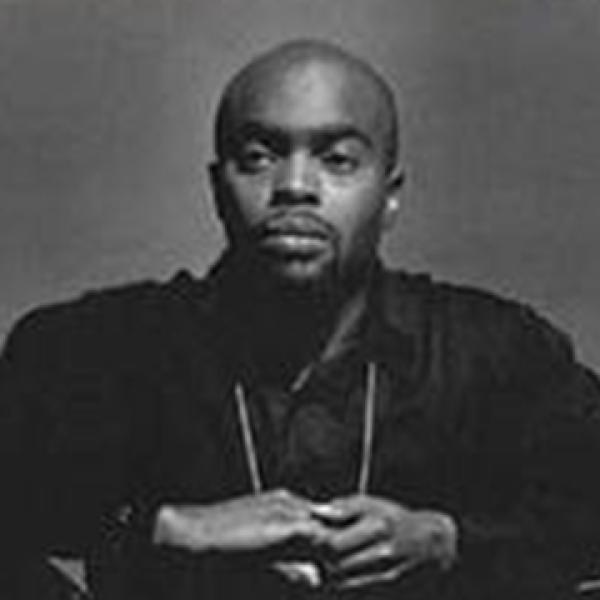
Travis A. Jackson

Travis A. Jackson

· Associate Professor in the Department of Music and the Humanities; Director of Undergraduate StudiesVerified

University of Chicago · Music

Active 1997–2025

h-index6
Citations177
Papers32
Funding
See your match with Travis A. Jackson — sign in to PhdFit.Sign in

About

Travis A. Jackson is an Associate Professor in the Department of Music and the Humanities at the University of Chicago and serves as the Director of Undergraduate Studies. He holds a PhD from Columbia University, earned in 1998. His primary research interests focus on the processes through which musical sounds come into being and how individuals and groups engage with sounds through listening, dancing, and writing. His work explores the intersection of ideas about composition, recording, and distribution with reception, emphasizing its embeddedness in culture, society, race, history, and geography. Jackson's approach is rooted in ethnomusicology, emphasizing the importance of what people say and do concerning music. He analyzes words and actions related to music to help students and readers understand the complex, situated interactions with music and musicians. His research applies to genres such as jazz and rock, requiring him to learn about urban geography, economic development, graphic design, and legal theories of race, among other topics. Through his teaching and writing, Jackson aims to demonstrate that music is an essential, human element of daily life, serving purposes beyond mere reflection of times.

Research topics

  • Art
  • History
  • Visual arts
  • Aesthetics
  • Art history

Selected publications

  • Jazz Performance as Ritual

    2025-01-21

    book-chapter1st authorCorresponding

    Travis A. Jackson is a US-based ethnomusicologist whose scholarship focuses on jazz and rock music. The author of Blowin’ the Blues Away: Performance and Meaning on the New York Jazz Scene (2012), Jackson is interested in music not as a simple aesthetic exercise but as a form of cultural expression that is central to the lives of both those who perform it and those who make up its audience. In the 2000 essay excerpted here, Jackson surveys multiple scholarly approaches to jazz performance as ritual, with particular attention to the way that ritualized forms structure the live performance event for both performers and listeners. Jackson’s detailed analysis of the dynamics of a typical musical event in a nightclub reveals the potential of the ritual framework as a method of understanding how and why popular music provides cultural continuity to a diasporic community.

  • Jazz

    Oxford Music Online · 2020-06-30 · 16 citations

    reference-entrySenior author
  • Recollections: Mark Tucker (1954-2000)

    DOAJ (DOAJ: Directory of Open Access Journals) · 2020-02-23

    articleOpen access1st authorCorresponding

    Mark Tucker was one of those rare individuals who excelled in all the areas one might invoke in assessing a musical scholar’s importance. His two books and numerous essays on Duke Ellington and his public presentations on Thelonious Monk have all contributed to our recognition of him as a first-rate musicologist and jazz scholar, one whose work is beautifully written and brimming with insight. His research on Ellington’s early years has enhanced our understanding of how one of America’s most celebrated composers developed his craft. By situating Ellington in the complex worlds of Washington, D.C. and Harlem up to the 1930s, Mark helped open the door to a more nuanced investigation of jazz, going beyond hagiography or decontextualized musical analysis to render a complex portrait worthy of his subject. His unfinished monograph on Thelonious Monk promised to go in the same direction. A presentation for Columbia’s Center for Jazz Studies lecture series in 2000 showed Mark succeeding at disentangling Monk the myth from Monk the musician, and in the process bringing many who thought they understood Monk to a new level of awareness.

  • PART ONE. Black, Brown and Beige

    2019-12-31

    book-chapter1st authorCorresponding
  • PART THREE. Blowin’ the Blues Away

    2019-12-31

    book-chapter1st authorCorresponding
  • Frontmatter

    2019-12-31

    book-chapterOpen access1st authorCorresponding
  • Appendix: Excerpt from an Interview with Steve Wilson

    2019-12-31

    book-chapter1st authorCorresponding
  • Jazz Performance as Ritual: The Blues Aesthetic and the African Diaspora

    2018-07-17 · 6 citations

    book-chapter1st authorCorresponding

    The African American music known as jazz generally merits little mention in discussions of the musics of the African diaspora. Jazz's relation to other forms of African American music is minimal in their analyses, surfacing only in cursory mentions of jazz's seemingly passive "mixture" of European and African elements. The chapter explores jazz's performance rituals and the aesthetic that informs them, later posing connections to ritual and aesthetic in other Black Atlantic musics. It compares a number of works by selected scholars interested in accounting for meanings in African American musics. Much of the writing and criticism of jazz prior to the early 1960s was predicated on conceptions of musical style and performance that had very little to do with how practitioners of the music thought and acted. The scene and the blues aesthetic constitute two related ways of framing musical events as jazz and as performance.

  • Falling into Fancy Fragments

    2015-02-17

    book-chapter1st authorCorresponding
  • Tourist Point of View? Musics of the World and Ellington's Suites

    The Musical Quarterly · 2013-12-01 · 20 citations

    article1st authorCorresponding

    Up until the late 1980s, the critical and scholarly consensus on Duke Ellington was largely that the composer's best work appeared before 1942. In the time spanning Ellington's arrival in New York in 1923 and reaching a putative apex approximately nineteen years later, two periods are the basis of that consensus: the years Ellington spent developing his style at the Cotton Club in Harlem in the late 1920s and early 1930s, and the period from roughly 1940 to 1942 when the ensemble designated the “Blanton–Webster Band”—named for bassist Jimmy Blanton and tenor saxophonist Ben Webster—made a celebrated series of recordings for Victor, recordings that also featured early contributions from composer and arranger Billy Strayhorn. In the notes for the 1986 reissue of those recordings, Mark Tucker wrote that they “represent the creative peak of a developmental process that had begun over 20 years earlier. The pieces they contain impress us today with their variety, imagination, and craft, also with their maturity of conception.”1 Those recordings and their predecessors also led Gunther Schuller to write, following Ellington's death in 1974, that the temporal constraints of the then-dominant commercial distribution medium, the 10-inch, 78-rpm disc, rather than being a hindrance, played an important role in making Ellington one of the United States' greatest composers: “He took this restriction and turned it into a virtue. He became the master in our time of the small form, the miniature, the vignette, the cameo portrait. What Chopin's nocturnes and ballades are to mid-nineteenth-century European music, Ellington's ‘Mood Indigo’ and ‘Cotton Tail’ are to mid-twentieth-century Afro-American music.”2 Schuller's praise here is measured, to be clear, for he aligns Ellington with a nineteenth-century composer not generally recognized for skill in long-form composition—arguably the sine qua non for classical composition in that century—and his phrasing condemns by omission the various “extended works” composed by Ellington, beginning in the 1930s and appearing with greater regularity after 1943.3

Frequent coauthors

  • John A. Lomax

    2 shared
  • Matthew Barton

    1 shared
  • J. F. Horrabin

    1 shared
  • P. H. Olivier

    1 shared
  • Thomas Owens

    1 shared
  • Robert H. Cataliotti

    1 shared
  • Freyda Simon

    1 shared
  • Robert Stuart Jamieson

    1 shared

Education

  • Ph.D., Music, Ethnomusicology

    Columbia University

    1998
  • M.A., Music, Ethnomusicology

    Columbia University

    1993
  • B.A., African American Studies

    University of Pennsylvania

    1991
  • Resume-aware match score
  • Save to shortlist
  • AI-drafted outreach

See your match with Travis A. Jackson

PhdFit ranks faculty by your research interests, methods, and publications — grounded in their actual work, not templates.

  • Free to start
  • No credit card
  • 30-second signup