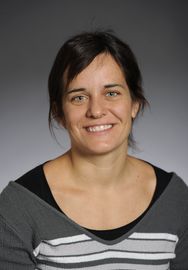
Tiziana Di Matteo
· ProfessorVerifiedCarnegie Mellon University · Physics
Active 1995–2026
About
Tiziana Di Matteo is a Professor in the Department of Physics at Carnegie Mellon University. Her research focuses on several key areas in astrophysics and cosmology, including black holes, high energy astrophysics, and cosmology. She is involved in projects such as cosmological simulations of black hole formation, studies of galaxy mergers involving black holes, 21cm tomography and foregrounds, X-ray background and accretion models, as well as neutrino transport and gamma-ray bursts. Professor Di Matteo has contributed to the scientific community through her research on the complex interactions between black holes and their environments, as well as the large-scale structure of the universe. She has also been active in teaching astrophysics courses, including Astrophysics of Stars and the Galaxy and Extragalactic Astrophysics and Cosmology. Her work has received attention in various media outlets, highlighting the significance of her simulations and studies on black hole and galaxy collisions.
Research topics
- Artificial Intelligence
- Computer Science
- Statistical physics
- Quantum mechanics
- Astrophysics
- Algorithm
- Physics
Selected publications
Institutions in Economic Complexity: Enhancing Growth Predictions and Theoretical Understanding
Research Square · 2026-04-24
preprintOpen accessSenior authorThe Properties of Little Red Dot Galaxies in the ASTRID Simulation
The Open Journal of Astrophysics · 2026-01-19
articleOpen accessWe present simulated counterparts of the ``Little Red Dot’’ (LRD) galaxies observed with JWST, using the large cosmological hydrodynamic simulation, ASTRID. We create mock observations of the galaxies ( <mml:math xmlns:mml="http://www.w3.org/1998/Math/MathML" display="inline"> <mml:mrow> <mml:mn>5</mml:mn> <mml:mo>≤</mml:mo> <mml:mi>z</mml:mi> <mml:mo>≤</mml:mo> <mml:mn>8</mml:mn> </mml:mrow> </mml:math> ) in ASTRID, and find seventeen which fit the color and size criteria of LRDs. These LRDs are galaxies with high stellar masses (), and massive black holes (). The host galaxies are dense, with stellar half mass radii (), and dust attenuation in the F444W band above 1.25. Their star formation has been recently quenched. They host relatively bright AGN that are dust-obscured and contribute significantly to the rest-frame optical red slope and have relatively low luminosity in the rest-frame ultraviolet, where the host galaxy’s stars are more dominant. These LRDs are in an evolutionary phase of miniquenching that is the result of AGN feedback from their massive black holes. The LRDs in ASTRID are bright with F444W magnitudes of <mml:math xmlns:mml="http://www.w3.org/1998/Math/MathML" display="inline"> <mml:mrow> <mml:mn>23.5</mml:mn> <mml:mo>−</mml:mo> <mml:mn>25.5</mml:mn> </mml:mrow> </mml:math> . The less massive and fainter galaxies in ASTRID lack the dust concentration necessary to produce the red slope of an LRD, though this could be an effect of limited resolution. Most of the highest Eddington black holes are not LRDs due to insufficient dust attenuation from their host galaxies, which are also experiencing relatively high star formation rates. This results in their spectra being too flat, despite their highly accreting black holes.
Central Cluster Galaxies: A Hotspot for Detectable Gravitational Waves from Black Hole Mergers
arXiv (Cornell University) · 2025-02-03
preprintOpen accessAfter Pulsar Timing Arrays (PTAs) have announced the evidence for a low-frequency gravitational wave background (GWB), the continuous waves (CWs) are the next anticipated gravitational wave (GW) signals. In this work, we model CW sources detectable by PTAs based on the massive black hole (MBH) merger population in the ASTRID cosmological simulation. We evolve MBH binaries, simulate their GW emissions, and calculate their detection probability (DP) for PTAs. The most detectable CW sources are produced by MBH mergers with masses M_BH > 10^10 solarmass in the lowest frequency bins with f<10 nHz. Remarkably, these mergers occur within massive galaxies with the stellar mass larger than 10^12 solarmass located at the center of galaxy clusters. Particularly striking in ASTRID is a triple merger event, wherein two consecutive mergers occur within 500 Myr interval in the same cluster core, generating high-DP CW signals at ~ 2nHz and ~ 10nHz. We also investigate the electromagnetic (EM) signatures associated with these events: either single or dual active galactic nuclei (AGN) in the massive host galaxies that are undergoing star formation. This research provides new insights into the low-frequency GW sky and informs future multi-messenger searches for PTA CW sources.
The Gravitational Wave Background from Massive Black Holes in the ASTRID Simulation
ArXiv.org · 2025-02-03 · 1 citations
preprintOpen accessRecent pulsar timing array (PTA) observations have detected nanohertz gravitational waves, likely originating from massive black hole binaries (MBHBs). The detected amplitude is unexpectedly higher than inferred from the electromagnetic measurements. We present new gravitational wave background (GWB) results from the ASTRID simulation. Its large volume and on-the-fly dynamical friction for MBHs provide new insights into the MBHB population, offering a more accurate assessment of its contribution to the observed GWB. ASTRID predicts a GWB from MBHBs of $h_c=2.8\times10^{-15}$, or $\sim45\%$ of the observed amplitude at $\sim 4\,{\rm nHz}$ and $h_c=2.5\times10^{-16}$ ($5\%$) with $h_c\propto f^{-1.6}$ at $\sim 30\,{\rm nHz}$. These predictions remain below current PTA constraints but align with previous empirical models based on the observed MBH mass functions. By comparison, TNG300 with post-processed MBH dynamics yields a range between $70-90\%$ ($20\% - 30\%$) of the observed levels at low (high) frequencies. At low frequencies, ASTRID predicts that the bulk of the GWB originates from MBHB with masses $M_{\rm tot}=1-3\times 10^9\,M_\odot$ peaking at $z\approx 0.3$, consistent with TNG300. Notably, both simulations predict significant GWB contribution from minor mergers ($q<0.2$) by up to $\sim 40\%$. By tracing the full merger trees of local MBHs in ASTRID, we show that they generate GWs at $\sim 10\%-80\%$ of the maximum signal assuming no accretion and recent equal-mass mergers. Finally, we demonstrate the importance of on-the-fly MBH dynamics, the lack of which leads to $3- 5$ times excessive mass growth by merger, and a similar boost to the GWB prediction.
Supervised Similarity for Firm Linkages
SSRN Electronic Journal · 2025-01-01
preprintOpen accessThe Astrophysical Journal · 2025-03-10 · 13 citations
articleOpen accessSenior authorAbstract Merger rate predictions of massive black hole (MBH) seeds from large-scale cosmological simulations differ widely, with recent studies highlighting the challenge of low-mass MBH seeds failing to reach the galactic center, a phenomenon known as the seed sinking problem. In this work, we tackle this issue by integrating cosmological simulations and galaxy merger simulations from the MAGICS-I and MAGICS-II resimulation suites with high-resolution N -body simulations. Building on the findings of MAGICS-II, which showed that only MBH seeds embedded in stellar systems are able to sink to the center, we extend the investigation by incorporating nuclear star clusters (NSCs) into our models. Utilizing N -body resimulations with up to 10 7 particles, we demonstrate that interactions between NSCs and their surrounding galactic environment, particularly tidal forces triggered by cluster interactions, significantly accelerate the sinking of MBHs to the galactic center. This process leads to the formation of a hard binary in ≲500 Myr after the onset of a galaxy merger. Our results show that in eight out of 12 models, the high stellar density of the surrounding NSCs enhances MBH hardening, facilitating gravitational-wave mergers by redshift z = 4. We conclude that at z > 4, dense NSCs serve as the dominant channel for MBH seed mergers, producing a merger rate of 0.3–0.6 yr −1 at z = 4, which is approximately 300–600 times higher than in non-NSC environments. In contrast, in environments without NSCs, surrounding dark matter plays a more significant role in loss-cone scattering.
Statistically validated network for analysing textual data
Applied Network Science · 2025-02-19 · 1 citations
articleOpen accessSenior authorAbstract This paper presents a novel methodology, called Word Co-occurrence SVN topic model (WCSVNtm), for document clustering and topic modeling in textual datasets. This method represents the corpus as a bipartite network of words and documents to rigorously assess the statistical significance of word co-occurrences within documents and document overlap based on shared vocabulary. By employing the Leiden community detection algorithm to the SVN, distinct communities of words can be identified and interpreted as topics. Similarly, documents can be sorted into groups based on their thematic similarities. We demonstrate the effectiveness of our approach by analyzing three datasets: a set of 120 Wikipedia articles, the arXiv10 dataset, which consists of 100,000 abstracts from scientific papers, and a sampled subset of 10,000 documents from the original arXiv10. To benchmark our results, we compare our approach with several well-established models in the field of topic modeling and document clustering, including the hierarchical Stochastic Block Model (hSBM), BERTopic, and Latent Dirichlet Allocation (LDA). The results show that WCSVNtm achieves competitive performance across all datasets, automatically selecting the number of topics and document clusters, whereas state-of-the-art methods require prior knowledge or additional tuning for optimization. Finally, any advancements in community detection algorithms could further improve our method.
Heavy seeds and the first black holes: Insights from the BRAHMA simulations
ArXiv.org · 2025-10-01
preprintOpen accessFrom the luminous quasars at $z \sim 6$ to the recent $z \sim 9-11$ AGNs revealed by JWST, observations of the earliest black hole (BH) populations can provide unique constraints on BH formation and growth models. We use the BRAHMA simulations with constrained initial conditions to investigate BH assembly in extreme overdense regions. The simulations implement heavy seeds ($\sim 10^4-10^5 M_{\odot})$ forming in dense, metal-poor gas exposed to sufficient Lyman-Werner flux. With gas accretion modeled via Bondi-Hoyle formalism and BH dynamics and mergers using a subgrid dynamical friction scheme, we isolate the impact of seeding, dynamics, accretion, and feedback on early BH growth. With fiducial stellar and AGN feedback inherited from IllustrisTNG, accretion is strongly suppressed at $z \gtrsim 9$, leaving mergers as the dominant growth channel. Gas accretion dominates at $z \lesssim 9$, where permissive models (super-Eddington or low radiative efficiency) build $\sim 10^9\ M_{\odot}$ BHs powering quasars by $z \sim 6$, while stricter IllustrisTNG-based prescriptions yield much lower BH masses ($\sim 10^6-10^8\ M_{\odot}$). Our seed models strongly affect merger-driven growth at $z \gtrsim 9$: only the most lenient models (with $\sim 10^5\ M_{\odot}$ seeds) produce enough BH mergers to reach $\gtrsim 10^6\ M_{\odot}$ by $z \sim 10$, consistent with current estimates for GN-z11. Our dynamical friction model gives low merger efficiencies, hindering the buildup of $\gtrsim 10^7\ M_{\odot}$ BHs by $z \sim 9-10$, as currently inferred for GHZ9, UHZ1, and CAPERS-LRD-z9. If the BH-to-stellar mass ratios of these sources are indeed as extreme as currently inferred, they would require either very short BH merger timescales or reduced AGN thermal feedback. Weaker stellar feedback boosts both star formation and BH accretion and cannot raise these ratios.
Bridging Literature and the Universe Via A Multi-Agent Large Language Model System
ArXiv.org · 2025-07-11
preprintOpen accessAs cosmological simulations and their associated software become increasingly complex, physicists face the challenge of searching through vast amounts of literature and user manuals to extract simulation parameters from dense academic papers, each using different models and formats. Translating these parameters into executable scripts remains a time-consuming and error-prone process. To improve efficiency in physics research and accelerate the cosmological simulation process, we introduce SimAgents, a multi-agent system designed to automate both parameter configuration from the literature and preliminary analysis for cosmology research. SimAgents is powered by specialized LLM agents capable of physics reasoning, simulation software validation, and tool execution. These agents collaborate through structured communication, ensuring that extracted parameters are physically meaningful, internally consistent, and software-compliant. We also construct a cosmological parameter extraction evaluation dataset by collecting over 40 simulations in published papers from Arxiv and leading journals that cover diverse simulation types. Experiments on the dataset demonstrate a strong performance of SimAgents, highlighting its effectiveness and potential to accelerate scientific research for physicists. Our demonstration video is available at: https://youtu.be/w1zLpm_CaWA. The complete system and dataset are publicly available at https://github.com/xwzhang98/SimAgents.
Supervised Similarity for Firm Linkages
ArXiv.org · 2025-06-09
preprintOpen accessWe introduce a novel proxy for firm linkages, Characteristic Vector Linkages (CVLs). We use this concept to estimate firm linkages, first through Euclidean similarity, and then by applying Quantum Cognition Machine Learning (QCML) to similarity learning. We demonstrate that both methods can be used to construct profitable momentum spillover trading strategies, but QCML similarity outperforms the simpler Euclidean similarity.
Recent grants
Quasars and Large Scale Structure: Gigaparsec-scale simulations confront Large Survey Data
NSF · $535k · 2016–2022
Toward Petascale Cosmology with GADGET
NSF · $836k · 2007–2014
Miniquasars in the Dark Ages: Cosmological simulations of black holes with radiative transfer
NSF · $435k · 2010–2016
Petascale Cosmology with Gadget: Modeling the formation of the First Quasars with Blue Waters
NSF · $5k · 2013–2016
The First Billion Years: a Petascale Universe of Galaxies and Quasars
NSF · $40k · 2016–2019
Frequent coauthors
- 330 shared
Tomaso Aste
- 151 shared
Rupert A. C. Croft
- 119 shared
Yueying Ni
- 73 shared
Volker Springel
- 64 shared
Nianyi Chen
Carnegie Mellon University
- 63 shared
Simeon Bird
- 63 shared
Yu Feng
Université de Technologie de Troyes
- 52 shared
Noemi Nava
University College London
Education
- 1998
Ph.D., Astrophysics
University of Cambridge (U.K.)
- 1995
B.S., Astrophysics
University College London (U.K)
Awards & honors
- Carnegie Science Award of Excellence (2008)
- Berkham Faculty Grant (2006)
- Michael Penston Prize of the Royal Astronomical Society (199…
- Resume-aware match score
- Save to shortlist
- AI-drafted outreach
See your match with Tiziana Di Matteo
PhdFit ranks faculty by your research interests, methods, and publications — grounded in their actual work, not templates.
- Free to start
- No credit card
- 30-second signup