Resume-aware faculty matching

Find professors who actually fit you

Upload your resume. Four AI agents analyze your background, rank the faculty who fit, inspect their recent research, and help you draft outreach — grounded in their actual work, not templates.

Free to startNo credit cardCancel anytime
Top matches Balanced preset
Dr. Sarah Chen
Stanford · Interpretability · NLP
91
Dr. Marcus Holloway
MIT · Robotics · RL
84
Dr. Aisha Okonkwo
CMU · Fairness · HCI
82
Nova · Professor Researcher · re-ranking top 20…
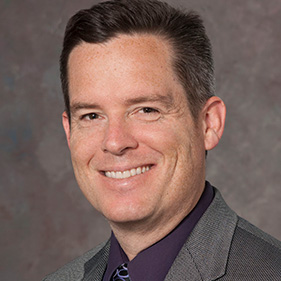
Thomas Smith

Thomas Smith

· M.D., F.A.C.C.Verified

University of California, Davis · Cardiology

Active 1856–2025

h-index91
Citations30.8k
Papers62638 last 5y
Funding$55.9M1 active
See your match with Thomas Smith — sign in to PhdFit.Sign in

Research topics

  • Medicine
  • Internal medicine
  • Cardiology
  • Endocrinology
  • Pathology

Selected publications

  • A Literature Review Examining the Potential Role of the ImPACT to Evaluate Probable Concussions in Athletes

    The Rehabilitation Professional · 2025-11-09

    reviewOpen accessSenior author

    The Immediate Post-Concussion Assessment and Cognitive Testing (ImPACT) is proposed to represent the most widely-used tool for the detection and management of concussions. With the growing rate of concussions in the high school population, there is a need for the validation of concussion detection and management to ensure the best possible outcomes for athletes’ health. There has been extensive research done in regards to the ImPACT in the last decade. The ImPACT’s validity is regularly researched; however, future methods should aim to focus on the baseline testing in the initial phase of concussion management. Also, the importance of baseline testing should be incorporated into the education on concussions for the high school population, as well as youth sporting groups. Athletes need to know the significance of head injuries and how· improper treatment could do more harm than the concussion itself. This article offers a literature review concerning this timely topic, and additionally presents recommendations for future research endeavors.

  • Pathology of Medulloblastoma: Morphologic Features and Molecular Classification

    IntechOpen eBooks · 2025-02-05

    book-chapterOpen access1st authorCorresponding

    This chapter presents an overview of the pathology of medulloblastoma. Historical aspects relating to the origin of medulloblastoma are briefly summarized. The current definition of medulloblastoma presented in the 2021 World Health Organization (WHO) Classification of Tumors of the Central Nervous System is discussed. This is followed by a description of the major gross and microscopic (histologic) features of medulloblastoma, and histologic criteria for the four major WHO subtypes. The role of immunohistochemistry in the classification of medulloblastoma is reviewed. The third part of the chapter focuses on the molecular classification of medulloblastoma as currently delineated in the 2021 WHO classification of Central Nervous System (CNS) tumors. This section presents in detail the methodology and criteria forming the basis of the molecular classification and how the different molecular groups correlate with the histologic subtypes and their immunohistochemical features. When appropriate, the clinical features relating to each molecular group are briefly discussed.

  • 71668 | Height Matters: 2-Dimensional Versus 3-Dimensional Multi Planar Reconstruction Guided Transseptal Puncture in Mitral-Transcatheter Edge-to-Edge Repair

    Structural Heart · 2025-06-01

    articleOpen accessSenior author

    Transseptal puncture height is a critical determinant in M-TEER. An optimal puncture (4.0-5.0 cm) allows precise steerable guide catheter positioning and clip delivery system maneuverability. Low punctures may hinder leaflet grasp and cause “aorta-hugger” trajectories, while high punctures risk atrial free wall perforation. Few studies compare 2D vs 3D imaging for accuracy and differences in measurements.

  • Is a Preprocedure Transesophageal Echocardiogram Always Necessary Prior to Mitral Valve Transcatheter Edge-to-Edge Repair?

    Structural Heart · 2025-03-13

    letterOpen access1st authorCorresponding
  • Left Atrial Appendage Closure Via Transhepatic Access in a Patient With Congenitally Interrupted Inferior Vena Cava

    JACC Case Reports · 2025-12-09

    articleOpen access

    BACKGROUND: Left atrial appendage occlusion (LAAO) is indicated for patients with nonvalvular atrial fibrillation at risk of thromboembolic stroke and intolerant to long-term anticoagulation. Standard procedural access for LAAO is from the transfemoral approach. In certain circumstances where this is prohibitive, options are limited. CASE SUMMARY: A patient with atrial fibrillation underwent unsuccessful LAAO due to interrupted inferior vena cava (IVC). She was referred for consideration of LAAO via an alternative access. Using a transhepatic approach, she underwent successful occlusion with a 31-mm Watchman FLX Pro device. DISCUSSION: Although rare, transfemoral venous approach can be prohibitive for several reasons, including congenitally absent IVC, occluded IVC filter, or extrinsic compression. This case highlights the preprocedural planning, technical approach, and postprocedural considerations for successful LAAO using a transhepatic approach. TAKE-HOME MESSAGE: Alternate access via a transhepatic approach can be a viable alternative for LAAO when the standard femoral venous approach is prohibitive.

  • Anglo-German Connections and the Crusade Movement:

    2025-12-05

    book-chapter1st authorCorresponding
  • PD02-07 PRIMARY RESULTS FROM THE MULTI-INSTITUTIONAL, PROSPECTIVE ARTIFICIAL URINARY SPHINCTER CLINICAL OUTCOMES (AUSCO) TRIAL

    The Journal of Urology · 2025-04-08

    article
  • Impact of Baseline Anteroposterior Mitral Annular Dimensions on Clinical Outcomes after MitraClip for Secondary Mitral Regurgitation

    Structural Heart · 2025-03-21

    articleOpen access

    <h2>Abstract</h2><h3>Background</h3> In the randomized Cardiovascular Outcomes Assessment of the MitraClip Percutaneous Therapy for Heart Failure Patients with Functional Mitral Regurgitation (COAPT; NCT01626079) trial, mitral transcatheter edge-to-edge repair (M-TEER) improved clinical outcomes in patients with severe secondary mitral regurgitation (MR). A prior post hoc analysis from the COAPT trial showed that increasing anteroposterior mitral annular diameter (APMAD) was the sole independent echocardiographic predictor of the composite endpoint of death or heart failure hospitalizations (HFH) at 2 years. Given the relationship between the mitral annulus and leaflets, we examined the association of baseline APMAD with long-term clinical outcomes. <h3>Methods</h3> COAPT patients (n = 575) were stratified into tertiles by baseline APMAD as follows: small APMAD, medium APMAD, and large APMAD. APMAD was measured in the anteroposterior direction from the parasternal long-axis view at end-diastole and in the intercommissural direction from the apical two-chamber view. <h3>Results</h3> Patients with larger baseline APMAD were more often male and had fewer comorbidities, larger ventricles, and larger mitral orifice areas. At 2 years, there were no significant differences in MR severity and the composite endpoint of death or HFH in patients treated with M-TEER by baseline APMAD. In patients treated with guideline-directed medical therapy (GDMT) alone, there were no significant differences in MR severity, but the composite endpoint of death or HFH was higher in patients with the largest baseline APMADs. The treatment effect of M-TEER was consistent among APMAD tertiles (<i>p</i><sub>interaction</sub> = 0.87). <h3>Conclusions</h3> APMAD was a predictor of adverse outcomes in patients treated with GDMT alone. M-TEER reduced MR severity and the risk of death or HFH regardless of baseline APMAD compared with GDMT alone.

  • Rewriting the First Crusade

    Boydell and Brewer eBooks · 2024-03-27

    book1st authorCorresponding
  • Transcatheter Edge-to-Edge Repair in Patients With Complex Tricuspid Valve Anatomy

    JACC: Cardiovascular Interventions · 2024-12-01 · 11 citations

    articleOpen access

    BACKGROUND: Untreated severe tricuspid regurgitation (TR) carries a poor prognosis. OBJECTIVES: The authors report the 1-year outcomes of transcatheter edge-to-edge repair (TEER) with the TriClip system (Abbott Structural Heart) in patients with complex tricuspid valve anatomies. METHODS: The multicenter, international TRILUMINATE Pivotal (Trial to Evaluate Cardiovascular Outcomes in Patients Treated with the Tricuspid Valve Repair System Pivotal) trial included a single-arm cohort, with complex tricuspid valve anatomies excluded from the randomized arm (ie, anticipated TR reduction but not to moderate or less after TEER). The primary outcome endpoint of the single arm was 1-year survival with a Kansas City Cardiomyopathy Questionnaire score improvement ≥10 points. RESULTS: In the primary analysis population (N = 100), the mean age was 80 ± 6 years, and 35% had a cardiac implantable electronic device lead. Nearly 90% of patients had massive or torrential TR, 44% had prior left-sided valve interventions, 63% had ≥4-segmental tricuspid leaflet morphology, and the coaptation gap averaged 7.4 ± 2.7 mm. The primary endpoint was met (outcome: 46.2%, performance goal: 30%; P = 0.0008). A total of 81% of subjects had moderate or less TR at 1 year. No major adverse events or deaths occurred within 30 days postprocedure. One-year all-cause mortality and heart failure hospitalization were 15% and 24%, respectively. Significant improvements in NYHA functional class and Kansas City Cardiomyopathy Questionnaire overall scores occurred and were maintained at 1 year. CONCLUSIONS: In patients with complex tricuspid anatomies, TEER with the TriClip system demonstrated excellent procedural safety with significant TR reduction and associated improvements in quality of life at 1 year.

Recent grants

Frequent coauthors

  • Ralph A. Kelly

    95 shared
  • David J. Greenblatt

    Tufts University

    84 shared
  • Jean‐Luc Balligand

    82 shared
  • George Beller

    University of Virginia

    76 shared
  • Edgar Haber

    74 shared
  • William B. Hood

    Griffith University

    74 shared
  • Jason H. Rogers

    University of California, Davis

    62 shared
  • Vincent P. Butler

    Columbia University

    51 shared
  • Resume-aware match score
  • Save to shortlist
  • AI-drafted outreach

See your match with Thomas Smith

PhdFit ranks faculty by your research interests, methods, and publications — grounded in their actual work, not templates.

  • Free to start
  • No credit card
  • 30-second signup