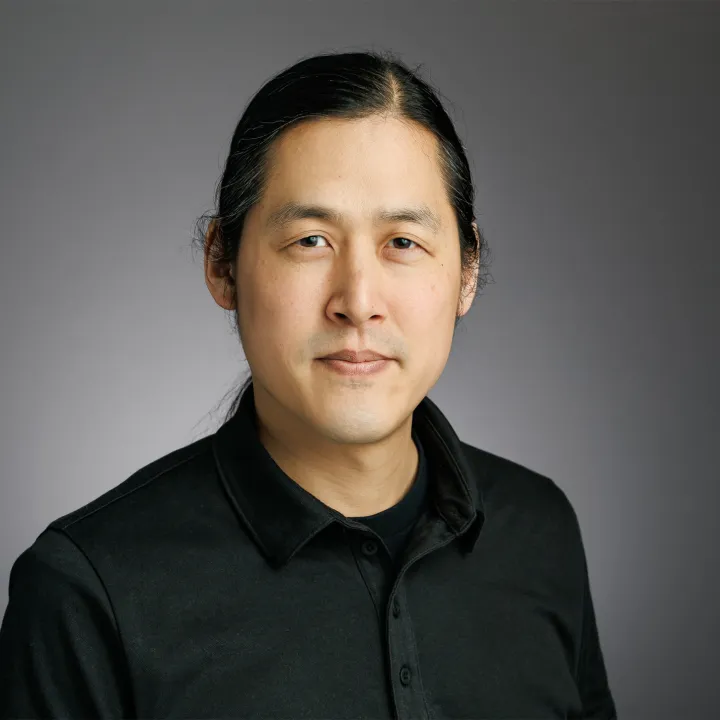
About
I am a full Professor of Computer Science at Yale, and also an affiliate of American Studies and Ethnicity, Race & Migration (ER& M). I co-direct the Critical Computing Initiative and co-lead the Computer Graphics Group. My research focuses on physics-based simulation, including fire, water, and humans, as well as the history of computer graphics and Asian Americans & STEM.
Research topics
- Computer Science
- Political Science
- Computer graphics (images)
- Engineering
- Data Mining
- Data science
- Artificial Intelligence
- Physics
- Sociology
- Mathematical analysis
- Human–computer interaction
- Theoretical computer science
- Applied mathematics
- Gender studies
- Programming language
- Structural engineering
- Mathematical optimization
- Operating system
- Classical mechanics
- Law
- Optics
- Mechanical engineering
- Mathematics
- Combinatorics
Selected publications
Hyper-Dimensional Deformation Simulation
2025-07-23
articleOpen accessSenior authorModélisation numérique de l'étendard d'une plume, une membrane fortement anisotrope
HAL (Le Centre pour la Communication Scientifique Directe) · 2024-05-13
articleOpen accessSenior authorNational audience
Curly-Cue: Geometric Methods for Highly Coiled Hair
2024-12-03 · 5 citations
articleOpen accessSenior authorThe Life and Legacy of Bui Tuong Phong
2024-07-18 · 1 citations
articleOpen access1st authorCorrespondingWe examine the life and legacy of pioneering Vietnamese American computer scientist Bùi Tường Phong, whose shading and lighting models turned 50 last year. We trace the trajectory of his life through Vietnam, France, and the United States, and its intersections with global conflicts. Crucially, we present evidence that his name has been cited incorrectly over the last five decades. His family name is Bùi Tường, not Phong. By presenting these facts at SIGGRAPH, we hope to collect more information about his life, and ensure that his name is remembered correctly in the future.
Into the Portal: Directable Fractal Self-Similarity
2024-07-12 · 3 citations
articleSenior authorWe present a novel, directable method for introducing fractal self-similarity into arbitrary shapes. Our method allows a user to directly specify the locations of self-similarities in a Julia set, and is general enough to reproduce other well-known fractals such as the Koch snowflake. Ours is the first algorithm to enable this level of general artistic control while also maintaining the character of the original fractal shape. We introduce the notion of placing “portals” in the iteration space of a dynamical system, bridging the aesthetics of iterated maps with the fine-grained control of iterated function systems (IFS). Our method is effective in both 2D and 3D.
Historical Studies in the Natural Sciences · 2024-06-01 · 1 citations
articleSenior authorThis article argues that the first important comprehensive efforts by US mathematicians to survey, translate, and disseminate the work of Chinese mathematicians resulted from Cold War geopolitical and scientific competition and economic pressures that emerged in the 1950s and 1960s. The success of the American Mathematical Society’s (AMS) translation program and its journal Chinese Mathematics depended less on official diplomatic channels and more on an informal network of Chinese American mathematicians and librarians in the United States, which provided the infrastructure and hidden labor necessary for transnational mathematical exchange and translation. The history of the Chinese translation project demonstrates the importance of moving beyond the biographies and work of established mathematicians to capture the broader transpacific social history of Chinese American mathematical research and technical labor in the early Cold War. Moreover, the article demonstrates the importance of bringing Asian American history and the history of Cold War science together, as the mathematical and linguistic expertise and labor required came from recently immigrated Chinese American mathematicians caught at the nexus of Cold War anticommunist politics and the incomplete repeal of Chinese exclusion. Historians of mathematics have mostly narrated the late 1940s and early 1950s as a time of anti-communist purges that impacted the lives of Chinese scientists and derailed US–China scientific exchange. Meanwhile, the 1960s have remained unexamined. Instead, we see the ways in which the AMS’s translation program generated important mathematical exchanges that widely impacted mathematics and adjacent fields.
arXiv (Cornell University) · 2024-09-26 · 1 citations
preprintOpen accessTangent stabilised large strain isotropic elasticity was recently proposed by Poya et al. [1] wherein by working directly with principal stretches the entire eigenstructure of constitutive and geometric/initial stiffness terms were found in closed-form, giving fresh insights into exact convexity conditions of highly non-convex functions in discrete settings. Consequently, owing to these tangent eigenvalues an analytic tangent stabilisation was proposed bypassing incumbent numerical approaches routinely used in nonlinear finite element analysis. This formulation appears to be extremely robust for quasi-static simulation of complex deformations even with no load increments and time stepping while still capturing instabilities automatically in ways that are infeasible for path-following techniques in practice. In this work, we generalise the notion of tangent stabilised elasticity to virtually all known invariant formulations of nonlinear elasticity. We show that, closed-form eigen-decomposition of tangents is easily available irrespective of invariant formulation or integrity basis. In particular, we work out closed-form tangent eigensystems for isotropic Total Lagrangian deformation gradient (F )-based and right Cauchy-Green (C)-based as well as Updated Lagrangian left Cauchy-Green (b)-based formulations and present their exact convexity conditions postulated in terms of their corresponding tangent and initial stiffness eigenvalues. In addition, we introduce the notion of geometrically stabilised polyconvex large strain elasticity for models that are materially stable but exhibit geometric instabilities for whom we construct their initial stiffness in a spectrally-decomposed form analytically. We further extend this framework to the case of transverse isotropy where once again, closed-form tangent eigensystems are found for common transversely isotropic invariants.
More Than Killmonger Locs: A Style Guide for Black Hair (in Computer Graphics)
2024-07-27 · 3 citations
articleSenior authorWe will cover recent advances and ongoing challenges in the depiction of Black hair, otherwise known as kinky, or Afro-textured hair. In computer graphics, the majority hair research has been in the depiction straight or wavy hair. As a result, many aspects of the aesthetics and mechanics of Black hair remain poorly understood. To help fill this gap, we will present Code My Crown, a free guide to creating Black digital hairstyles that we co-authored in collaboration with a community of game artists and Dove. We also cover styling guidelines for 3D models in the Open Source Afro Hair Library, and present Lifted Curls, our strand simulation technique specifically designed for Afro-textured hair. Finally, we will suggest future directions for hair research.
Computer Methods in Applied Mechanics and Engineering · 2024-12-28 · 5 citations
articleOpen accessTangent stabilised large strain isotropic elasticity was recently proposed by Poya et al. (2023) wherein by working directly with principal stretches the entire eigenstructure of constitutive and geometric/initial stiffness terms were found in closed-form, giving fresh insights into exact convexity conditions of highly non-convex functions in discrete settings. Consequently, owing to these newly found tangent eigenvalues an analytic tangent stabilisation was proposed (for common non-convex strain energies that exhibit material and/or geometric instabilities) bypassing incumbent numerical approaches routinely used in nonlinear finite element analysis. This formulation appears to be extremely robust for quasi-static simulation of complex deformations even with no load increments and time stepping while still capturing instabilities (similar to dynamic analysis) automatically in ways that are infeasible for path-following techniques in practice. In this work, we generalise the notion of tangent stabilised elasticity to virtually all known invariant formulations of nonlinear elasticity. We show that, closed-form eigen-decomposition of tangents is easily available irrespective of invariant formulation or integrity basis. In particular, we work out closed-form tangent eigensystems for isotropic Total Lagrangian deformation gradient ( )-based and right Cauchy–Green ( )-based as well as Updated Lagrangian left Cauchy–Green ( )-based formulations and present their exact convexity conditions postulated in terms of their corresponding tangent and geometric stiffness eigenvalues. In addition, we introduce the notion of geometrically stabilised polyconvex large strain elasticity for models that are materially stable but exhibit geometric instabilities for whom we construct their geometric stiffness in a spectrally-decomposed form analytically. We further extend this framework to the case of transverse isotropy where once again, closed-form tangent eigensystems are found for common transversely isotropic invariants. In this context, we augment the recent work on mixed variational formulations in principal stretches for deformable and rigid bodies, by presenting a mixed variational formulation for models with arbitrarily directed inextensible fibres. Since, tangent stabilisation unleashes an unparallelled capability for extreme deformations new numerical techniques are required to guarantee element-inversion-safe analysis. To this end, we propose a discretisation-aware load-stepping together with a line search scheme for a robust industry-grade implementation of tangent stabilised elasticity over general polyhedral meshes. Extensive comparisons with path-following techniques provide conclusive evidence that utilising tangent stabilised elasticity can offer both faster and automated results.
Modelling a Feather as a Strongly Anisotropic Elastic Shell
2024-07-12
articleOpen accessFeathers exhibit a highly anisotropic behaviour, governed by their complex hierarchical microstructure composed of individual hairs (barbs) clamped onto a spine (rachis) and attached to each other through tiny hooks (barbules). Previous methods in computer graphics have approximated feathers as strips of cloth, thus failing to capture the particular macroscopic nonlinear behaviour of the feather surface (vane). To investigate the anisotropic properties of a feather vane, we design precise measurement protocols on real feather samples. Our experimental results suggest a linear strain-stress relationship of the feather membrane with orientation-dependent coefficients, as well as an extreme ratio of stiffnesses in the barb and barbule direction, of the order of 104. From these findings we build a simple continuum model for the feather vane, where the vane is represented as a three-parameter anisotropic elastic shell. However, implementing the model numerically reveals severe locking and ill-conditioning issues, due to the extreme stiffness ratio between the barb and the barbule directions. To resolve these issues, we align the mesh along the barb directions and replace the stiffest modes with an inextensibility constraint. We extensively validate our membrane model against real-world laboratory measurements, by using an intermediary microscale model that allows us to limit the number of required lab experiments. Finally, we enrich our membrane model with anisotropic bending, and show its practicality in graphics-like scenarios like a full feather and a larger-scale bird. Code and data for this paper are available at https://gitlab.inria.fr/elan-public-code/feather-shell/.
Recent grants
CAREER: Enabling Efficient Non-Linearities in Biomechanical Simulations
NSF · $331k · 2013–2017
Frequent coauthors
- 10 shared
Doug L. James
Stanford University
- 9 shared
Ming C. Lin
Chinese Center For Disease Control and Prevention
- 7 shared
Florence Bertails-Descoubes
Centre Inria de l'Université Grenoble Alpes
- 7 shared
Victor Romero
Université Grenoble Alpes
- 5 shared
A. M. Darke
University of California, Santa Cruz
- 5 shared
Jean Jouve
Institut polytechnique de Grenoble
- 4 shared
Rahul Narain
Indian Institute of Technology Delhi
- 4 shared
Nils Thuerey
Education
- 2001
B.S., Computer Science
Cornell
- 2006
Ph.D., Computer Science
UNC Chapel Hill
- 2007
M.S.
IBM TJ Watson Research Center
- 2008
Other
Cornell University
- 2009
Other
Cornell University
- 2011
Other
University of Saskatchewan
Awards & honors
- SciTech Oscar (2012, 2022)
- Resume-aware match score
- Save to shortlist
- AI-drafted outreach
See your match with Theodore Kim
PhdFit ranks faculty by your research interests, methods, and publications — grounded in their actual work, not templates.
- Free to start
- No credit card
- 30-second signup