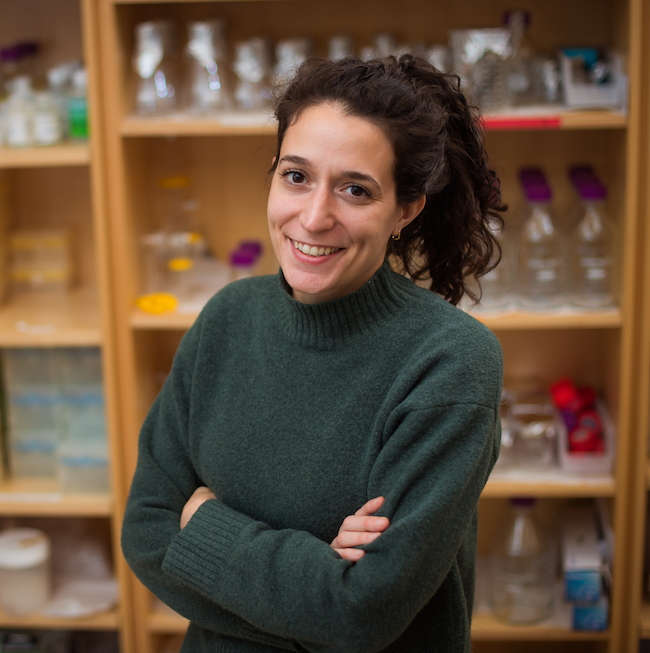
Tami Lieberman
· Hermann L. F. von Helmholtz Career Development ProfessorMassachusetts Institute of Technology · Civil & Environmental Engineering
Active 2011–2023
About
Tami Lieberman is an Associate Professor at MIT, affiliated with the Department of Civil and Environmental Engineering (CEE), the Institute for Medical Engineering and Science (IMES), and Bluesky. Her research focuses on microbiomes, evolution, and medicine, with an emphasis on computational and experimental approaches to understanding microbial systems. She holds a Ph.D. in Bioinformatics & Computational Biology from the City University of Hong Kong. Her work involves investigating microbial communities and their roles in health and disease, contributing to the fields of microbiome informatics and therapeutic development. She is actively involved in mentoring postdoctoral associates, graduate students, and undergraduate researchers, and collaborates with various institutes and programs related to microbiome research and infectious disease.
Research topics
- Computer Science
- Biology
- Evolutionary biology
- Medicine
- Ecology
- Geography
- Internal medicine
- Microbiology
- Genetics
Selected publications
On-person ecology and evolution using high-resolution approaches
2023
1st authorCorresponding- Computer Science
- Ecology
- Computer Science
254. Genomic diversity of Gram-negative Bacilli from Bloodstream Infections in Hospitalized Children
Open Forum Infectious Diseases · 2023
- Medicine
- Internal medicine
- Microbiology
Abstract Background Gram-negative bloodstream infection (BSI) in hospitalized children is associated with significant morbidity and mortality. It is unclear whether bacterial clonality of isolates during BSI in a unique patient is associated with clinical characteristics such as immunocompromise. We hypothesized that genomic diversity of BSI isolates would be higher in immunocompromised patients due to mucosal barrier injury and therefore larger translocation bottleneck. Methods We prospectively enrolled patients with a central venous catheter who were hospitalized at Boston Children’s Hospital and had a positive blood culture that grew E. coli, Klebsiella spp., or Pseudomonas aeruginosa. An aliquot from the blood culture bottle was plated on agar, and at least 24 colonies were picked randomly and subjected to whole-genome sequencing (WGS). Patient-specific reference genomes were constructed using long-read sequencing of at least 1 isolate on the PacBio platform. All isolates were sequenced using Illumina (MiSeq or NextSeq). Single nucleotide variant (SNV) calls were made using the WideVariant pipeline (github). Clinical characteristics were obtained retrospectively from the electronic medical record. We defined immunocompromise as neutropenia (ANC< 500) on the day of BSI or prior solid organ or stem cell transplant. The proportion of BSI episodes with clonal blood isolates (defined as 0 SNV) was compared between immunocompromised and non-immunocompromised patients using Fisher’s exact test. Results We enrolled 34 patients (median age 2.33 years, IQR 0.8-3.8 years), 25 having BSI from Enterobacterales (11 E. coli, 14 Klebsiella spp.) and 9 from Pseudomonas aeruginosa. Immunocompromised patients had a significantly higher proportion of Enterobacterales BSI episodes with clonal isolates compared with non-immunocompromised patients [13/18 (72%) vs. 1/7 (14%) respectively, P=0.021). This was not seen with Pseudomonas BSI, which had clonal isolates in 3/5 (60%) vs. 2/4 (50%) respectively (P=1). Conclusion Contrary to our hypothesis, immunocompromised patients were more likely to have clonal Enterobacterales BSI isolates compared with non-immunocompromised patients, perhaps due to lower host pressures for bacterial population diversification in immunocompromised patients. Disclosures Arolyn Conwill, PhD, Day Zero Diagnostics: current employee|Day Zero Diagnostics: Stocks/Bonds
Phylogenetic analysis of SARS-CoV-2 in Boston highlights the impact of superspreading events
Science · 2020 · 318 citations
- Computer Science
- Evolutionary biology
- Biology
Analysis of 772 complete severe acute respiratory syndrome coronavirus 2 (SARS-CoV-2) genomes from early in the Boston-area epidemic revealed numerous introductions of the virus, a small number of which led to most cases. The data revealed two superspreading events. One, in a skilled nursing facility, led to rapid transmission and significant mortality in this vulnerable population but little broader spread, whereas other introductions into the facility had little effect. The second, at an international business conference, produced sustained community transmission and was exported, resulting in extensive regional, national, and international spread. The two events also differed substantially in the genetic variation they generated, suggesting varying transmission dynamics in superspreading events. Our results show how genomic epidemiology can help to understand the link between individual clusters and wider community spread.
Frequent coauthors
- 2 shared
Jennifer Blumenthal
Children's Hospital of Philadelphia
- 2 shared
Gregory P. Priebe
Boston Children's Hospital
- 2 shared
Thomas J. Sandora
Boston Children's Hospital
- 1 shared
Ylaine Gerardin
PathAI (United States)
- 1 shared
Arolyn Conwill
Massachusetts Institute of Technology
- 1 shared
Patrick McGann
Walter Reed Army Institute of Research
Labs
Similar researchers at Massachusetts Institute of Technology
- Resume-aware match score
- Save to shortlist
- AI-drafted outreach
See your match with Tami Lieberman
PhdFit ranks faculty by your research interests, methods, and publications — grounded in their actual work, not templates.
- Free to start
- No credit card
- 30-second signup