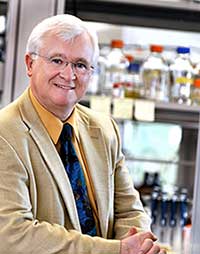
Tadhg Begley
· Distinguished Professor, Derek Barton Professor in Chemistry, Robert A. Welch Foundation ChairVerifiedTexas A&M University · Chemistry
Active 1984–2025
About
Tadhg Begley is a Distinguished Professor of Chemistry at Texas A&M University and holds the Robert A. Welch Foundation Chair. His research group focuses on the mechanistic chemistry and enzymology of complex organic transformations, particularly those involved in vitamin biosynthetic pathways. His work includes studying the biosynthesis of compounds such as thiamin, molybdopterin, pyridoxal phosphate, and menaquinone, utilizing a combination of molecular biology, protein biochemistry, organic synthesis, and structural studies. Begley's research provides insights into the organic chemistry of living systems and aims to contribute to fields such as biotechnology, drug design, and academia. He has a particular interest in cellular physiology and the mechanistic enzymology of thiamin biosynthesis, exploring complex transformations like the biosynthesis of the thiamin pyrimidine and thiazole. Begley's educational background includes a B.S. from the National University of Ireland and a Ph.D. from the California Institute of Technology. His contributions to the field have been recognized through awards such as the NIH MERIT Award, the Merck Faculty Development Award, and election as an AAAS Fellow. He has also authored significant publications, including books on biological pathways and cofactor chemistry.
Research topics
- Chemistry
- Organic chemistry
- Biochemistry
- Stereochemistry
- Photochemistry
- Biology
- Microbiology
- Computational biology
Selected publications
Vitamin B <sub>2</sub> Catabolism: Nature’s Route from Riboflavin to Acetoacetate and Pyruvate
ACS Central Science · 2025-11-20 · 2 citations
articleOpen accessSenior authorCorrespondingreconstitution of the enzymes of the riboflavin catabolic pathway. The pathway begins with the oxidative removal of ribose to form lumichrome, which is then solubilized by a P450-catalyzed oxidation of the C7 methyl group, followed by hydrolytic degradation of the C-ring pyrimidine. Loss of C4, in a thiamin-dependent heterocycle decarboxylation, is followed by a xanthine oxidase and Rieske dioxygenase-mediated degradation of the quinoxaline ring. Catechol dioxygenase then catalyzes the conversion of the resulting A-ring-derived catechol to form 4-methyl-6-carboxypyrone. This is cleaved through a hydrolysis/hydration/retroaldol sequence to form pyruvate and acetoacetate, both of which are substrates for the citric acid cycle. The elucidation of the riboflavin catabolic pathway fills an important gap in our understanding of riboflavin metabolism and sets the stage for evaluating the impact of riboflavin catabolism on human and animal nutrition as well as the function of lumichrome as a quorum sensor mimic in the rhizosphere.
Chemical Science · 2025-11-18
articleOpen accessThiamin pyrimidine synthase (ThiC) is a noncanonical radical SAM enzyme that catalyzes the complex radical rearrangement of aminoimidazole ribonucleotide (AIR) to hydroxymethylpyrimidine phosphate (HMP-P) as part of the thiamin biosynthetic pathway in bacteria and plants. In this work, we investigate the mechanism of ThiC using advanced electron paramagnetic resonance (EPR) techniques. Freeze-quenching a reaction of ThiC revealed the accumulation of a new radical species. By employing electron nuclear double resonance (ENDOR) spectroscopy with various substrate isotopologues, we determined the hyperfine parameters of several nuclei, allowing us to propose a structure for this intermediate. The accumulated species was characterized as a dihydro-aminoimidazole centered radical attached to two ribose derived fragments. This radical is sensitive to perturbations in the enzyme H-bonding network. In addition, mutagenesis of active site residues results in the accumulation of two distinct intermediates, including a C5' ribonucleotide centered radical and a ribose C2' radical fragment. Identification of these early radical intermediates provides insights into the initial steps of the ThiC mechanism. The ThiC-catalyzed reaction involves a 20-step radical cascade and is the most complex rearrangement found in biosynthesis. This study highlights the pivotal role that EPR can play in elucidating the mechanism of highly complicated enzyme-catalyzed reactions.
Abstract 2036 Characterization of Riboflavin (Vitamin B2) Catabolism
Journal of Biological Chemistry · 2025-05-01
articleOpen accessSenior authorRiboflavin, commonly known as vitamin B2, is a redox cofactor involved in the catalysis of a wide diversity of biological oxidation reactions, such as shuttling electrons, accepting/donating hydrides, and creating flavin hydroperoxides with molecular oxygen. Due to the ubiquitous nature of riboflavin, flavoenzymology is now a well-studied area. In contrast, very little is known about the enzymes involved in riboflavin catabolism. Previously our group successfully isolated a bacterial strain able to catalyze the oxidative cleavage of ribose from the isoalloxazine heterocycle, leaving lumichrome, but unable to catalyze any further breakdown.
Handbook of Proteolytic Enzymes · 2025-01-01
book-chapterMec+ peptidase (Mycobacterium tuberculosis)
Handbook of Proteolytic Enzymes · 2025-01-01
book-chapterSenior authorACS Central Science · 2024-05-13 · 11 citations
articleOpen accessSenior authorCorrespondingPhosphomethylpyrimidine synthase (ThiC) catalyzes the conversion of AIR to the thiamin pyrimidine HMP-P. This reaction is the most complex enzyme-catalyzed radical cascade identified to date, and the detailed mechanism has remained elusive. In this paper, we describe the trapping of five new intermediates that provide snapshots of the ThiC reaction coordinate and enable the formulation of a revised mechanism for the ThiC-catalyzed reaction.
Abstract 1585 Characterization of a bacterial vitamin B2 catabolic pathway
Journal of Biological Chemistry · 2024-03-01
articleOpen accessSenior authorVitamin B2 (riboflavin) is one of the essential biomolecules in all forms of life. It is a precursor to redox co-factors riboflavin-5'-mononucleotide (FMN) and flavin adenine dinucleotide (FAD). Previous reports of riboflavin catabolism are sparse, and the enzymes responsible were not identified. We report the first identification and characterization of a complete riboflavin catabolic pathway. A novel flavoenzyme motif in Microbacterium maritypicum cleaves the ribose chain and forms lumichrome, which is not degraded further. Pimelobacter simplex was then found capable of utilizing lumichrome as a carbon and nitrogen source. Metabolic studies coupled with chemical logic led to the identification of a gene cluster and subsequent functional characterization of the enzymes involved in the breakdown of lumichrome into small metabolites. Lumichrome has low water solubility (4.8 mg/L). To increase its availability to cells, the first step of lumichrome catabolism is a rare oxidation of the C7-methyl group by a 'self-sufficient' cytochrome P450, producing more soluble 7-carboxylumichrome. The entire pathway then goes through cascades of oxidative and hydrolytic enzymes to systematically open up each of the three rings of lumichrome. The pathway also includes a unique thiamin pyrophosphate (TPP)-dependent decarboxylase that acts on an aromatic carboxylic acid, an unprecedented reaction for this class of enzymes. The mechanism of this enzyme is currently being studied using substrate analogs and intermediate trapping. The final steps involve a metal-dependent hydroxylation by a cupin-domain containing hydratase before a retro-aldolase produces pyruvic acid (used in the Krebs citric acid cycle) and acetoacetate. Characterization of the entire riboflavin catabolic pathway will lead to a further understanding of how bacterial catabolism can be responsible for vitamin deficiencies, elucidating possible druggable targets. This research was funded by the Welch foundation.
Journal of Biological Chemistry · 2024-03-01
articleOpen accessSenior authorThiamin pyrophosphate (TPP, an active form of vitamin B1) is an essential cofactor in all realms of life. Grain products are the primary source of TPP and the recommended daily allowance for humans is 1.2 mg. While structurally simple, its biosynthesis is remarkably complex and presents a treasure trove of new biological chemistry. The TPP biosynthetic pathway involves separate biosynthesis of thiazole and pyrimidine moieties, which are then coupled to form TPP. The mechanistic enzymology of thiamin thiazole biosynthesis has been studied in detail. In contrast, the mechanism of thiamin pyrimidine formation is yet to be established. In bacteria, phosphomethylpyrimidine synthase (ThiC), is a radical S-adenosyl-L-methionine (SAM) enzyme that catalyzes the conversion of 5-aminoimidazole ribonucleotide (AIR) to 4-amino-5-hydroxymethyl-2-methyl pyrimidine phosphate (HMP-P). This transformation is the most complex radical rearrangement in primary metabolism, with the enzyme controlling the reactivity of at least 15 radical intermediates during the transformation. Despite our extensive efforts over the last two decades, the mechanism of this chemical transformation remains elusive. Herein, we have proposed a mechanism for the ThiC-catalyzed reaction involving previously unknown reactivity of 5'-nucleotide radicals. The early steps of the rearrangement involve a mesolytic cleavage to generate a sugar-based radical, followed by radical recombination to generate a desired C-C bond. To support this mechanism, we have used site-directed mutagenesis, substrate analogs, isotopologues, derivatization strategies, and EPR to trap and characterize two early-stage intermediates in the mechanism. Site-directed mutagenesis of a conserved cysteine residue in ThiC traps a late-stage intermediate, suggesting a novel cysteine-mediated decarbonylation in this complex radical rearrangement. We have also identified the stereospecificity of initial hydrogen abstraction by 5'-deoxyadenosyl radical and identified SAM as the source of a previously unidentified hydrogen atom of thiamin pyrimidine. These intermediates provide mechanistic snapshots of the early, middle, and late stages of the ThiC-catalyzed reaction. Using bioinformatics, we have also identified ThiC-like enzymes that are involved in the biosynthesis of other natural products. This research was supported by a grant from the National Institutes of Health (DK44083) and by the Robert A. Welch Foundation (A0034).
Journal of Biological Chemistry · 2024-03-01
articleOpen accessSenior authorMenaquinone is a vital redox cofactor in bacteria, and its biosynthesis has been reported to occur by two different routes. The more recently discovered aminofutalosine pathway is found in pathogenic bacteria like H. pylori, making it an attractive target for antibacterial drugs. The biosynthesis of menaquinone from 5,8-dihydroxy-2-naphthoic acid in the aminofutalosine pathway is proposed to involve four enzymes that tailor the naphthaquinone core. One of the enzymes involved, MqnP, is an integral-membrane prenyltransferase that attaches the poly-prenyl tail to menaquinone, while MqnG is a membrane-anchored methyltransferase. This study establishes an intrinsic regioselectivity of the prenylation and methylation. Then, the regioselectivity is investigated using isotope-labeled substrate feeding and NMR studies. Further, the regioselectivity exhibited by MqnP might justify the need for a separate decarboxylase enzyme MqnL in the aminofutalosine pathway. The elucidation of the prenyltransferase product sets the stage for studying the UbiD-like decarboxylase involved in menaquinone biosynthesis. Also, the possible sequence of tailoring enzymes has been narrowed down by studying MqnG and MqnP-mediated reactions. The complete elucidation of the aminofutalosine pathway allows a better understanding of the parallels and differences from the OSB pathway. This study utilizes partial reconstitution of MqnG and in vivo analysis of the MqnP reaction to clarify the role of the tailoring enzymes. Future investigations on the decarboxylase units MqnM-MqnL will complete our knowledge of the aminofutalosine pathway. NSF grant proposal ID #2204203
Alkylcysteine Sulfoxide C–S Monooxygenase Uses a Flavin-Dependent Pummerer Rearrangement
Journal of the American Chemical Society · 2023-05-25 · 16 citations
articleOpen accessSenior authorCorrespondingFlavoenzymes are highly versatile and participate in the catalysis of a wide range of reactions, including key reactions in the metabolism of sulfur-containing compounds. S-Alkyl cysteine is formed primarily by the degradation of S-alkyl glutathione generated during electrophile detoxification. A recently discovered S-alkyl cysteine salvage pathway uses two flavoenzymes (CmoO and CmoJ) to dealkylate this metabolite in soil bacteria. CmoO catalyzes a stereospecific sulfoxidation, and CmoJ catalyzes the cleavage of one of the sulfoxide C-S bonds in a new reaction of unknown mechanism. In this paper, we investigate the mechanism of CmoJ. We provide experimental evidence that eliminates carbanion and radical intermediates and conclude that the reaction proceeds via an unprecedented enzyme-mediated modified Pummerer rearrangement. The elucidation of the mechanism of CmoJ adds a new motif to the flavoenzymology of sulfur-containing natural products and demonstrates a new strategy for the enzyme-catalyzed cleavage of C-S bonds.
Recent grants
NIH · $3.8M · 2008
NIH · $1.8M · 2009
NIH · $409k · 1991
Menaquinone biosynthesis via the futalosine pathway
NSF · $540k · 2019–2022
Chemistry of Biological Systems
NIH · $6.0M · 1996–2021
Frequent coauthors
- 78 shared
S.E. Ealick
Cornell University
- 39 shared
Fred W. McLafferty
- 29 shared
Cynthia Kinsland
Cornell University
- 27 shared
Pieter C. Dorrestein
University of California, San Diego
- 25 shared
Javier Seravalli
University of Nebraska–Lincoln
- 25 shared
Stephen W. Ragsdale
University of Michigan–Ann Arbor
- 24 shared
Sameh H. Abdelwahed
Texas A&M University
- 23 shared
Abhishek Chatterjee
Boston College
Awards & honors
- Merck Faculty Development Award
- NIH MERIT Award
- Elected AAAS Fellow
- Honorary D.Sc. National University of Ireland (Dublin)
- Distinguished Professor of Chemistry
- Resume-aware match score
- Save to shortlist
- AI-drafted outreach
See your match with Tadhg Begley
PhdFit ranks faculty by your research interests, methods, and publications — grounded in their actual work, not templates.
- Free to start
- No credit card
- 30-second signup