
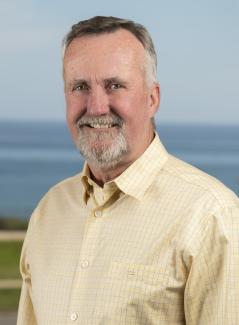
Steve Gaines
University of California, Santa Barbara · Environmental Science and Management
Active 1981–2026
Academic metrics are sourced from OpenAlex and public funding records; values may differ from Google Scholar.
About
Steven Gaines is a Distinguished Professor Emeritus at the Bren School of Environmental Science & Management at the University of California, Santa Barbara. His research focuses on marine ecology and conservation, sustainable fisheries, the design of marine reserves, and the impact of climate change on ocean ecosystems. He has served as director of the UC Santa Barbara Marine Science Institute, as well as acting Dean of Science and acting Vice Chancellor for Research at UCSB. Gaines currently serves as a strategic advisor for the Environmental Markets Lab (emLab), which advances economic research to deliver practical solutions for people and the planet.
Research topics
- Political Science
- Environmental science
- Biology
- Fishery
- Geography
- Ecology
- Environmental resource management
- Economics
- Business
- Computer Science
Selected publications
Protecting the global ocean for biodiversity, food and climate
Nature · 2021 · 750 citations
Ecological impacts of human‐induced animal behaviour change
Ecology Letters · 2020-07-24 · 269 citations
reviewA growing body of literature has documented myriad effects of human activities on animal behaviour, yet the ultimate ecological consequences of these behavioural shifts remain largely uninvestigated. While it is understood that, in the absence of humans, variation in animal behaviour can have cascading effects on species interactions, community structure and ecosystem function, we know little about whether the type or magnitude of human-induced behavioural shifts translate into detectable ecolog…
Let more big fish sink: Fisheries prevent blue carbon sequestration—half in unprofitable areas
Science Advances · 2020-10-28 · 143 citations
articleOpen accessemissions by burning less fuel and reactivating a natural carbon pump through the rebuilding of fish stocks and the increase of carcasses deadfall.
Cold range edges of marine fishes track climate change better than warm edges
Global Change Biology · 2020 · 112 citations
Species around the world are shifting their ranges in response to climate change. To make robust predictions about climate-related colonizations and extinctions, it is vital to understand the dynamics of range edges. This study is among the first to examine annual dynamics of cold and warm range edges, as most global change studies average observational data over space or over time. We analyzed annual range edge dynamics of marine fishes-both at the individual species level and pooled into cold-…
Assessing the population‐level conservation effects of marine protected areas
Conservation Biology · 2021 · 58 citations
Marine protected areas (MPAs) cover 3-7% of the world's ocean, and international organizations call for 30% coverage by 2030. Although numerous studies show that MPAs produce conservation benefits inside their borders, many MPAs are also justified on the grounds that they confer conservation benefits to the connected populations that span beyond their borders. A network of MPAs covering roughly 20% of the Channel Islands National Marine Sanctuary was established in 2003, with a goal of providing…
Recent grants
Frequent coauthors
- 58 shared
Benjamin S. Halpern
University of California, Santa Barbara
- 45 shared
Robert R. Warner
- 44 shared
Christopher Costello
University of British Columbia
- 39 shared
Jane Lubchenco
- 34 shared
Sarah E. Lester
Florida State University
- 28 shared
Bruce A. Menge
Oregon State University
- 24 shared
Elizabeth M. P. Madin
University of Hawaiʻi at Mānoa
- 24 shared
Mark D. Bertness
Brown University
Labs
Gaines LabPI
Education
- 1982
Ph.D., Zoology
Oregon State University
- 1977
B.Sc., Biology
University of California Irvine
Similar researchers at University of California, Santa Barbara
- Resume-aware match score
- Save to shortlist
- AI-drafted outreach
See your match with Steve Gaines
PhdFit ranks faculty by your research interests, methods, and publications — grounded in their actual work, not templates.
- Free to start
- No credit card
- 30-second signup