Resume-aware faculty matching

Find professors who actually fit you

Upload your resume. Four AI agents analyze your background, rank the faculty who fit, inspect their recent research, and help you draft outreach — grounded in their actual work, not templates.

Free to startNo credit cardCancel anytime
Top matches Balanced preset
Dr. Sarah Chen
Stanford · Interpretability · NLP
91
Dr. Marcus Holloway
MIT · Robotics · RL
84
Dr. Aisha Okonkwo
CMU · Fairness · HCI
82
Nova · Professor Researcher · re-ranking top 20…
Stephen Puryear

Stephen Puryear

Verified

North Carolina State University · Philosophy

Active 2000–2023

h-index8
Citations180
Papers325 last 5y
Funding
See your match with Stephen Puryear — sign in to PhdFit.Sign in

About

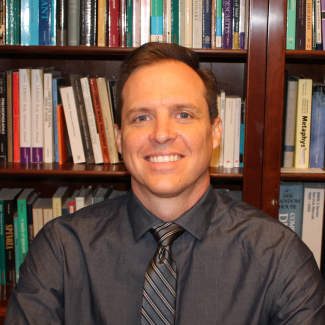
Stephen Puryear is a professor of philosophy in the Department of Philosophy and Religious Studies at NC State University. He earned a B.S. in mechanical engineering from NC State in 1994, followed by a Ph.D. in philosophy from the University of Pittsburgh in 2006, where his dissertation focused on Perception and Representation in Leibniz under the supervision of Nicholas Rescher. After completing a postdoctoral fellowship at Stanford University, he joined NC State's faculty in 2008. Puryear's research primarily centers on metaphysics and ethics, engaging with the German philosophical tradition, especially Leibniz, Kant, and Schopenhauer. His current main project is a book on Leibniz's idealism, and he continues to work on topics such as Schopenhauer's philosophy, moral and political philosophy, and metaphysics. He has received recognition for his teaching, including the Outstanding Lecturer Award from the College of Humanities and Social Sciences in 2012 and the university-level Outstanding Teacher Award in 2020, which also led to his induction into the NC State Academy of Outstanding Teachers. Puryear has held leadership roles in philosophical societies, including serving as president of the North Carolina Philosophical Society and as vice-president of the Leibniz Society of North America.

Research topics

  • Philosophy
  • Environmental ethics
  • Epistemology
  • Aesthetics

Selected publications

  • Schopenhauer and Modern Moral Philosophy

    2023-09-22

    book-chapterOpen access1st authorCorresponding

    Anscombe counsels us to dispense with those moral concepts that presuppose a divine law conception of ethics, among which she numbers the concepts of “moral obligation and moral duty, […] of what is morally right and wrong, and of the moral sense of ‘ought’.” Schopenhauer made a similar point more than a century earlier, though his critique implicates a narrower range of concepts. Through reflection on his accounts of right and wrong and of duty and obligation, this chapter attempts to show that we can dispense with the imperative in ethics while retaining these notions, thus preserving a distinctively modern conception of morality.

  • Physical objects as possibilities for experience

    Metascience · 2023

    1st authorCorresponding
    • Epistemology
    • Philosophy
    • Aesthetics
  • Berkeley and Leibniz

    Oxford University Press eBooks · 2022

    1st authorCorresponding
    • Philosophy

    Abstract This chapter explores the relationship between the views of Leibniz and Berkeley on the fundamental nature of the created universe. It argues that Leibniz concurs with Berkeley on three key points: that in the final analysis there are only perceivers and their contents (subjective idealism), that there are strictly speaking no material or corporeal substances, and that bodies or sensible things reduce to the contents of perceivers (phenomenalism). It then reconstructs Leibniz’s central argument for phenomenalism, which rests on his belief in the infinite division of matter, his doctrine of the ideality of relations, and the traditional principle that being and unity convert. Finally, it explores Leibniz’s belief that a body having its being in one perceiver can be “founded” on other perceivers, and considers Berkeley’s reasons for opposing such a view.

  • Schopenhauer's Rejection of the Moral Ought

    Routledge eBooks · 2021 · 2 citations

    1st authorCorresponding
    • Philosophy
    • Environmental ethics

    More than a century before Anscombe counselled us to jettison concepts such as that of the moral ought, or moral law, Schopenhauer mounted a vigorous attack on such prescriptive moral concepts, particularly as found in Kant. In this chapter I consider what I take to be his four arguments for this stance. According to the first, Kant begs the question by merely assuming that ethics has a prescriptive or legislative-imperative form, when a purely descriptive-explanatory conception such as Schopenhauer's also presents itself as a possibility. According to the second, Kant's purportedly philosophical ethics is in fact a theological ethics in disguise, because prescriptive notions such as that of the moral ought presuppose a divine lawgiver. According to the third, Kant's conceptions of the moral law as a law of freedom, and of moral imperatives as categorical or unconditioned, involve him in contradictions. Finally, Schopenhauer argues that there can be no such thing as a moral ought because a binding ought or law must be understood to operate through appeals to self-interest, which stands in opposition to morality. I contend that these last three arguments are sound and that the final one in particular succeeds in refuting the prescriptivist conception of morality.

  • Why Leibniz should have agreed with Berkeley about abstract ideas

    British Journal for the History of Philosophy · 2021-03-22

    articleOpen access1st authorCorresponding

    Leibniz claims that Berkeley “wrongly or at least pointlessly rejects abstract ideas”. What he fails to realize, however, is that some of his own core views commit him to essentially the same stance. His belief that this is the best (and thus most harmonious) possible world, which itself stems from his Principle of Sufficient Reason, leads him to infer that mind and body must perfectly represent or ‘express’ one another. In the case of abstract thoughts he admits that this can happen only in virtue of thinking of some image that, being essentially a mental copy of a brain state, expresses (and is expressed by) that state. But here he faces a problem. In order for a thought to be genuinely abstract, its representational content must differ from that of any mental image, since the latter can represent only something particular. In that case, however, an exact correspondence between the accompanying mental image and the brain state would not suffice to establish a perfect harmony between mind and body. Even on Leibniz’s own principles, then, it appears that Berkeley was right to dismiss abstract ideas.

  • The Logic of Leibniz’s Borrowed Reality Argument

    The Philosophical Quarterly · 2019-08-28 · 3 citations

    articleOpen access1st authorCorresponding

    Abstract Leibniz argues that there must be a fundamental level of simple substances because composites borrow their reality from their constituents and not all reality can be borrowed. I contend that the underlying logic of this ‘borrowed reality argument’ has been misunderstood, particularly the rationale for the key premise that not all reality can be borrowed. Contrary to what has been suggested, the rationale turns neither on the alleged viciousness of an unending regress of reality borrowers nor on the Principle of Sufficient Reason, but on the idea that composites are phenomena and thus can be real only insofar as they have a foundation in substances, from which they directly ‘borrow’ their reality. The claim that composites are phenomena rests in turn on Leibniz's conceptualism about relations. So understood, what initially looked like a disappointingly simple argument for simples turns out to be a rather rich and sophisticated one.

  • Consent by residence: A defense

    European Journal of Political Theory · 2019-02-24 · 19 citations

    articleOpen access1st authorCorresponding

    The traditional view according to which we adults tacitly consent to a state’s lawful actions just by living within its borders—the residence theory—is now widely rejected by political philosophers. According to the critics, this theory fails because consent must be (i) intentional, (ii) informed, and (iii) voluntary, whereas one’s continued residence within a state is typically none of these things. Few people intend to remain within the state in which they find themselves, and few realize that by remaining they are consenting to the state’s lawful actions. Moreover, the various obstacles standing in the way of us leaving the state render our remaining involuntary. Thus, the critics conclude, few if any people can be considered to have consented through their residence. I argue that these objections fail and that the residence theory remains a viable option, at least for those who are not committed incompatibilists.

  • Monads, Composition, and Force. Ariadnean Threads Through Leibniz's Labyrinth by Richard T. W. Arthur

    Journal of the history of philosophy · 2019-01-01

    articleOpen access1st authorCorresponding

    Reviewed by: Monads, Composition, and Force. Ariadnean Threads Through Leibniz's Labyrinth by Richard T. W. Arthur Stephen Puryear Richard T. W. Arthur. Monads, Composition, and Force. Ariadnean Threads Through Leibniz's Labyrinth. Oxford: Oxford University Press, 2018. Pp. xv + 239. Cloth, $80,00. Leibniz describes the problem of the composition of the continuum as one of the two famous labyrinths of the human mind. (The other concerns freedom.) The problem, in brief, is that matter and motion appear to be continuous and thus would seem to be composed of an infinity of spatial or temporal points, which is absurd. Leibniz's strategy for escaping from this labyrinth involves distinguishing the realm of the real or actual from that of the ideal. In the former, there is composition from parts but no continuity: everything is discrete, even though divided to infinity. In the latter, there is genuine continuity but no composition, the whole being prior to the parts. Since the two realms are disjoint, there is never any continuum composed of points. Leibniz maintains that this solution requires us to think very differently about the nature of space, time, bodies, and substances, and, in particular, to posit an infinity of simple substances or monads. The main aim of this historically rich and interpretively provocative book is to explain why Leibniz says such things by examining his purported solution and how he arrived at it. Each of the book's seven chapters focuses on a different "Ariadnean thread" that supposedly helped Leibniz find his way out of the labyrinth. They concern the themes of "composition, aggregation, atoms, forms, motion, substance, and continuation in existence" (6). A central theme of the book is that Leibniz should be viewed as a realist about bodies, rather than an idealist. On Arthur's reading, bodies are (in themselves) phenomena in both a synchronic (or Democritean) sense, according to which they lack true unity at any given moment, and a diachronic (or Platonic) sense, according to which no body remains precisely the same being for more than a moment. But they are not phenomena in the sense of having their being in perceptions: to the contrary, they have a real, extramental existence. Every body either is an organic body or is composed of organic bodies. Each organic body in turn has a substantial form or dominant monad, which makes it actual, though without unifying its parts into a substantial whole at any one time. The composites of these two—organic body and dominant monad—are identified as corporeal substances and, on Arthur's view, Leibniz steadfastly affirms their existence throughout his mature period. As to why Leibniz's solution to the problem of the composition of the continuum requires positing monads, Arthur offers two reasons. As I understand them, both hinge on the claim that matter and motion, being real, must be actually divided into parts, this being what makes them discrete rather than continuous. Leibniz holds that the actual divisions in matter must result from different motions within it. These motions, in turn, presuppose motive forces and ultimately what he calls primitive active force, which can be found only in simple substances. So the actual divisions in matter presuppose monads. Furthermore, it is because of the discrete or actually divided nature of matter and motion that bodies do not strictly speaking persist for more than a moment, and thus that accounting for the enduring nature of corporeal substance requires positing some indivisible (i.e. simple) principle of diachronic unity, some principle that "constitutes a [corporeal] substance as the same substance through time despite the fact that its body is not precisely the same body from one moment to another" (69). Arthur criticizes the idealist reading for being unable to explain why Leibniz's solution to the continuum problem requires monads. One might wonder, however, why a suitably nuanced version of the idealist view could not readily accommodate something like Arthur's own explanation. Even if bodies have their being only within perceivers, they could still be actually divided into parts by different motions within them. These motions could still be caused by motive forces that likewise have their being in perceivers. And these phenomenal forces...

  • On a Failed Defense of Factory Farming

    Journal of Agricultural and Environmental Ethics · 2017-04-01 · 8 citations

    article1st authorCorresponding
  • Schopenhauer on the Rights of Animals

    European Journal of Philosophy · 2017-03-08 · 18 citations

    articleOpen access1st authorCorresponding

    Abstract I argue that Schopenhauer's ascription of (moral) rights to animals flows naturally from his distinctive analysis of the concept of a right. In contrast to those who regard rights as fundamental and then cast wrongdoing as a matter of violating rights, he takes wrong ( Unrecht ) to be the more fundamental notion and defines the concept of a right ( Recht ) in its terms. He then offers an account of wrongdoing that makes it plausible to suppose that at least many animals can be wronged and thus, by extension, have rights. The result, I argue, is a perspective on the nature of moral rights in general, and the idea of animal rights in particular, that constitutes an important and plausible alternative to the more familiar views advanced by philosophers in recent decades.

Frequent coauthors

  • r Science

    2 shared
  • László Erdős

    2 shared
  • Stijn Bruers

    1 shared
  • Paul Lodge

    University of Oxford

    1 shared

Education

  • Ph.D., Philosophy

    University of Pittsburgh

    2006
  • M.A., Philosophy

    Texas A&M University

    2000
  • B.S., Mechanical and Aerospace Engineering

    North Carolina State University

    1994

Awards & honors

  • Outstanding Lecturer Award from the College of Humanities an…
  • Outstanding Teacher Award (2020)
  • Induction into the NC State Academy of Outstanding Teachers
  • Resume-aware match score
  • Save to shortlist
  • AI-drafted outreach

See your match with Stephen Puryear

PhdFit ranks faculty by your research interests, methods, and publications — grounded in their actual work, not templates.

  • Free to start
  • No credit card
  • 30-second signup