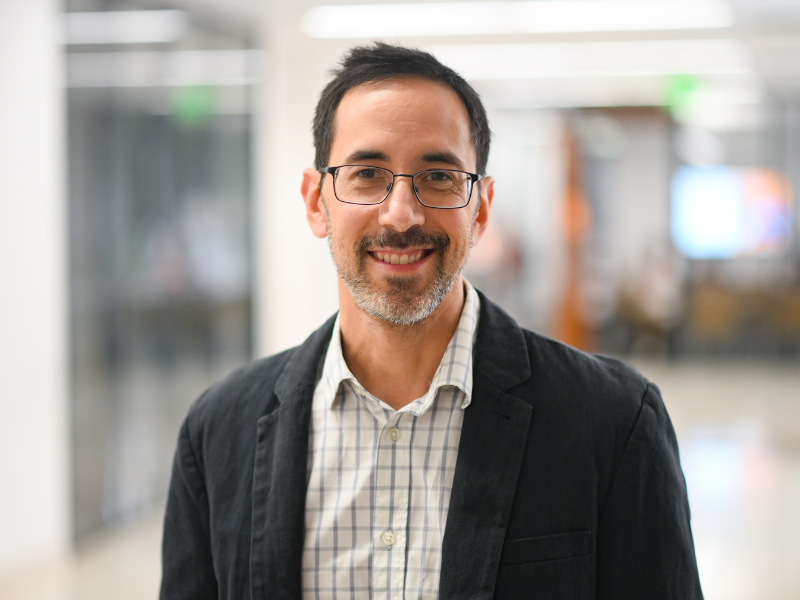
Stephen Boyles
· Professor Civil, Architectural and Environmental EngineeringVerifiedUniversity of Texas at Austin · Civil, Architectural and Environmental Engineering
Active 2006–2026
About
Stephen D. Boyles is a professor in the Maseeh Department of Civil, Architectural and Environmental Engineering at The University of Texas at Austin, holding the Clyde E. Lee Endowed Professorship in Transportation Engineering. He is a recognized expert in transportation network modeling and the application of mathematical optimization techniques to transportation problems. His research interests include network modeling, static and dynamic traffic assignment, transportation user behavior, infrastructure systems, and innovative vehicle technologies. Boyles has received numerous awards for his contributions, including the National Science Foundation’s Faculty Early Career Development (CAREER) award, the Transportation Research Board’s Fred Burggraf Award, and recognition from the Milton Pikarsky Award and the Daniel Fambro Award. As a faculty member, he has served as a Principal Investigator or Co-Principal Investigator on projects sponsored by various agencies such as the Texas Department of Transportation, Wyoming Department of Transportation, the National Science Foundation, and the Mountain-Plains Consortium. His research spans topics like rural roadway pricing, operational analysis of low-volume rural freeways with high heavy-vehicle proportions, large-scale traffic simulation, real-time information provision, and electric vehicles. He holds a Ph.D. in Civil Engineering from the University of Texas at Austin, earned in 2009, along with a Master of Science in Engineering from the same university, and both a Bachelor of Science in Civil Engineering and Mathematics from the University of Washington. Boyles is also a member of the Academy of Distinguished Teachers (2025) and has received several teaching awards, including the Dad’s Association Centennial Teaching Fellowship, the Department Teaching Award from the Fariborz Maseeh Department, and the Dean’s Award for Outstanding Engineering Teaching by an Assistant Professor.
Research topics
- Computer Science
- Mathematics
- Engineering
- Mathematical optimization
- Machine Learning
- Operations research
- Artificial Intelligence
- Economics
- Statistics
Selected publications
Departure Time Choice with Parametric Heterogeneity: Equilibrium and Instability
arXiv (Cornell University) · 2026-04-15
articleOpen accessVickrey's classic single-bottleneck departure time choice equilibrium model exhibits instability under many plausible day-to-day learning dynamics. Such instability is not observed in reality -- does this difference stem from the day-to-day dynamics or from one of the simplifying assumptions of the basic model? This paper explores a variant of the basic model with a continuous distribution of schedule delay parameters which we intuitively expect to have more favorable stability properties. To attain tractability we assume a monotonic relationship between earliness and lateness parameters. We first verify the existence and uniqueness of the equilibrium solution for this model. We then study a broad class of day-to-day dynamics satisfying local pressure and order preservation conditions. Our main contribution is a formal proof that, surprisingly, all such day-to-day dynamics in this context are unstable.
SSRN Electronic Journal · 2026-01-01
preprintOpen accessDeparture Time Choice with Parametric Heterogeneity: Equilibrium and Instability
arXiv (Cornell University) · 2026-04-15
preprintOpen accessVickrey's classic single-bottleneck departure time choice equilibrium model exhibits instability under many plausible day-to-day learning dynamics. Such instability is not observed in reality -- does this difference stem from the day-to-day dynamics or from one of the simplifying assumptions of the basic model? This paper explores a variant of the basic model with a continuous distribution of schedule delay parameters which we intuitively expect to have more favorable stability properties. To attain tractability we assume a monotonic relationship between earliness and lateness parameters. We first verify the existence and uniqueness of the equilibrium solution for this model. We then study a broad class of day-to-day dynamics satisfying local pressure and order preservation conditions. Our main contribution is a formal proof that, surprisingly, all such day-to-day dynamics in this context are unstable.
Anchorage Queue Dynamics due to Fog Channel Closures at the Port of Houston
Journal of Waterway Port Coastal and Ocean Engineering · 2026-03-19
articleThe Port of Houston, Texas, is regularly disrupted by recurring fog events that reduce visibility and result in navigation channel closures for safety reasons. These fog closures disrupt regional industry as no vessels may enter the port, a critical issue given the prominence of Houston as a freight gateway. Despite these significant impacts, fog events are relatively understudied in the port management literature. As arriving vessels wait in the anchorage area before visiting the port, anchorage queue behavior provides insights into the performance and resilience of the port system. We introduce conceptual definitions to capture the anchorage queue dynamics of a fog disruption and recovery cycle. Specifically, we define the queue growth rate, maximum recovery rate, and total recovery rate of the anchorage queue. We provide empirical evidence and derive typical values for these rates in the Houston anchorage using archival automatic identification system vessel tracking data and historic channel status records. Different fog events are categorized as single or compound events, and we compare the queue dynamics observed during fog events to those that occur during hurricanes, a more widely studied disruptive event. We identify 79 total fog events that resulted in measurable impacts on the Houston anchorage queue between 2016 and 2024. Anchorage queues typically grow at a rate of 0.82 vessels per hour (v/h) and recover at a total rate of 0.84 v/h, with a temporary ability to process vessels at a higher rate of 2.0 v/h after reopening postfog. Recovery rates show higher variance than growth rates, indicating that the system recovery is less predictable than its disruption. Our findings provide insights into maritime system performance and may help system stakeholders better understand and predict the impacts of fog events on vessel congestion and maritime freight operations.
Characterizing Longitudinal Vessel Arrival and Queue Behavior from AIS at the Port of Houston
Journal of Waterway Port Coastal and Ocean Engineering · 2026-03-19
articleWe present the methods and results for automatic identification system (AIS) vessel tracking data analysis to support port operations and simulation efforts in the Houston region. While AIS data have been widely used to measure port performance, we specifically study the validity of assuming a Poisson arrival process for the Houston anchorage and quantify observed anchorage waiting behavior for container, noncontainer cargo, and tanker vessels in a longitudinal analysis from 2019 to 2024. Statistical testing and graphical analysis are used to examine the interarrival times. We contend that the Poisson assumption is likely valid for container and noncontainer cargo vessel types, but less clear for tanker vessels. The queue analysis shows that the Houston anchorage is dominated by tanker vessels, of which a majority experience waiting, and that deviations in container vessel queue size and duration were observed in late 2021 and 2022, corresponding to the global demand surge for container cargo. These findings directly support simulation studies for the Port of Houston and provide empirical evidence of long-term vessel arrival and waiting behaviors in the Houston anchorage.
Spectral analysis of the logit mapping and implications for stochastic user equilibrium algorithms
arXiv (Cornell University) · 2026-05-21
preprintOpen accessSenior authorWe analyze the Jacobian of the logit mapping for stochastic user equilibrium (SUE) and use it to develop two improved algorithms for path-based SUE. We show that the Jacobian decomposes into two matrices: one that annihilates differences of feasible path flow vectors, and another whose eigenvalues are all non-positive reals, provided link costs are monotone non-decreasing and separable. Using these properties, we first show that the method of successive averages (MSA) with a small constant step-size $s$ converges linearly at a rate $1-s$, with the largest admissible step-size depending on the eigenvalues of the Jacobian of the logit mapping. Building on this result, we develop an adaptive constant step-size rule that retains the global convergence of MSA while achieving asymptotic linear convergence. Our second algorithm is a Newton-based method using a reformulation of SUE as a root-finding problem. Unlike gradient-projection approaches that operate on the Hessian of the SUE objective function (a dense matrix), our method exploits the structure of the Jacobian of the logit mapping, making computations tractable and removing the need for manifold optimization. Numerical experiments show superlinear convergence on most tested networks, with our methods outperforming existing approaches on large networks or when demand is high. To our knowledge, this article is the first to report runtimes for logit-based SUE on networks as large as Chicago Regional and Philadelphia, providing a benchmark for future algorithmic development.
Spectral analysis of the logit mapping and implications for stochastic user equilibrium algorithms
ArXiv.org · 2026-05-21
articleOpen accessSenior authorWe analyze the Jacobian of the logit mapping for stochastic user equilibrium (SUE) and use it to develop two improved algorithms for path-based SUE. We show that the Jacobian decomposes into two matrices: one that annihilates differences of feasible path flow vectors, and another whose eigenvalues are all non-positive reals, provided link costs are monotone non-decreasing and separable. Using these properties, we first show that the method of successive averages (MSA) with a small constant step-size $s$ converges linearly at a rate $1-s$, with the largest admissible step-size depending on the eigenvalues of the Jacobian of the logit mapping. Building on this result, we develop an adaptive constant step-size rule that retains the global convergence of MSA while achieving asymptotic linear convergence. Our second algorithm is a Newton-based method using a reformulation of SUE as a root-finding problem. Unlike gradient-projection approaches that operate on the Hessian of the SUE objective function (a dense matrix), our method exploits the structure of the Jacobian of the logit mapping, making computations tractable and removing the need for manifold optimization. Numerical experiments show superlinear convergence on most tested networks, with our methods outperforming existing approaches on large networks or when demand is high. To our knowledge, this article is the first to report runtimes for logit-based SUE on networks as large as Chicago Regional and Philadelphia, providing a benchmark for future algorithmic development.
Transportation Research Record Journal of the Transportation Research Board · 2025-07-18
articleSenior authorIncreasing opportunities for telework and other forms of online activity participation are changing the landscape of transportation demand. This paper presents a relaxed singly constrained static traffic assignment model that extends existing approaches to accommodate both destination choice and the decision not to travel. We demonstrate that this formulation maintains desirable properties of existence and uniqueness of solutions, while being more flexible in capturing travel behaviors. A case study on the Austin, Texas, network examines scenarios related to telework adoption, targeted development in low-income areas, and changes to central business district attractiveness. Results show the model captures important behavioral shifts not reflected in simpler approaches such as models allowing destination choice or elastic demand alone. Using the relaxed singly constrained model, we demonstrate non-uniform traffic impacts across the network and find tradeoffs between congestion reduction and economic activity. The case study highlights potential equity impacts of both overall increases in telework and targeted changes in destination attractiveness that would otherwise be overlooked, suggesting that it is critical to develop more sophisticated models integrating traffic assignment with demand-side predictions.
Heuristic Selection in Disaster Recovery Sequencing
Journal of Infrastructure Systems · 2025-04-23
articleSenior authorTransportation network recovery after an extreme hazard or natural disaster is time sensitive and resource intensive, with hundreds or thousands of damaged links needing repair. The associated optimization problem is difficult, and experiments in the published literature are largely confined to smaller-scale instances. We aim to bridge this gap by comparing eight algorithms proposed for repair sequencing on larger-scale instances. These methods include algorithms proposed in prior literature, an improved bidirectional beam search heuristic, and a simulated annealing heuristic newly tailored for network repair sequencing. Our experiments involved over 1,900 random problem instances over two test networks with 8–64 broken links, significantly greater than what has been reported in past literature. We assessed the solution quality and computational needs of these methods. In particular, our simulated annealing heuristic offers high-quality solutions in less than a day for problems with up to 175 and 185 broken links on the Anaheim and Berlin-Mitte-Center test networks, respectively, corresponding to 18%–20% of network links. We also show transferability of the simulated annealing heuristic by tuning its parameters on the Anaheim network, then applying it without further tuning to Berlin-Mitte-Center. Comparable performance was obtained on both networks.
IEEE Transactions on Industry Applications · 2025-04-08 · 1 citations
articleSenior authorShared autonomous electric vehicles can provide on-demand transportation for passengers while also interacting extensively with the electric distribution system. This interaction is especially beneficial after a disaster when the large battery capacity of the fleet can be used to restore critical electric loads. We develop a dispatch policy that balances the need to continue serving passengers (especially critical workers) and the ability to transfer energy across the network. The model predictive control policy tracks both passenger and energy flows and provides maximum passenger throughput if any policy can. The resulting mixed integer linear programming problem is difficult to solve for large-scale problems, so a distributed solution approach is developed to improve scalability, privacy, and resilience. We demonstrate that the proposed heuristic, based on the alternating direction method of multipliers, is effective in achieving near-optimal solutions quickly. The dispatch policy is examined in simulation to demonstrate the ability of vehicles to balance these competing objectives with benefits to both systems. Finally, we compare several dispatch behaviors, demonstrating the importance of including operational constraints and objectives from both the transportation and electric systems in the model.
Recent grants
Collaborative Research: Non-Additive Network Routing and Assignment Models
NSF · $205k · 2016–2020
Collaborative Research: Real-Time Stochastic Matching Models for Freight Electronic Marketplace
NSF · $333k · 2018–2022
Collaborative Research: Stochastic and Dynamic Hyperpath Equilibrium Models
NSF · $156k · 2011–2015
CAREER: Integrated Multiresolution Transportation Network Modeling
NSF · $400k · 2013–2019
Frequent coauthors
- 38 shared
Avinash Unnikrishnan
University of Alabama at Birmingham
- 37 shared
Michael W. Levin
- 32 shared
S. Travis Waller
- 22 shared
Priyadarshan N. Patil
- 19 shared
Tarun Rambha
Indian Institute of Science Bangalore
- 19 shared
Rachel James
University of Edinburgh
- 17 shared
Ravi Venkatraman
Portland State University
- 16 shared
Peter Stone
Awards & honors
- Academy of Distinguished Teachers member (2025)
- Dad’s Association Centennial Teaching Fellowship (2018-19)
- Department Teaching Award – Fariborz Maseeh Department of Ci…
- Dean’s Award for Outstanding Engineering Teaching by an Assi…
- New Faculty Award – Council of University Transportation Cen…
- Resume-aware match score
- Save to shortlist
- AI-drafted outreach
See your match with Stephen Boyles
PhdFit ranks faculty by your research interests, methods, and publications — grounded in their actual work, not templates.
- Free to start
- No credit card
- 30-second signup