About
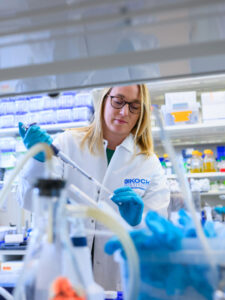
Stefani Spranger is an associate professor at MIT working to understand why some cancers do not respond to immunotherapy, with the goal of making them more vulnerable to immune attack. Her research focuses on discovering how tumors suppress immune responses, particularly investigating the mechanisms behind immune evasion in cancers such as lung, ovarian, and glioblastoma. Her work has led to a better understanding of the factors that control T-cell responses to tumors and explores ways to improve these responses through vaccination or immune-stimulating molecules called cytokines. Spranger's background includes studying biology at Ludwig Maximilian University in Munich, where she developed an interest in cell biology and immunology. She completed her PhD working on adoptive T-cell transfer therapy, a promising immunotherapy approach. After her PhD, she conducted postdoctoral research at the University of Chicago, studying immune responses to tumors and discovering why some melanoma patients do not respond to immunotherapy. She was drawn to MIT by its collaborative environment and the opportunity to work with engineers at the Koch Institute for Integrative Cancer Research. Her research involves building model systems to study immune responses in different tumor types and tissues, with a focus on overcoming immunosuppression in cancers that are resistant to current therapies.
Research topics
- Biology
- Immunology
- Cancer research
- Cell biology
- Internal medicine
- Genetics
- Medicine
- Biochemistry
Selected publications
Mechanisms, Microenvironments, and Models: Understanding Therapeutic Resistance in Glioblastoma
International Journal of Radiation Oncology*Biology*Physics · 2026-04-01
articleSenior authorMapping intratumor heterogeneity across layers for advancing immunotherapy
Cell · 2026-04-01
article2025-12-15
articleOpen access<p>Supplementary Figure 1. Antigen presentation landscape of pro-inflammatory and anti-inflammatory macrophages.</p>
2025-12-15
articleOpen access<p>Copies per cell presentation on GBM tumor cells post co-culture with BMDM</p>
2025-12-15
articleOpen access<p>Peptide quantification in TMT labeled GL261 or CT2A KO co-cultured macrophages and naïve macrophage</p>
2025-12-15
articleOpen access<p>Peptide quantification in TMT labeled pro-inflammatory macrophages and naïve macrophage</p>
2025-12-15
articleOpen access<p>Supplementary Figure 7. Antigen presentation landscape of GBM tumor cells in macrophage co-culture.</p>
2025-12-15
articleOpen access<p>Supplementary Figure 4. NF-kb activation in GBM co-cultured macrophages.</p>
2025-12-15
articleOpen access<p>Peptide quantification in TMT labeled anti-flammatory macrophages and naïve macrophage</p>
2025-12-15
articleOpen access<p>Flow cytometry antibody information</p>
Recent grants
NIH · $147k · 2018
Tumor-intrinsic oncogenic alterations and evasion of anti-tumor immunity
NIH · $747k · 2017–2020
Frequent coauthors
- 98 shared
Thomas F. Gajewski
University of Chicago
- 59 shared
Maria Zagorulya
Massachusetts Institute of Technology
- 59 shared
Brendan Horton
Massachusetts Institute of Technology
- 55 shared
Jason J. Luke
- 53 shared
Riyue Bao
- 52 shared
Darrell J. Irvine
Scripps Research Institute
- 50 shared
K. Dane Wittrup
- 47 shared
J. Christopher Love
IIT@MIT
- Resume-aware match score
- Save to shortlist
- AI-drafted outreach
See your match with Stefani Spranger
PhdFit ranks faculty by your research interests, methods, and publications — grounded in their actual work, not templates.
- Free to start
- No credit card
- 30-second signup