
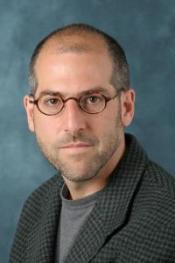
Simon A. Cole
· Professor of Criminology, Law & SocietyUniversity of California, Irvine · Criminology, Law and Society
Active 1973–2026
Academic metrics are sourced from OpenAlex and public funding records; values may differ from Google Scholar.
About
Simon A. Cole is a Professor of Criminology, Law and Society at the UCI School of Social Ecology. He holds a Ph.D. from Cornell University and specializes in the historical and sociological study of the interaction between science, technology, law, and criminal justice. His work explores the development and implications of forensic science, including fingerprinting, DNA fingerprinting, and biometric technologies. Cole is the author of 'Suspect Identities: A History of Fingerprinting and Criminal Identification,' which received the 2003 Rachel Carson Prize, and co-author of 'Truth Machine: The Contentious History of DNA Fingerprinting.' He has spoken widely on fingerprinting, scientific evidence, and the intersection of science and law, and has served as an expert witness on fingerprint evidence. Currently, his research interests include the sociology of forensic science and the development of criminal identification databases and biometric technologies. Cole teaches courses on Forensic Science and Society, Miscarriages of Justice, and The Death Penalty. He is also the Director and Associate Editor of The National Registry of Exonerations and is affiliated with the Department of History.
Research topics
- Artificial Intelligence
- Psychology
- Machine Learning
- Computer Science
- Marketing
- Cognitive psychology
- Medicine
- Archaeology
- Surgery
- Business
Selected publications
British journal of surgery · 2023 · 58 citations
BACKGROUND: Healthcare cannot achieve net-zero carbon without addressing operating theatres. The aim of this study was to prioritize feasible interventions to reduce the environmental impact of operating theatres. METHODS: This study adopted a four-phase Delphi consensus co-prioritization methodology. In phase 1, a systematic review of published interventions and global consultation of perioperative healthcare professionals were used to longlist interventions. In phase 2, iterative thematic anal…
Psychological Aspects of Forensic Identification Evidence
Psychology Press eBooks · 2020 · 33 citations
Senior authorCorrespondingForensic scientists are often asked to compare two items of evidence to determine whether they have (or might have) a common source. Testimony about such comparisons is called forensic identification evidence. This type of evidence frequently plays a crucial role in criminal trials by helping to link the defendant to the crime. This chapter focuses on expert testimony that purports to make a 'source attribution', that is, a determination that two physical items have (or might have) a common sour…
Law Probability and Risk · 2020-12-01 · 19 citations
articleOpen accessCorrespondingAbstract Over the past decade, with increasing scientific scrutiny on forensic reporting practices, there have been several efforts to introduce statistical thinking and probabilistic reasoning into forensic practice. These efforts have been met with mixed reactions—a common one being scepticism, or downright hostility, towards this objective. For probabilistic reasoning to be adopted in forensic practice, more than statistical knowledge will be necessary. Social scientific knowledge will be cri…
Journal of Experimental Psychology Applied · 2022 · 15 citations
Forensic feature-comparison examiners compare-or "match"-evidence samples (e.g., fingerprints) to provide judgments about the source of the evidence. Research demonstrates that examiners in select disciplines possess expertise in this task by outperforming novices-yet the psychological mechanisms underpinning this expertise are unclear. This article investigates one implicated mechanism: statistical learning, the ability to learn how often things occur in the environment. This ability is likely…
SERVAL (Université de Lausanne) · 2020-03-12 · 14 citations
articleOpen access1st authorCorrespondingThe decade since the publication of the 2009 National Research Council report on forensic science has seen the increasing use of a new word to describe forensic results. What were once called “facts,” “determinations,” “conclusions,” or “opinions,” are increasingly described as “decisions.” Prior to 2009, however, the term “decision” was rarely used to describe forensic results. Lay audiences, such as lawyers, might be forgiven for perceiving this as a surprising turn. In its plain English meani…
Recent grants
CAREER: Towards a Systems Analysis of the Utilization of Scientific Evidence in the Criminal Law
NSF · $403k · 2004–2012
NIH · $147k · 2010
Frequent coauthors
- 32 shared
William Thompson
Johns Hopkins University
- 17 shared
Henry N. Pontell
- 16 shared
Julia Hume
University of Adelaide
- 16 shared
Maurice Punch
University of Adelaide
- 16 shared
J. Wright Amos
University of Southern California
- 16 shared
Joel Joffe
University of Southern California
- 16 shared
Gasper Patrico
Texas Christian University
- 16 shared
Matt Alecock
University of Adelaide
Education
Ph.D.
Cornell University
Awards & honors
- 2003 Rachel Carson Prize by the Society for Social Studies o…
Similar researchers at University of California, Irvine
- Resume-aware match score
- Save to shortlist
- AI-drafted outreach
See your match with Simon A. Cole
PhdFit ranks faculty by your research interests, methods, and publications — grounded in their actual work, not templates.
- Free to start
- No credit card
- 30-second signup